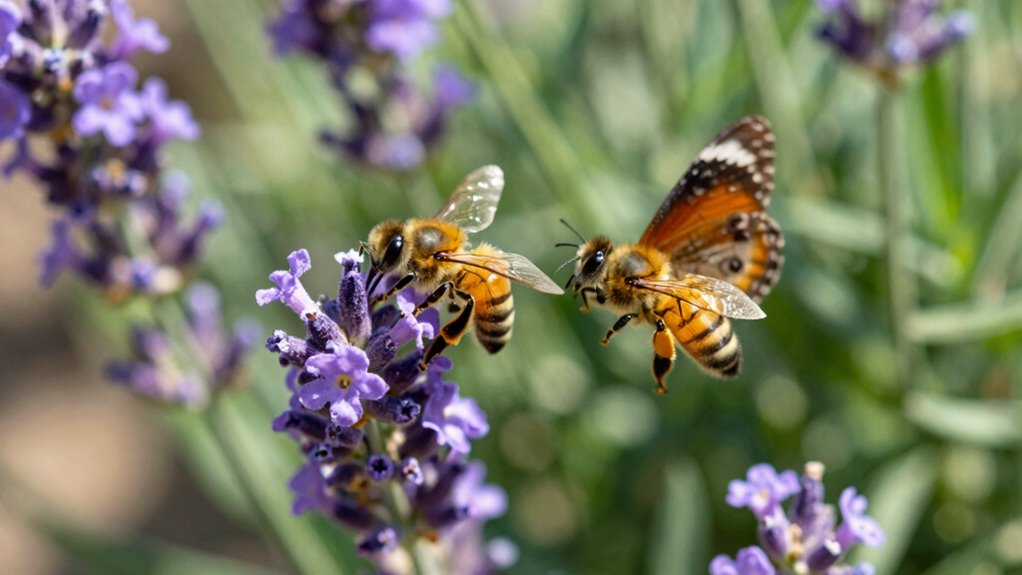

Pollinator gardening shows you how all parts of nature rely on each other. By planting native flowers, you support diverse pollinators, which in turn help plants reproduce. Healthy plants attract more pollinators, creating a balanced cycle that benefits the entire ecosystem. Your small efforts in creating habitats strengthen this interdependence, helping ecosystems thrive. If you look closer, you’ll discover even more ways your garden can demonstrate the web of life and mutual reliance.

Get books, candles and calm essentials delivered free — and shop member deals
- Fast, free delivery on millions of items
- Access to Prime Big Deal Days deals on October 6–7
- Prime Video, Amazon Music and more included
Key Takeaways
- Pollinator gardening demonstrates mutual dependence between plants and pollinators for reproduction and survival.
- Diverse native plants attract various pollinators, showcasing ecosystem resilience through interdependence.
- Creating habitats supports healthy pollinator populations, emphasizing the importance of habitat preservation.
- Healthy pollinator and plant relationships sustain broader ecosystems and biodiversity.
- Gardens serve as models of cooperation, illustrating how interconnected elements maintain ecological balance.
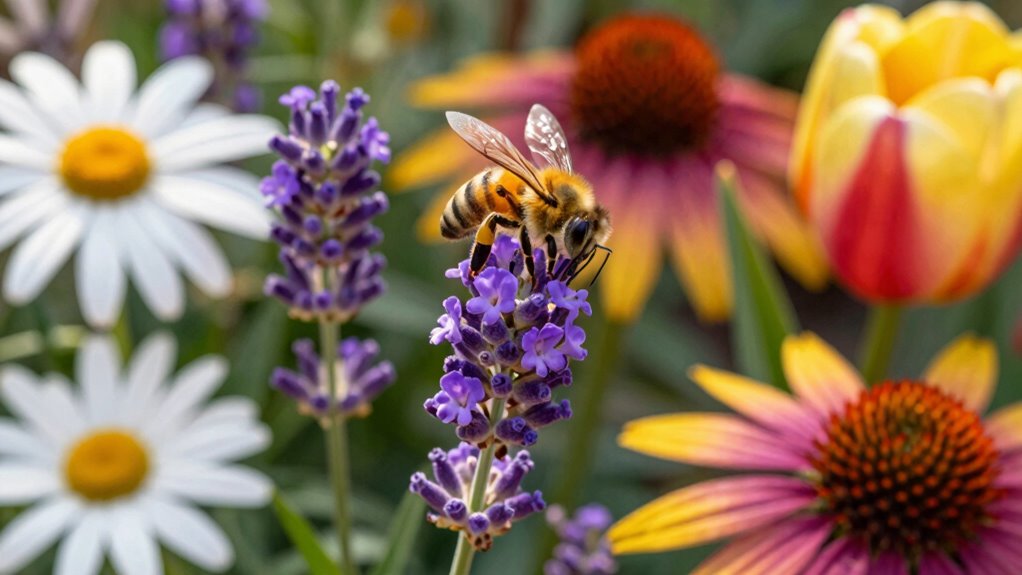
Have you ever wondered how your garden can support the essential relationship between pollinators and plants? When you plant flowers that attract bees, butterflies, and hummingbirds, you’re participating in a complex web of mutual reliance. These creatures depend on your garden for nectar and pollen, while your plants rely on pollinators to reproduce and thrive. This interdependence highlights a delicate ecosystem balance—each part working together to sustain the whole. By understanding this connection, you recognize that your actions directly influence the health of local ecosystems.
Pollinator gardening teaches you that no species exists in isolation. Instead, every plant and pollinator shares a symbiotic relationship where both benefit. When pollinators visit flowers, they gather food, but in the process, they transfer pollen between plants. Without this transfer, many plants wouldn’t produce fruit or seeds, which means fewer plants to support future pollinators. It’s a cycle rooted in mutual reliance, where the survival of one depends on the other. This realization emphasizes that your garden isn’t just a collection of individual plants; it’s a vital part of a broader network of life, intricately connected through these interactions.
Pollinators and plants depend on each other in a vital, mutually beneficial cycle that sustains ecosystems.
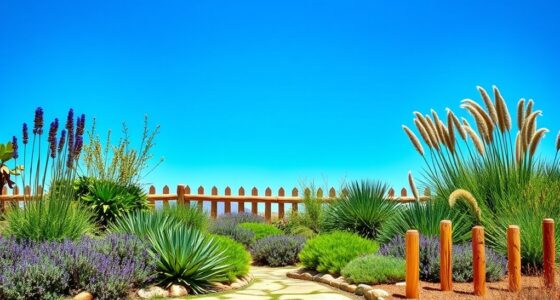
As you cultivate your garden with native plants and diverse blooms, you’re fostering resilience in the ecosystem. These plants attract a variety of pollinators, each with different needs and behaviors, creating a stable environment that can adapt to changes. This diversity not only supports pollinator populations but also fortifies the ecosystem against pests and diseases. Your efforts in creating habitat and providing nourishment demonstrate how small actions can uphold ecosystem balance, ensuring the survival of pollinators and plants alike. Recognizing the importance of pollinator health underscores the need for habitat preservation and sustainable gardening practices. Supporting these delicate relationships can enhance biodiversity and overall ecological stability.
Moreover, pollinator gardening reveals that interdependence isn’t just about survival—it’s about thriving. When pollinators flourish, they help plants produce abundant flowers and fruits, which in turn support a broader array of wildlife. This interconnected web is a reminder that every species, including humans, plays a role in maintaining ecological harmony. Observing these relationships teaches us that ecosystem resilience depends on maintaining diverse and healthy habitats. Creating spaces that support pollinators also involves understanding the significance of native plants, which are crucial for sustaining local species. Additionally, recognizing the importance of cultural symbols like the Māori Kowhaiwhai or Hei Tiki can deepen appreciation for traditional knowledge about strength and interconnectedness. By observing these relationships, you learn that cooperation and mutual reliance are essential for a resilient environment. Your garden becomes a living example of how nurturing one part of the system benefits the whole, reinforcing the importance of interdependence in nature.
In essence, what you learn from pollinator gardening is that ecosystems function best when every element supports the others. Your garden becomes more than just a personal space; it transforms into a vital contributor to sustaining a balanced, thriving environment rooted in mutual reliance.
Frequently Asked Questions
How Do Pollinators Choose Specific Plants to Visit?
You might notice pollinators choose specific plants based on their plant preferences and nectar incentives. They’re drawn to flowers offering abundant nectar, which provides essential energy. Bright colors, strong scents, and flower shapes also influence their choices. By understanding these cues, you can plant a garden that attracts your favorite pollinators, fostering interdependence between them and your plants. This mutual relationship benefits both, promoting healthy, thriving ecosystems.
What Happens if Pollinators Disappear Entirely?
If pollinators disappear entirely, you’ll notice plants struggle to reproduce, leading to a collapse in ecosystem balance. While some might think other methods could replace pollination, nothing matches nature’s efficiency. Pollinator decline threatens biodiversity and food security. You’ll see fewer fruits, vegetables, and flowering plants, disrupting the entire food chain. Protecting pollinators isn’t just about flowers; it’s about maintaining the health and stability of our environment for everyone.
Can Pollinator Gardens Help Endangered Species Recover?
Yes, pollinator gardens can aid endangered species recovery by supporting habitat restoration and enhancing genetic diversity. When you plant pollinator-friendly plants, you create essential habitats that attract and sustain these species. This increased habitat availability helps endangered species thrive and reproduce, boosting their populations. By fostering genetic diversity, pollinator gardens also promote resilient populations, making them better equipped to withstand environmental stresses and threats.
How Does Climate Change Affect Pollinator Behavior?
Imagine pollinators as dancers adjusting their steps on a shifting stage. Climate change impacts pollinator behavior by disrupting their rhythms, forcing adaptation. Rising temperatures and unpredictable weather alter flowering times, confusing pollinators’ navigation. This climate impact pushes pollinator adaptation, making their movements less synchronized with plant cycles. You see, as the environment changes, pollinators must adjust swiftly to survive, highlighting how interconnected and delicate our ecological dance truly is.
What Are Some Common Misconceptions About Pollinator Interdependence?
Many people think pollinators are solely responsible for plant reproduction, but that’s a misconception. In reality, there’s mutual dependence, where both pollinators and plants rely on each other for survival. This interdependence maintains ecological balance, showing that disrupting one part can affect the whole system. Understanding this interconnectedness helps you appreciate how pollinator health impacts broader ecosystems and emphasizes the importance of protecting these crucial relationships.
Conclusion
Just as a garden flourishes when each flower and pollinator plays its part, our interconnected world thrives on interdependence. Think of yourself as a crucial thread in this vibrant tapestry, weaving together life’s delicate balance. When you nurture pollinators, you nurture the entire ecosystem — and in doing so, you learn that caring for one another is the true secret to growth. Embrace this dance of dependence, and watch how beauty blossoms all around you.
Products Worth Considering
As an affiliate, we earn on qualifying purchases.