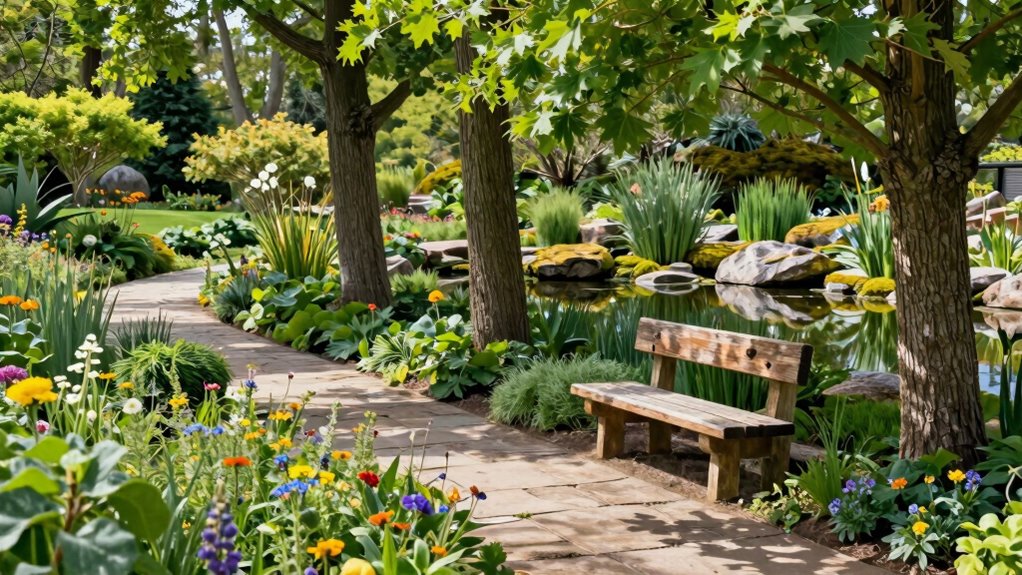
To create an outdoor space that feels both ecological and beautiful, start by choosing native plants that thrive in your region, attracting pollinators and reducing maintenance. Incorporate water-saving features like rain barrels and drought-tolerant plants, then add natural elements like rocks, logs, and meandering paths for a more organic look. Including small ponds or birdbaths invites wildlife, helping your landscape blend beauty with ecological harmony. Explore more ways to craft your perfect sustainable haven.

Turn your quiet moments into listening time
- Thousands of audiobooks, podcasts and originals
- Listen on your phone, tablet or Echo — also offline
- Cancel anytime
Key Takeaways
- Incorporate native plants suited to local climate for beauty, biodiversity, and low maintenance.
- Use naturalistic design elements like rocks, logs, and meandering paths to mimic natural habitats.
- Install water features such as ponds or birdbaths to support wildlife and enhance ecological diversity.
- Employ water-saving techniques like rain barrels and mulch to promote sustainability.
- Avoid chemicals, prioritize composting, and foster a balanced ecosystem for a healthy, thriving outdoor space.
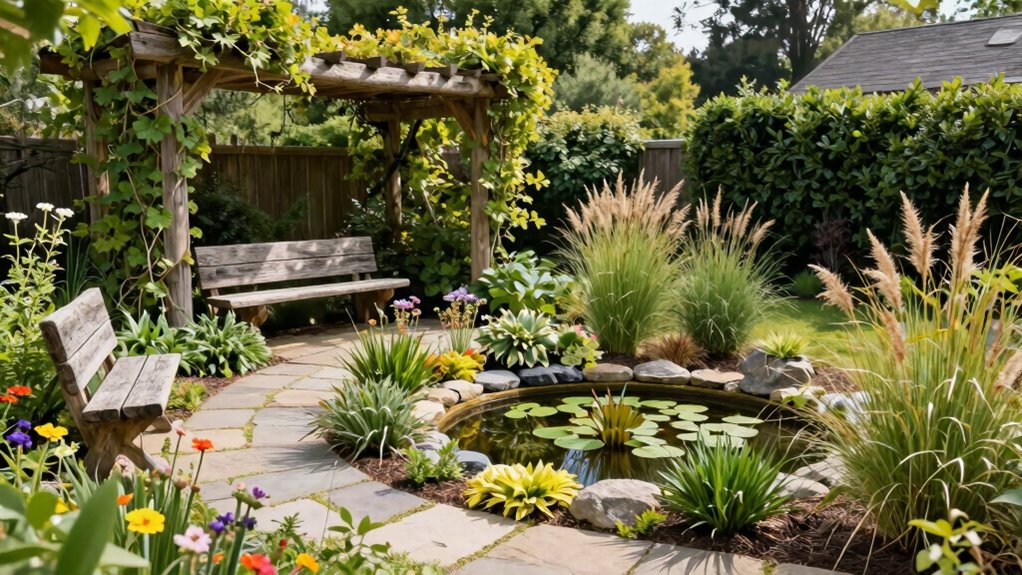
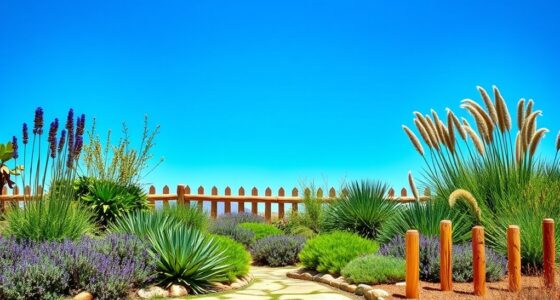
Have you ever wondered how to transform an ordinary outdoor area into a thriving ecological space? It all starts with intentional choices that support local ecosystems and promote sustainability. One of the most effective ways to do this is by selecting native plants. These plants are adapted to your region’s climate and soil, so they require less water, fertilizers, and pesticides. By planting native species, you create a resilient landscape that attracts pollinators like bees and butterflies, which are essential for healthy ecosystems. Native plants also help prevent erosion and improve soil health, making your outdoor space more sustainable over time. Incorporating native plants into your landscape design not only enhances biodiversity but also reduces the need for chemical interventions, creating a healthier environment for both you and local wildlife.
Choosing native plants supports local ecosystems, requiring less water and fostering resilient, sustainable landscapes.
Water conservation plays a vital role in building an ecological outdoor space. You want to design your landscape in a way that minimizes water use while still maintaining its beauty. Incorporate drought-tolerant plants and group them based on their water needs, a practice known as hydrozoning. Installing a rain barrel or a drip irrigation system ensures water goes directly to the roots where it’s needed most, reducing waste. Mulching around plants helps retain soil moisture, which cuts down on watering frequency. These steps not only conserve water but also reduce your water bill and lessen the strain on local water resources. Using water-efficient techniques can further enhance your efforts to create a sustainable landscape.
Creating a naturalistic layout can enhance the ecological feel of your yard. Instead of formal lines and manicured lawns, opt for irregular shapes, meandering paths, and layered plantings. Incorporate elements like rocks, logs, or native grasses to mimic natural habitats. These features provide shelter and food for local wildlife, turning your outdoor space into a mini-ecosystem. Avoid using chemical pesticides and fertilizers, as they can harm beneficial insects and soil microorganisms. Instead, focus on composting organic waste to enrich your soil naturally and maintain a healthy balance of nutrients.
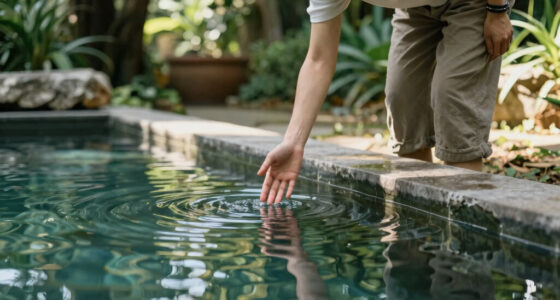
Finally, think about incorporating water features that support local wildlife, such as small ponds or birdbaths. When designed thoughtfully, these elements can attract birds, frogs, and insects, further enriching the ecological diversity of your yard. Be mindful of water quality and avoid introducing invasive species into your pond or water feature. By integrating native plants, practicing water conservation, and designing a natural, wildlife-friendly environment, you’ll create an outdoor space that’s not only beautiful but also sustainable and beneficial for the local ecosystem. With these simple yet impactful steps, you transform your yard into a thriving ecological haven where nature and beauty coexist harmoniously.
Frequently Asked Questions
How Can I Attract Native Wildlife to My Outdoor Space?
You can attract native wildlife by creating wildlife corridors that link your space to natural habitats, making it easier for animals to move safely. Focus on native plant selection to provide food and shelter tailored to local species. Avoid pesticides, and add water sources like birdbaths. These steps encourage local fauna to visit and thrive in your outdoor area, fostering a vibrant, ecological environment.
What Sustainable Materials Are Best for Outdoor Furniture?
They say “you get what you pay for,” so choose eco-friendly woods like cedar or teak, which are durable and sustainable. Recycled plastics are also excellent, as they resist weather and reduce waste. These materials not only stand the test of time but also help protect the environment. By selecting sustainable outdoor furniture, you create a beautiful space that’s both functional and kind to nature, making your outdoor oasis truly eco-friendly.
How Do I Maintain Ecological Balance Over Time?
You maintain ecological balance by prioritizing soil health and water conservation. Use organic compost to enrich the soil, encouraging healthy plant growth and preventing erosion. Implement rainwater harvesting and drip irrigation systems to conserve water and reduce runoff. Avoid chemical pesticides and fertilizers that harm ecosystems. Regularly monitor your plants and soil, adjusting practices to guarantee a thriving, balanced environment that supports biodiversity and sustains your outdoor space over time.
Can I Incorporate Edible Plants Into My Design?
Yes, you can definitely incorporate edible plants into your design, turning your yard into a feast for both the eyes and the palate. Think of companion planting as a harmonious dance where plants support each other, reducing pests naturally. Using pest management strategies like attracting beneficial insects guarantees your edible garden thrives without chemicals. This eco-friendly approach creates a lush, productive space that’s both beautiful and sustainable.
What Are the Cost-Effective Ways to Start?
You can start cost-effectively by focusing on budget planting, selecting native and easy-to-maintain plants that thrive naturally. Incorporate recycled decor, like reclaimed wood or repurposed containers, to add charm without overspending. Shop at local plant swaps or thrift stores to find affordable materials. Planning your space carefully helps avoid unnecessary purchases, while DIY projects and upcycling make your outdoor area beautiful and ecological without breaking the bank.
Conclusion
By embracing native plants, sustainable materials, and mindful design, you turn your outdoor space into a thriving, beautiful sanctuary. Think of it as planting a seed—what you nurture today blossoms into a resilient, enchanting environment tomorrow. With each thoughtful choice, you’re not just creating a pretty yard; you’re fostering a living, breathing ecosystem that sustains itself. So, why not be the architect of your own ecological paradise—where beauty and nature grow hand in hand?
Products Worth Considering
native plants for outdoor garden
As an affiliate, we earn on qualifying purchases.
As an affiliate, we earn on qualifying purchases.