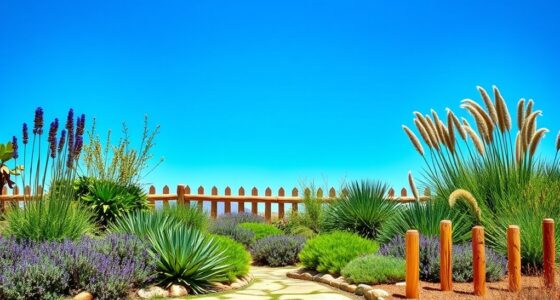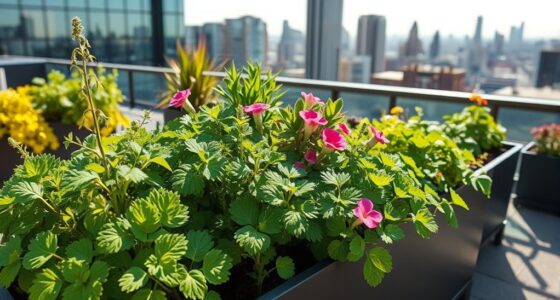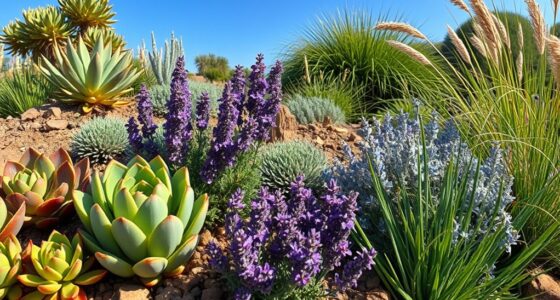
You can make your low-water garden feel lush and inviting by choosing drought-tolerant plants that add texture and color, like succulents or lavender. Use strategic landscaping with mulch and decorative stones to retain moisture and create visual interest. Group plants with similar water needs to keep things organized and efficient. Incorporate microclimates with shade and interesting features like pathways to enhance appeal. Keep exploring for more tips to transform your yard into a vibrant, eco-friendly space.

Turn your quiet moments into listening time
- Thousands of audiobooks, podcasts and originals
- Listen on your phone, tablet or Echo — also offline
- Cancel anytime
Key Takeaways
- Use a mix of native and drought-tolerant plants for variety, color, and texture.
- Incorporate decorative stones, mulch, and ground covers to add visual interest and richness.
- Strategically place taller plants or trees to create microclimates and shade smaller species.
- Group plants with similar water needs to optimize watering efficiency and maintain vibrancy.
- Add features like pathways and rock formations to enhance aesthetics without extra water use.

Have you ever wondered how to create a beautiful garden that doesn’t drain your water resources? The answer lies in understanding and applying xeriscaping principles. These principles focus on designing landscapes that minimize water use while still offering visual appeal. When you choose to incorporate drought-tolerant plants, you’re making a smart move toward a sustainable, low-water garden that’s both inviting and resilient. Drought-tolerant plants are specially adapted to survive with minimal watering, so they thrive even during dry spells. By selecting these hardy species, you reduce the need for frequent irrigation and help conserve water without sacrificing beauty.
Start by planning your garden around the concept of xeriscaping. This means grouping plants with similar water needs together, which allows you to water more efficiently. Instead of uniformly watering your entire yard, you target your efforts on specific sections, ensuring that each plant gets just the right amount of moisture. This approach not only conserves water but also promotes healthier, more vigorous plants. Incorporate mulch generously around your drought-tolerant plants to reduce evaporation and keep the soil moist longer. Organic mulches like bark, gravel, or stone can add visual interest while protecting your plants from extreme temperature fluctuations. Water-efficient gardening techniques can further enhance your landscape’s sustainability, making your garden more adaptable to changing climate conditions.
Group plants by water needs and use mulch to retain moisture and enhance visual appeal.
When selecting drought-tolerant plants, look for species native to your region or those specifically adapted to dry conditions. These plants are often more resilient, requiring less maintenance and water. Examples might include succulents, lavender, yarrow, or certain grasses, which all bring texture and color to your garden. Mixing these with decorative stones or xeriscape-friendly ground covers adds layers of visual appeal and reduces the need for continuous watering. You don’t have to sacrifice lushness; with careful plant selection and thoughtful design, your garden can feel vibrant and inviting. Additionally, understanding the plant adaptations of your chosen species can help you tailor your gardening practices even more effectively, ensuring your landscape remains thriving during drought periods.
Design your layout to maximize shade and reduce water loss. Strategically place taller plants or trees to provide shade for smaller, more delicate drought-tolerant species. Incorporate features like rock formations or pathways to create visual interest and define different zones within your garden. This not only enhances the aesthetic appeal but also helps manage microclimates, making your garden more resilient to drought conditions. Being mindful of plant adaptations can guide you in choosing the most suitable species for your environment, ensuring a thriving landscape even during dry seasons. With these strategies, your low-water garden can be a lush oasis that’s both eco-friendly and welcoming.
Frequently Asked Questions
Can Low-Water Gardens Support Native Wildlife?
Yes, low-water gardens can support native wildlife. By including wildlife attractants like native plants, you create a habitat that draws in pollinators, birds, and beneficial insects. These gardens provide essential ecosystem benefits, such as food and shelter, without excessive water use. With thoughtful plant choices and strategic design, your low-water garden becomes a thriving space that supports local wildlife while conserving resources.
What Are the Best Low-Water Plants for Shade?
You’ll love the best low-water plants for shade because they thrive with minimal water and tolerate low light. Plants like ferns, hostas, and coral bells excel in shaded areas, thanks to their shade tolerance. While some might think shade limits plant choices, these selections flourish in low-water gardens, adding lushness without extra watering. Proper plant selection guarantees your garden remains vibrant, even in shaded, drought-prone spots.
How Often Should I Prune Low-Water Garden Plants?
You should prune your low-water garden plants seasonally, typically in early spring or late winter, using proper pruning techniques. Remove dead or damaged growth to encourage healthy, lush foliage, and lightly trim to maintain shape and size. Be careful not to over-prune, as this can stress plants. Regular, gentle trimming helps keep your garden inviting and vibrant without demanding excessive water or effort.
Are Low-Water Gardens Suitable for Vegetable Gardening?
Yes, low-water gardens are suitable for vegetable gardening. You can choose drought-tolerant vegetables like peppers, eggplants, and herbs. To boost growth, practice companion planting and natural pest control methods, which help reduce water needs and maintain a healthy garden. Incorporate mulch to retain moisture and select plants adapted to your climate. With proper planning, your low-water vegetable garden can be productive, lush, and sustainable.
What Soil Types Are Ideal for Low-Water Landscapes?
You’ll want soil with a good mix of sand, silt, and clay, creating ideal soil composition for low-water landscapes. This blend improves water retention without becoming waterlogged, helping plants thrive with less moisture. Incorporate organic matter like compost to boost nutrients and enhance water-holding capacity. Avoid heavy, clay-heavy soils that retain too much water, and steer clear of sandy soils that drain quickly, making your garden more resilient and lush with minimal watering.
Conclusion
With thoughtful plant choices and clever design, your low-water garden can become a lush oasis, even in the driest seasons. Picture vibrant succulents spilling over textured stones, their colors glowing in the warm sunlight. Imagine wandering through a cool, shaded haven of native grasses and fragrant herbs, where every step feels invigorating. With a little care, your garden transforms into a vibrant retreat—proof that sustainability and beauty can go hand in hand, inviting you to relax and enjoy its natural charm.
Products Worth Considering

Philips Sonicare 5950 Rechargeable Electric Toothbrush with 2 Brush Heads, Navy

Garmin Forerunner 165 GPS Running Smartwatch, 43 mm, Black

Garmin Forerunner 55 GPS Running Smartwatch, Black
As an affiliate, we earn on qualifying purchases.