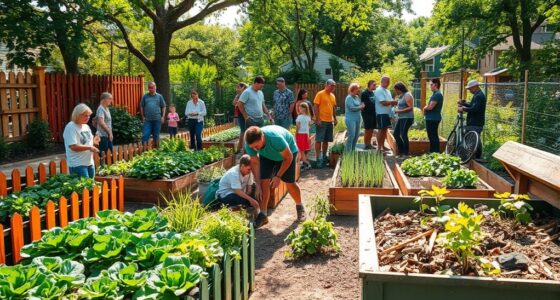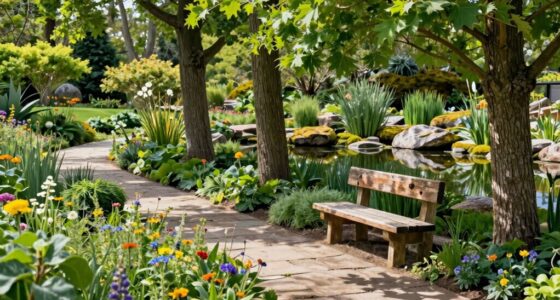
Less perfect gardens support more life because they embrace natural features and native plants, creating better habitats for wildlife. By avoiding constant tidiness, you allow native species to thrive and provide shelter for insects, birds, and small mammals. Natural imperfections also help promote ecological balance and resilience. Minimizing interference invites a diverse range of plants and animals to flourish. Want to discover how you can transform your garden into a thriving habitat? Keep exploring to find out.
Key Takeaways
- Natural imperfections create diverse habitats that attract a wider range of plants and animals.
- Reduced chemical use and tidiness make gardens more inviting for native wildlife.
- Uneven terrain and natural features provide essential shelter and nesting sites for species.
- Native plants adapted to local conditions thrive better in less manicured environments.
- Less controlled gardens promote ecological resilience and support biodiversity through habitat variety.
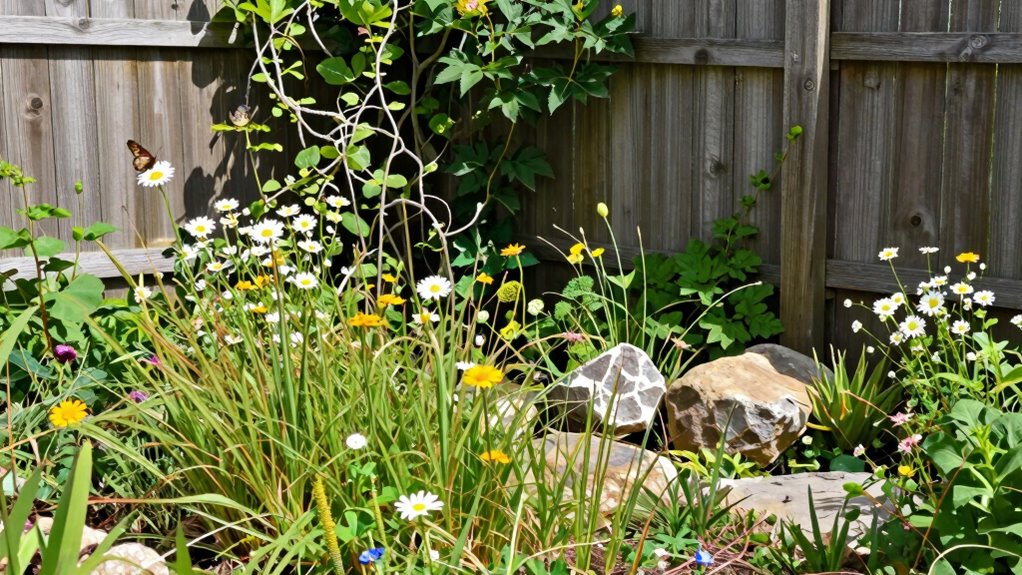
You might find that less manicured gardens actually support more life, as their natural imperfections create better habitats for a variety of plants and animals. When you let your garden follow its natural course, you’re encouraging a richer ecosystem to thrive. Unlike carefully trimmed lawns and excessively pruned bushes, a more relaxed garden style often provides the ideal environment for native species to flourish. These plants and animals have evolved alongside local ecosystems, so they’re better suited to the habitats you can create by minimizing interference. By allowing native species to grow freely, you create a more resilient and diverse natural habitat right outside your door.
Embrace natural imperfections to foster thriving, resilient habitats for native plants and wildlife right in your garden.
Natural habitats in your garden become more inviting when you avoid heavy chemicals and excessive tidiness. Instead of removing every leaf or trimming every branch, you let nature take its course. This creates shelter for insects, birds, and small mammals, which rely on undisturbed spaces for nesting, feeding, and hiding from predators. Native plants, in particular, thrive in less controlled environments because they’re adapted to the local climate and soil conditions. These plants support the local food chain, attracting pollinators like bees and butterflies, which are essential for maintaining biodiversity. As a result, your garden becomes a vibrant, living community that sustains itself with minimal intervention.
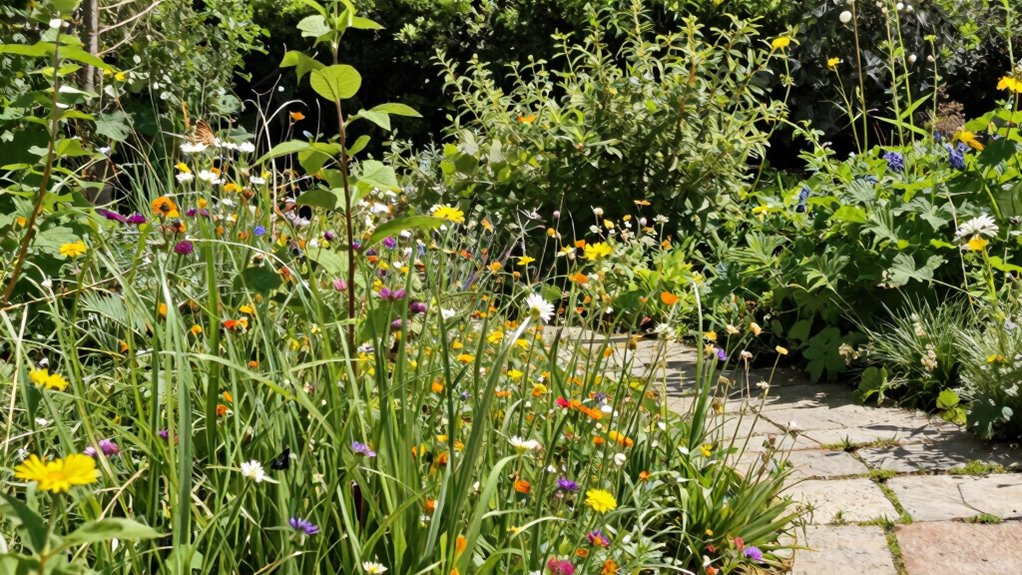
You’ll also notice that the uneven terrain, wildflower patches, and tangled shrubs provide essential resources for wildlife. Small creatures like frogs, insects, and songbirds find safe spots among the natural growth, helping to keep pest populations in check. This creates a balanced ecosystem where every species plays a role. By embracing the natural imperfections of your garden, you foster a healthier environment that supports native species and enhances the overall ecological stability. Incorporating native plant species into your garden design can further encourage this balance and resilience. You might also find that the natural features of a less manicured garden help to support native species, creating a more sustainable and thriving habitat.
Furthermore, less perfect gardens require less maintenance, saving you time and effort while still offering beauty and biodiversity. Native plants usually need less watering, fertilizers, and pesticides, reducing your garden’s environmental footprint. You become a steward of the land, nurturing a space that genuinely supports natural habitats. When you prioritize ecological health over aesthetic perfection, you’re helping to preserve local biodiversity and promote environmental resilience. Your garden becomes more than just a visual space; it transforms into an essential refuge for native species, reminding us that sometimes, the less perfect, the more alive. Additionally, understanding the importance of habitat diversity can inspire you to create even more supportive environments for your local wildlife.
Frequently Asked Questions
How Do Less Perfect Gardens Attract More Native Wildlife?
You attract more native wildlife to less perfect gardens by creating wildlife corridors and planting native species. These corridors connect habitats, allowing animals to move safely and find food or shelter. Native plantings provide familiar food sources and nesting sites, encouraging insects, birds, and small mammals to thrive. Embracing natural imperfections creates a diverse environment that supports a wider variety of native wildlife, enriching your garden’s ecosystem.
What Specific Plant Choices Benefit Biodiversity in Imperfect Gardens?
Think of your garden as a mosaic, where each piece adds to the bigger picture. By choosing native plants, you create natural habitats that attract local insects, birds, and pollinators. Incorporate diverse native species, including wildflowers, shrubs, and grasses, to support biodiversity. These plants thrive in your environment, offering food and shelter, and turning your imperfect garden into a vibrant, living haven that sustains more native wildlife.
Do Less Manicured Gardens Require More Maintenance?
Less manicured gardens typically require less maintenance because they embrace a natural, wild look that doesn’t demand constant trimming or pruning. This approach aligns with more relaxed garden aesthetics, reducing upkeep and allowing beneficial insects and wildlife to thrive. You’ll spend less time on maintenance frequency, making your garden easier to care for while supporting a diverse ecosystem. Embracing imperfection, as a result, benefits both your schedule and local biodiversity.
How Can I Create a Wildlife-Friendly Garden on a Budget?
To create a wildlife-friendly garden on a budget, focus on boosting soil health by adding compost and avoiding chemicals, which attracts beneficial insects and supports plant growth. Plant native species that attract pollinators and provide shelter. To keep garden pests in check naturally, encourage birds and beneficial insects. Minimize lawn areas and let parts of your garden grow wild. These simple steps create a thriving habitat without breaking the bank.
Are Less Perfect Gardens Suitable for Small Urban Spaces?
Less perfect gardens suit small urban spaces well, blending seamlessly into urban design with their charming, natural look. You’ll find that relaxed garden aesthetics encourage wildlife and create a cozy atmosphere. By embracing imperfections, you make your space more inviting and resilient. These gardens can be easily tailored to your needs, adding character without overwhelming your limited area, making your urban sanctuary both functional and lively.
Conclusion
So, next time your garden isn’t perfectly manicured, remember that it might actually support more life. Studies show that less maintained gardens attract up to 30% more insects and pollinators, which are essential for a healthy ecosystem. Embrace the wild, messy look—it’s a haven for wildlife and helps nature thrive. Your imperfect garden isn’t just charming; it’s important for supporting diverse life forms. Enjoy the beauty of nature’s chaos!
Products Worth Considering

American Wildflower Seeds for Planting – 24 Variety Pack of Native Plants
- Native Plant Variety: 24 native plant species included
- Supports Local Ecosystems: Helps pollinators, birds, beneficial insects
- Easy to Grow: Drought-tolerant, pest-resistant, adaptable
As an affiliate, we earn on qualifying purchases.
As an affiliate, we earn on qualifying purchases.