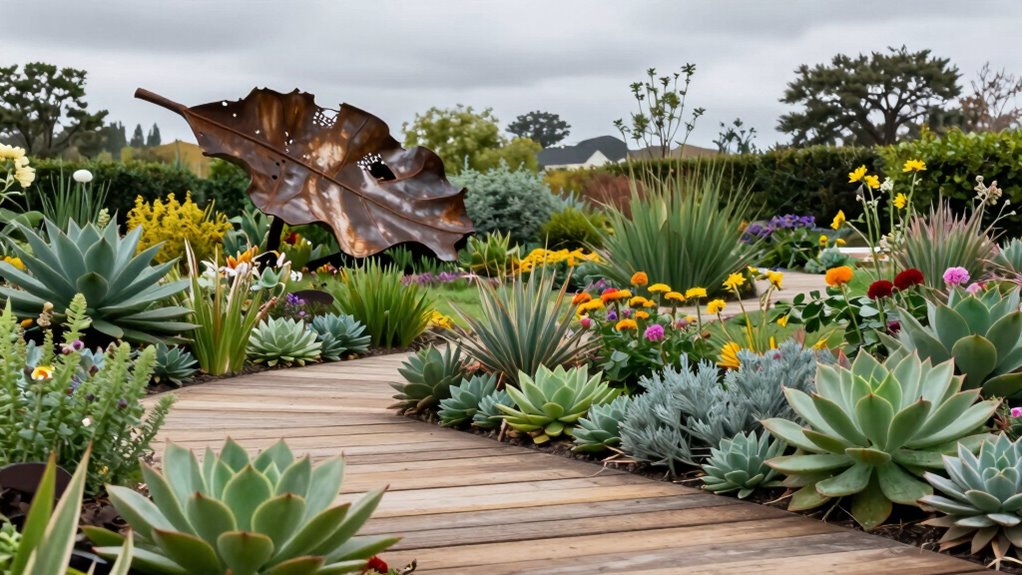

Current garden trends show you’re seeking ways to reduce your environmental impact as a response to climate anxiety. You’re choosing native plants, which support local ecosystems and resist extreme weather. Eco-friendly practices like rain gardens, composting, and xeriscaping help conserve water and resources. Urban gardening offers a chance to create greener, resilient communities close to home. These trends reveal your desire to live sustainably and protect biodiversity—discover how to make your garden part of the solution.
Key Takeaways
- Increased interest in native, climate-resilient plants reflects concerns about environmental stability and adaptation.
- Emphasis on eco-friendly practices indicates a desire to minimize gardening’s ecological footprint amidst climate fears.
- Urban gardening initiatives reveal hope for localized, sustainable solutions to reduce broader climate impacts.
- Growing popularity of sustainable landscaping shows awareness of resource conservation and climate change mitigation.
- Gardening as activism demonstrates a need for tangible, hopeful actions to counter climate anxiety.
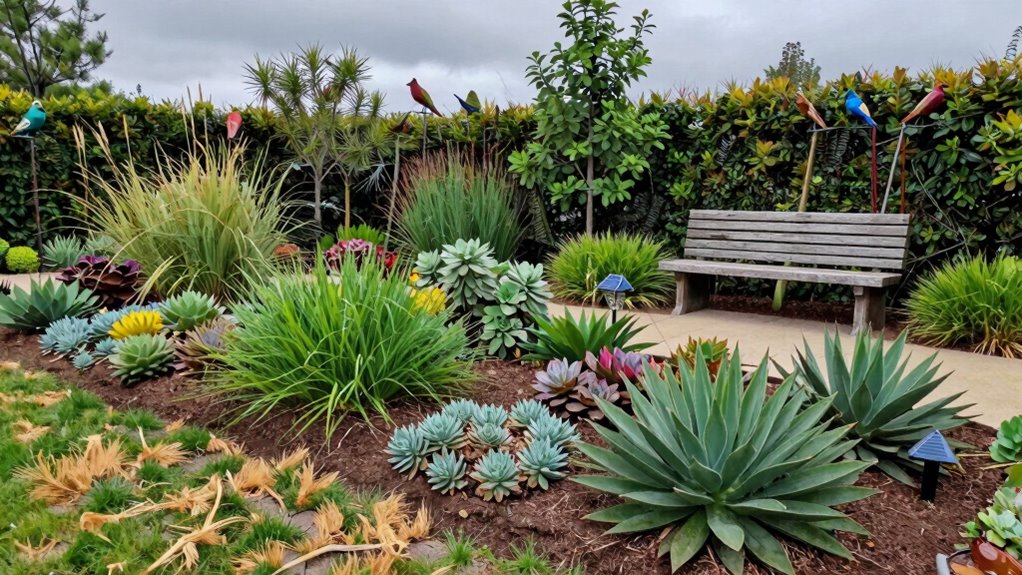
As climate change continues to influence our environment, many gardeners are feeling increasing anxiety about their outdoor spaces and the choices they make. This growing concern shapes current garden trends, revealing a collective desire to adapt and mitigate environmental impacts. You might notice that urban gardening is gaining popularity, not just for its convenience but as a strategic way to reduce your carbon footprint. By cultivating gardens in city settings, you cut down on transportation emissions and foster greener communities. It’s a way to take control, to create a little oasis that’s both beautiful and environmentally responsible.
Simultaneously, native plantings are becoming a cornerstone of modern gardening. You’re likely to see more gardens filled with plants that naturally thrive in your local climate and soil conditions. This shift isn’t just about aesthetics; it’s a conscious move to support local ecosystems, conserve water, and reduce the need for chemical fertilizers and pesticides. Native plants require less maintenance and are more resilient to extreme weather, which is increasingly common due to climate change. When you choose native plantings, you’re actively participating in a broader effort to foster biodiversity and create sustainable landscapes that can withstand environmental stresses. Incorporating low-maintenance plants can further reduce resource consumption and gardening efforts, aligning with eco-friendly practices. Additionally, understanding the benefits of climate-resilient plants can help you select species that will thrive despite unpredictable weather patterns. Recognizing the importance of native species can also guide you in creating a supportive habitat for local wildlife.
These trends also reflect a broader awareness of the environmental toll of traditional gardening practices. Many gardeners are reevaluating their methods, seeking ways to reduce water use, minimize waste, and incorporate eco-friendly materials. For you, this might mean opting for rain gardens, xeriscaping, or composting to limit your reliance on resources that contribute to climate change. You can also explore innovative techniques like permaculture that emphasize sustainable and self-sufficient garden designs. It’s about making intentional choices that align with a sustainable future, even if it means stepping outside your comfort zone or rethinking familiar gardening routines.
What these trends reveal about climate anxiety is a collective effort to find hope and agency amid uncertainty. You’re not just creating a pretty space; you’re engaging in a form of activism that aligns with your values. Whether it’s planting native species or growing food in an urban setting, these actions symbolize a desire to live more harmoniously with the environment. They serve as tangible steps toward resilience, illustrating that even small changes in your garden can have a meaningful impact. Recognizing the cryptid mysteries and folklore surrounding mysterious creatures also reminds us that nature is full of surprises and unknowns, encouraging a deeper connection and respect for the wilderness we seek to protect. In a world of mounting climate concerns, these gardening choices stand as both a reflection of anxiety and a declaration of your commitment to sustainability.
Frequently Asked Questions
How Do Garden Trends Influence Climate Change Awareness?
Garden trends influence your climate change awareness by encouraging you to plant native species that support local ecosystems and pollinators. As you adopt more sustainable practices, you realize how small actions can make a big impact. Your choices become more eco-conscious, fostering a deeper understanding of climate issues. This shift helps you see the essential role gardens play in combating climate change and preserving biodiversity.
Are Sustainable Gardening Practices Reducing Climate Anxiety?
Yes, sustainable gardening practices like garden composting and native plantings can dramatically ease your climate anxiety. By actively reducing waste and supporting local ecosystems, you feel empowered and connected to the environment. These small but impactful actions turn gardening from a simple hobby into a powerful way to combat climate change, making you feel like a hero in the fight for a healthier planet. Your efforts truly make a difference.
Which Plants Are Most Affected by Climate Shifts?
You’ll notice that native species and drought-tolerant plants are most affected by climate shifts. These plants struggle with changing rainfall patterns, higher temperatures, and unpredictable weather, which threaten their survival. You can help by choosing resilient native species and drought-tolerant plants for your garden, making it more adaptable to climate fluctuations. This proactive approach not only supports local ecosystems but also reduces your garden’s environmental impact.
How Can Gardens Help Communities Adapt to Climate Change?
Imagine your garden as a sturdy shield, protecting your community from climate shocks. By planting native species and designing resilient landscapes, you boost community resilience, helping neighborhoods withstand extreme weather. For example, a community garden in drought-prone areas reduced water use and provided fresh food, fostering unity. Your efforts in sustainable gardening can turn shared green spaces into essential buffers, strengthening local resilience against climate change.
Do Urban Gardens Lessen Residents’ Climate-Related Fears?
Yes, urban gardens can lessen your climate-related fears by boosting your mental health and fostering urban resilience. When you tend to plants and grow food, you feel more in control amidst climate uncertainties. These gardens create calming green spaces that reduce anxiety, while also building community strength to face environmental challenges together. Engaging with nature in your city offers a tangible way to combat climate fears and promote emotional well-being.
Conclusion
As you tend to your garden, remember it’s more than just a patch of earth—it’s a mirror reflecting your hopes and fears about the future. These trends whisper stories of resilience and change, urging you to nurture not only your plants but also your connection to the planet. In planting seeds today, you’re cultivating hope amid the storm, turning your garden into a sanctuary where nature’s gentle resilience blooms amidst climate anxiety’s shadow.