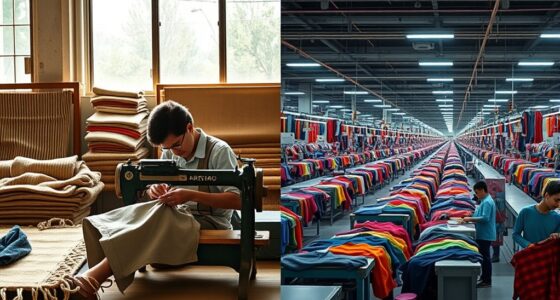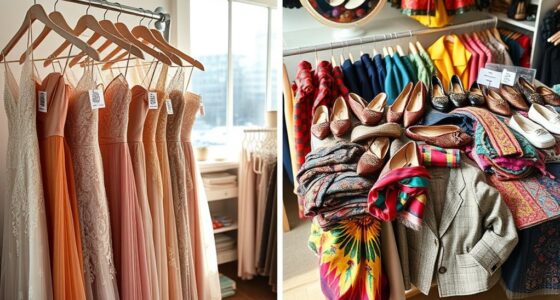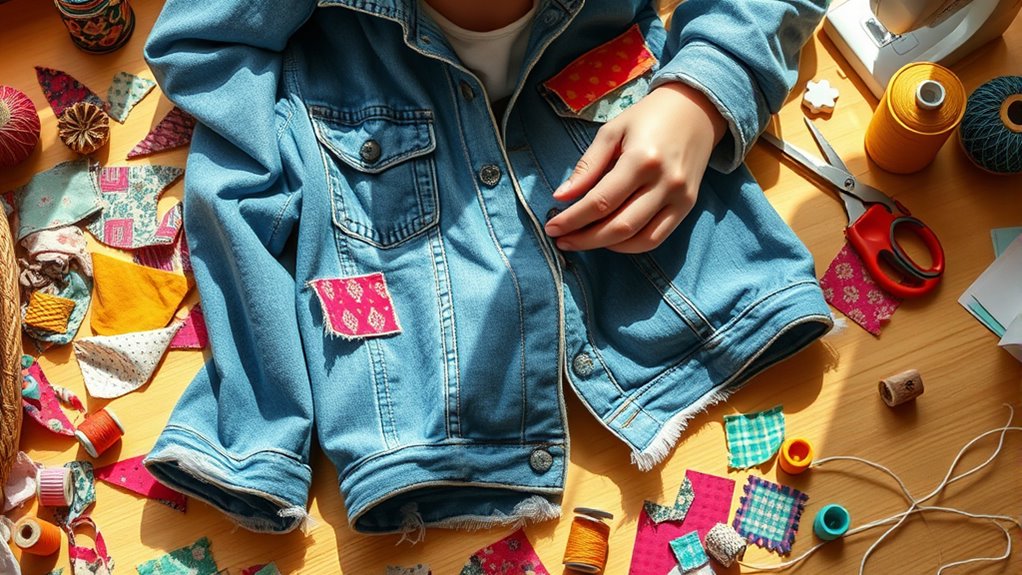

Upcycling and DIY fashion projects let you turn old clothes and accessories into one-of-a-kind pieces through techniques like fabric dyeing, patching, embroidery, and embellishments. You can create bold patterns or add personal touches that reflect your style, all while reducing waste and saving money. Experimenting with simple supplies like dye, patches, or paint makes it easy to refresh your wardrobe creatively. Keep exploring to discover more ideas for transforming your wardrobe sustainably and uniquely.
Key Takeaways
- Upcycling transforms old clothing into stylish new pieces through techniques like dyeing, patching, and embellishing.
- DIY fashion allows personalization and creativity, enabling unique accessories from fabric scraps and jewelry.
- Combining fabric dyeing with accessory customization creates bold, sustainable fashion statements while reducing waste.
- Basic supplies like dye, gloves, and fabric scraps make upcycling affordable and accessible for beginners.
- Developing DIY skills fosters individual style, promotes sustainability, and offers cost-effective wardrobe updates.
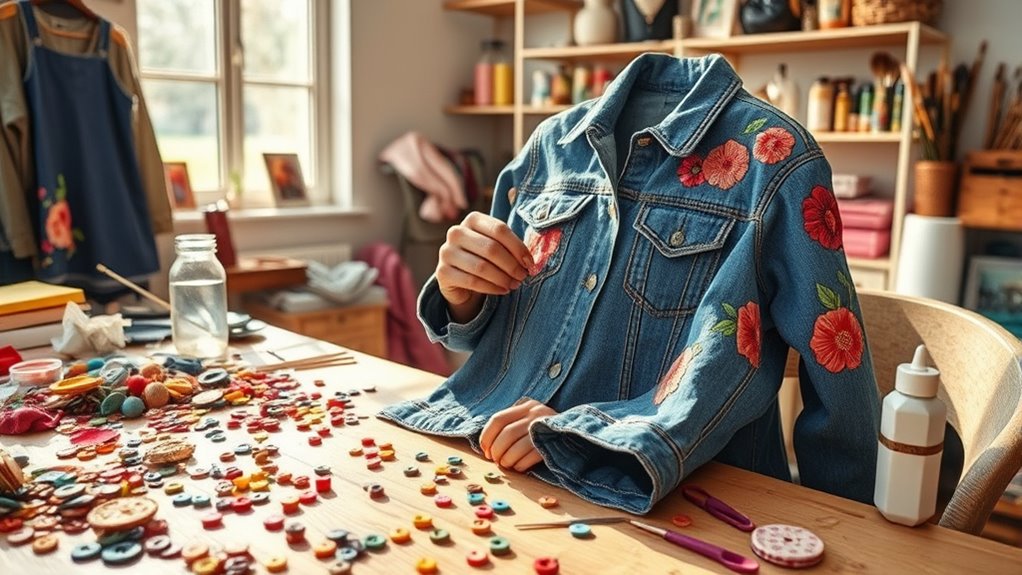
Ever wondered how you can turn old clothes into stylish, one-of-a-kind pieces? Upcycling offers a fantastic way to breathe new life into your wardrobe while expressing your creativity. One of the simplest and most impactful techniques is fabric dyeing. With just a few supplies—dye, water, gloves, and an old garment—you can transform faded or plain fabric into something vibrant and personalized. You might start by experimenting with different dyeing methods, like tie-dye, dip-dye, or even ice dye, to create unique patterns. Fabric dyeing allows you to match your clothing to your current style or mood, making each piece truly yours. Plus, it’s an affordable way to update your wardrobe without buying new clothes. As you master dyeing techniques, you’ll find endless ways to customize your wardrobe, giving old shirts, pants, or skirts a fresh, modern look. Exploring various dyeing methods can help you achieve a range of creative effects and enhance your upcycling projects.
Accessory customization is another key aspect of upcycling that lets you elevate your fashion game without spending much. Think about adding patches, embroidery, or fabric paint to your existing clothes to create eye-catching details. You can repurpose scraps of fabric or old jewelry to craft unique accessories that complement your outfits. For example, transforming an old belt into a statement piece with some fabric wraps or embellishments can instantly elevate a simple look. Customizing accessories also includes adding buttons, studs, or appliqués to give your garments a distinct personality. This approach not only makes your clothing stand out but also helps you develop a personal style that reflects your creativity. It’s a fun, hands-on process that encourages you to experiment and combine different textures and colors.
When you combine fabric dyeing with accessory customization, you can truly make your wardrobe one-of-a-kind. For instance, dye a plain tote bag in a bold color, then add hand-stitched patches or painted designs for a personalized touch. Or, dye a pair of old sneakers in a gradient or tie-dye pattern, then attach decorative pins or charms to make them unique. These DIY projects are not only satisfying but also environmentally friendly, reducing waste and encouraging sustainable fashion. Plus, they give you the freedom to express your individuality, showcasing how you can turn basic or outdated items into stylish statements. With a little effort and some creative thinking, your old clothes will become the highlight of your wardrobe, all while saving money and reducing your fashion footprint.
Frequently Asked Questions
What Are the Best Beginner Upcycling Projects for Fashion?
You should start with simple projects like transforming old jeans into trendy shorts or adding creative embellishments to plain T-shirts. Incorporate vintage fabrics to give your pieces unique flair, and experiment with creative embellishments like embroidery or patches to personalize your style. These projects are easy to do, fun, and allow you to develop your skills while creating eco-friendly fashion items that reflect your personality.
How Can I Source Sustainable Materials for DIY Fashion?
Sourcing sustainable materials starts with smart shopping and seeking out eco-friendly options. You can explore recycling techniques like repurposing old garments or shopping at thrift stores, which offer sustainable sourcing options. Additionally, look for brands committed to eco-conscious practices and materials. Connect with local artisans or online marketplaces specializing in recycled fabrics. By prioritizing recycled, biodegradable, and ethically sourced materials, you’ll create fashionable pieces that are eco-friendly and expressive.
What Tools Are Essential for Upcycling Clothing?
You’ll need a good sewing kit, including needles, thread, scissors, and pins, to easily alter or repair clothing. Fabric paints are essential for adding personalized designs or colors. These tools help you transform your garments creatively and efficiently. Make sure your sewing kit has a variety of needle sizes and colors, and choose fabric paints suitable for your fabric type. With these tools, you’ll confidently upcycle your clothing into unique, eco-friendly pieces.
How Do I Ensure DIY Fashion Projects Are Eco-Friendly?
You can make your DIY fashion projects more eco-friendly by focusing on reducing textile waste and avoiding harsh chemical dyes. Opt for natural dyes like beetroot or turmeric, and repurpose old garments instead of buying new ones. Use sustainable materials and minimal chemicals, and always seek eco-conscious alternatives. By doing so, you turn your creativity into a positive force for the environment, crafting stylish pieces that also honor the planet.
Can Upcycled Fashion Be Commercially Viable?
Yes, upcycled fashion can be commercially viable if you tap into market demand and develop strong branding strategies. You need to showcase the uniqueness and sustainability of your pieces to attract eco-conscious consumers. Focus on storytelling and quality to stand out. By understanding your target audience and effectively marketing your upcycled products, you can build a profitable brand while promoting eco-friendly fashion choices.
Conclusion
So, next time you toss out that old shirt or pair of jeans, think twice. Instead of adding to the landfill, you could turn them into something fabulous with just a little effort. Who knew that saving the planet could be as simple as a bit of DIY? Ironically, the most fashionable thing you can do might just be giving your old clothes a new life—proving that style and sustainability really do go hand in hand.