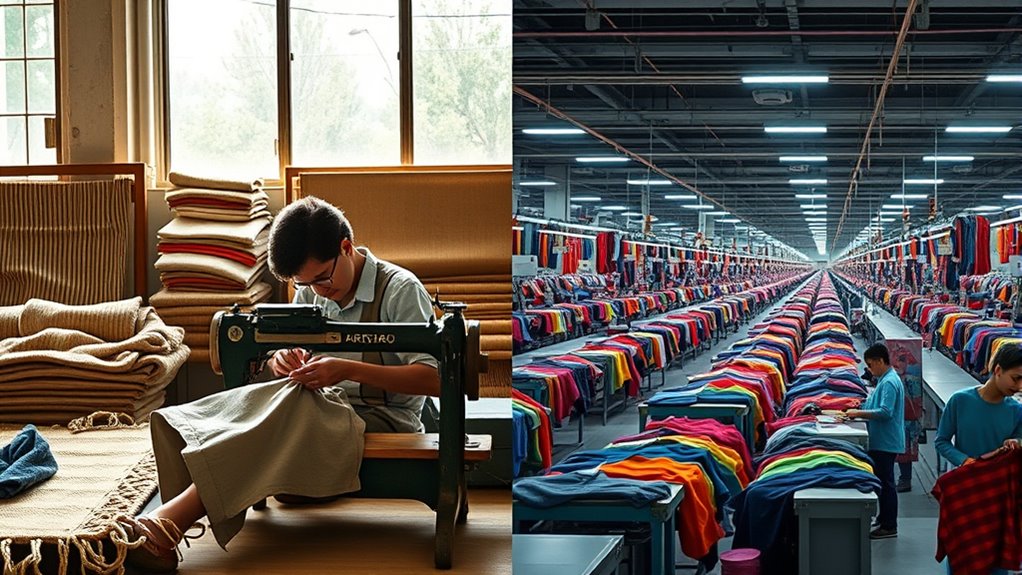

Slow fashion focuses on creating durable, eco-friendly clothing using sustainable materials and ethical labor practices, which means you’ll get pieces that last longer and are better for the planet. Fast fashion, on the other hand, offers trendy, inexpensive garments made quickly with synthetic fabrics that often harm the environment and neglect worker rights. By choosing slow fashion, you support a responsible industry and reduce waste—keep exploring to see how these styles truly compare.
Key Takeaways
- Slow fashion uses sustainable, durable materials like organic cotton and recycled fabrics, while fast fashion relies on cheap synthetic, non-biodegradable textiles.
- Slow fashion emphasizes ethical production with transparent supply chains and fair labor practices; fast fashion often neglects these aspects.
- Items in slow fashion are crafted for longevity, whereas fast fashion produces trend-driven pieces that quickly wear out, encouraging overconsumption.
- Fast fashion significantly contributes to environmental pollution through microplastic shedding and high waste levels; slow fashion minimizes ecological impact.
- Slow fashion promotes ethical, health-conscious choices, supporting fair wages and safe working conditions; fast fashion frequently overlooks these considerations.

In today’s fashion industry, the choice between slow fashion and fast fashion considerably impacts your wardrobe and the environment. When you opt for slow fashion, you’re likely prioritizing quality over quantity, which means selecting items made from sustainable materials. These materials, such as organic cotton, hemp, or recycled fabrics, are designed to minimize environmental harm and promote durability. By choosing sustainable materials, you reduce your reliance on fast-moving, resource-intensive production methods that often involve toxic chemicals and excessive water use. Slow fashion also emphasizes labor ethics, ensuring that workers are paid fair wages and work in safe conditions. This approach supports transparency, encouraging brands to be accountable for their supply chains and to avoid exploitative practices common in fast fashion. When you shop with these values in mind, you’re actively supporting a more ethical industry that values human rights and environmental sustainability. Recognizing the importance of health, especially mental well-being, can also influence your fashion choices, encouraging sustainable consumption over impulsive buying.
Fast fashion, on the other hand, capitalizes on quick turnaround times and low prices to satisfy constantly changing trends. It often relies on cheap, synthetic materials that can be produced rapidly and in large quantities, but these materials are typically less durable and contribute to environmental degradation. Fast fashion brands tend to overlook labor ethics, sometimes sourcing garments from factories with poor working conditions and minimal oversight. This approach allows them to keep costs down, but it comes at the expense of workers’ rights and environmental sustainability. As a consumer, when you buy fast fashion, you might get a trendy piece at a low price, but it’s likely to wear out quickly and contribute to a cycle of overconsumption and waste. Additionally, the environmental footprint of synthetic fabrics like polyester is significant, as they shed microplastics and are not biodegradable.
Choosing slow fashion means you’re making a conscious decision to invest in pieces that last longer, often crafted with care and attention to detail. This shift supports the use of sustainable materials and promotes ethical labor practices, which together create a more responsible and sustainable industry. While slow fashion items might come with a higher upfront cost, they ultimately save you money and resources in the long run, thanks to their durability. Fast fashion’s allure lies in its affordability and trendiness, but it’s important to recognize the hidden costs—environmental damage, unethical labor, and waste—that come with it. By understanding these differences, you can make more informed choices that align with your values and contribute to a healthier planet.
Frequently Asked Questions
How Does Slow Fashion Impact Local Economies?
You support local economies by choosing slow fashion, which often relies on local craftsmanship. This boosts small-scale artisans and keeps money within the community. As a result, it enhances economic resilience by diversifying income sources and reducing dependency on large corporations. Your conscious choices help sustain local skills and traditions, creating a more sustainable and resilient economy while fostering a sense of community pride and cultural preservation.
What Are the Environmental Benefits of Slow Fashion?
You’ll notice that slow fashion substantially benefits the environment by reducing textile waste and promoting eco-friendly materials. When you choose slow fashion, you help cut down on excess waste, as garments are made to last longer. Plus, brands often use sustainable fabrics that are gentler on the planet. This approach supports a healthier ecosystem, decreases pollution, and encourages responsible consumption, making fashion more eco-friendly for everyone.
Can Fast Fashion Be Sustainable?
You might think fast fashion can be sustainable, but it often isn’t. While some brands claim to use sustainable fabric and ethical production, their rapid turnover and mass production usually undermine these efforts. Real sustainability requires lasting quality and responsible practices. If you want to make a difference, choose brands that prioritize genuine ethical production and eco-friendly materials, rather than chasing quick trends that harm the environment.
How Do Consumer Behaviors Influence Fashion Trends?
Your consumer behaviors directly influence fashion trends by shaping demand for certain styles and practices. When you prioritize ethical sourcing and support brands committed to sustainability, you encourage the industry to adopt more responsible practices. Increased consumer awareness about the impact of fast fashion motivates brands to innovate and embrace slow fashion principles. Ultimately, your choices can drive positive change, making fashion more sustainable and ethically produced.
What Are the Challenges in Transitioning to Slow Fashion?
You’ll face challenges in shifting to slow fashion, like ensuring ethical manufacturing and improving supply chain transparency. It requires you to invest in sustainable materials, support fair labor practices, and verify suppliers’ claims. Changing consumer habits and higher costs can also be hurdles. However, embracing these practices helps build trust and promotes responsible fashion, making your brand more sustainable and aligned with ethical values.
Conclusion
Ultimately, choosing between slow and fast fashion is like picking between a steady, nourishing meal and a quick snack. Slow fashion nurtures your conscience and the planet, while fast fashion offers instant gratification at a cost. By making mindful choices, you become the captain steering your wardrobe’s ship. Remember, your clothing habits are the brushstrokes of your impact on the world—so choose wisely and paint a future you’re proud of.