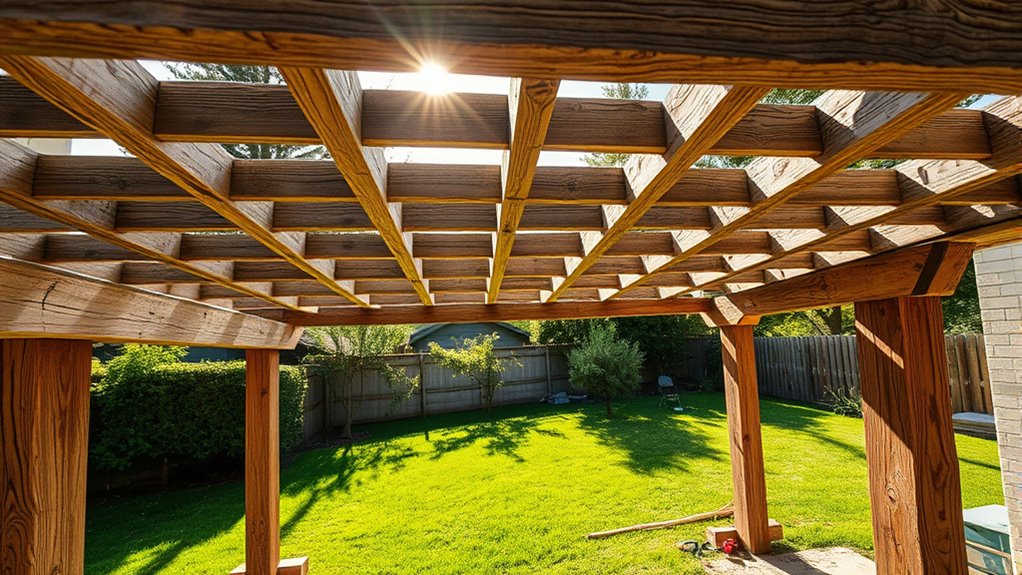

To build a DIY pergola for shade, start by selecting a sunny, obstruction-free site and measuring the area precisely. Gather necessary materials like wood or metal beams, concrete, and hardware. Dig holes for the posts and pour concrete for stability. Assemble the frame, attach cross beams, and plan for lighting or decoration options. Add outdoor furniture and plants to personalize your space. Keep reading to explore detailed steps and tips for creating your perfect outdoor retreat.

Turn your quiet moments into listening time
- Thousands of audiobooks, podcasts and originals
- Listen on your phone, tablet or Echo — also offline
- Cancel anytime
Key Takeaways
- Select a sunny, unobstructed location and measure the area accurately before beginning construction.
- Dig footing holes and pour concrete to securely set posts, ensuring stability and proper proportions.
- Assemble the frame with cross beams to create a shaded lattice, incorporating electrical access or solar lighting plans.
- Choose weather-resistant furniture and arrange it beneath the pergola for a functional outdoor relaxation space.
- Add decorative elements like climbing plants, lighting, and accessories to enhance aesthetics and ambiance.
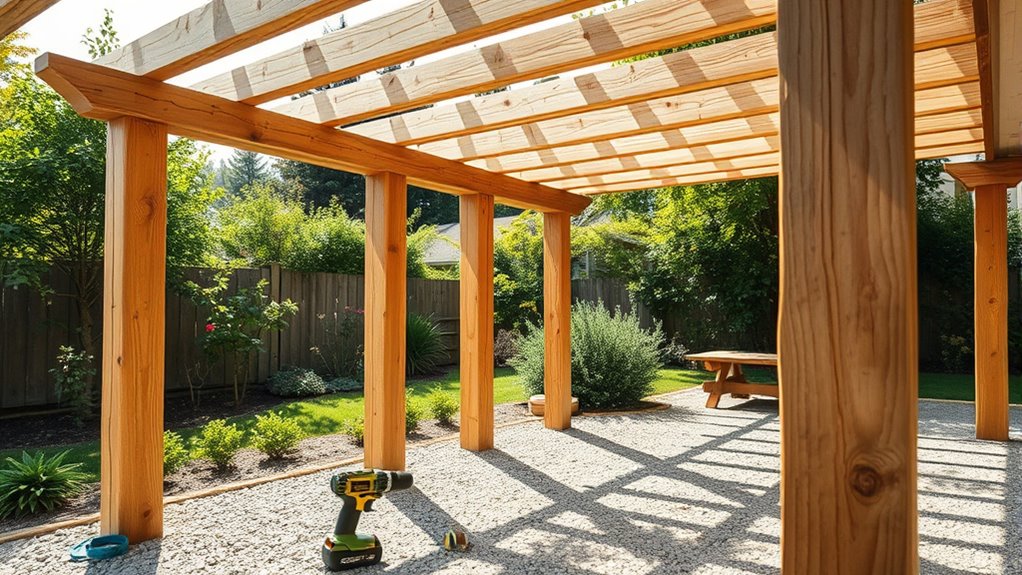
Ever thought about transforming your outdoor space with a beautiful pergola? Building one yourself not only adds charm but also creates a cozy spot for relaxing or entertaining. When planning your DIY pergola, consider how outdoor lighting can enhance its appeal. String lights or solar lanterns can be woven into the beams, giving your space a warm glow at night. This simple addition makes the area inviting after sunset and highlights the structure’s design. You might also think about incorporating garden furniture that complements your pergola. Comfortable chairs, a dining table, or even a swing can turn your outdoor area into a functional extension of your home. Choosing weather-resistant pieces ensures your setup lasts through seasons.
Transform your outdoor space with a DIY pergola, lighting, and weather-resistant garden furniture.
Start by selecting a suitable location where your pergola will get plenty of sunlight and isn’t obstructed by trees or structures. Once you have your spot, gather your materials—wood or metal beams, concrete for footings, and hardware. Measure carefully, so your structure is proportionate and stable. Dig your footing holes, pour concrete, and set your posts in place. As you assemble the frame, keep in mind how you’ll add outdoor lighting later; planning for electrical access or solar options is essential. Once the main structure is secure, attach the cross beams, creating the lattice that provides shade. You can customize the design by adding decorative elements or climbing plants for extra shade and beauty.
Adding outdoor lighting is straightforward if you plan ahead. String lights can be draped across the beams, or you can install solar-powered lanterns on posts or hooks. This not only elevates the ambiance but also increases safety around your new structure. When it comes to garden furniture, position pieces thoughtfully. A cozy seating area under your pergola invites relaxation, while a dining setup encourages outdoor meals with friends and family. Choosing furniture made from weatherproof materials ensures durability and ease of maintenance.
Additionally, understanding how to change gears on a gravel bike can be useful if you plan to include paths or trails near your outdoor space, making it easier to access your new pergola from different parts of your yard. Finally, think about the finishing touches. Incorporate potted plants, hanging baskets, or a retractable canopy to customize your pergola further. With some effort and planning, you’ll create a shaded retreat that’s perfect for outdoor living. Building your own pergola allows you to tailor every detail, from lighting to furniture, making your outdoor space uniquely yours. And with the right setup of outdoor lighting and garden furniture, you’ll enjoy your shaded oasis year-round.
Frequently Asked Questions
What Is the Ideal Location for a DIY Pergola?
You should place your DIY pergola in a spot that enhances your garden aesthetics and offers privacy. Find a location near your seating area or outdoor dining space to create a cozy, inviting atmosphere. Consider positioning it where it gets plenty of sunlight for climbing plants, and away from noisy streets to boost privacy. This way, your pergola becomes a beautiful focal point that improves your outdoor living space.
How Do I Choose the Best Materials for Durability?
To choose the best materials for durability, you should prioritize options with high material longevity, like cedar, redwood, or pressure-treated pine, which resist rot and pests. Consider maintenance requirements too; cedar and redwood need less upkeep, saving you time and effort. Avoid cheaper woods that warp or decay quickly. Opt for sturdy hardware and weather-resistant finishes to extend your pergola’s lifespan and guarantee it remains beautiful for years.
What Permits or Approvals Are Needed Before Building?
Before building your pergola, you gotta get the go-ahead! Check your local building codes to see what permits are required, and whether you need approval from your homeowner association. You might need a permit for structural safety or zoning compliance. Don’t forget to contact your local planning office or building department to avoid any issues. Planning proactively prevents problems and keeps your project perfect and permitted.
How Can I Ensure My Pergola Withstands Weather Conditions?
To guarantee your pergola withstands weather conditions, you should use weatherproofing techniques like sealing wood, applying waterproof paint, or using weather-resistant materials. Additionally, incorporate structural reinforcement by using sturdy posts, braces, and corrosion-resistant hardware. Regularly inspect and maintain your pergola, tightening any loose components and reapplying protective finishes as needed. This approach helps your pergola stay durable and safe through various weather challenges.
What Are Cost-Effective Options for Building a Pergola?
Are you looking to save money while creating a beautiful outdoor space? Consider budget alternatives like using recycled materials such as reclaimed wood or pallets, which can be both cost-effective and eco-friendly. You might also explore affordable options like pre-made kits or DIY plans that reduce labor costs. Why pay more when you can creatively repurpose materials and build a sturdy pergola without breaking the bank?
Conclusion
Building your own pergola isn’t just about creating shade; it’s about crafting a space where memories grow and life unfolds. With each beam you set, you’re building not just a structure, but a sanctuary for laughter, relaxation, and connection. So, grab your tools and take pride in this journey—you’re shaping more than wood; you’re shaping your perfect outdoor escape. Let your creativity soar and watch your dream space come alive beneath the open sky.
Products Worth Considering
As an affiliate, we earn on qualifying purchases.