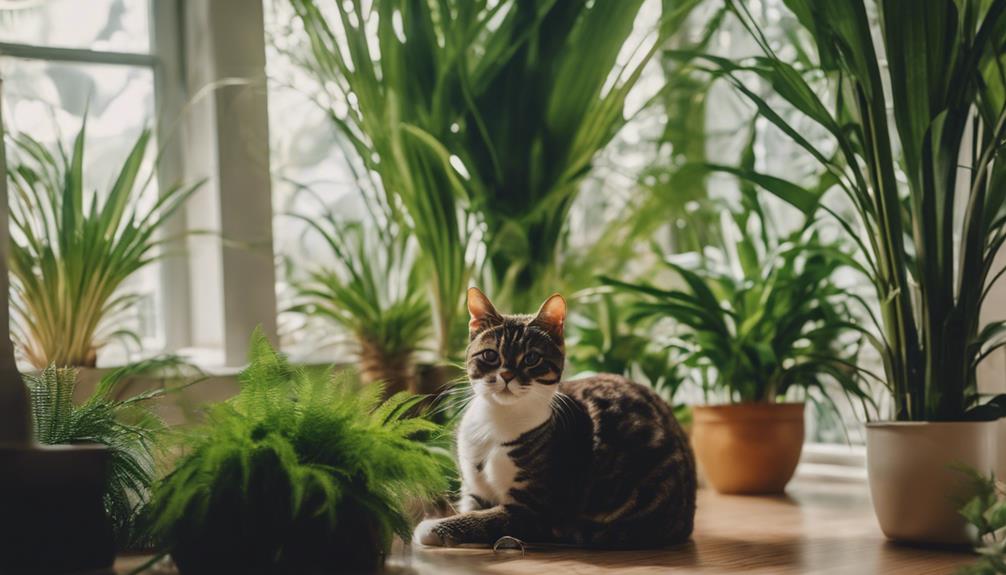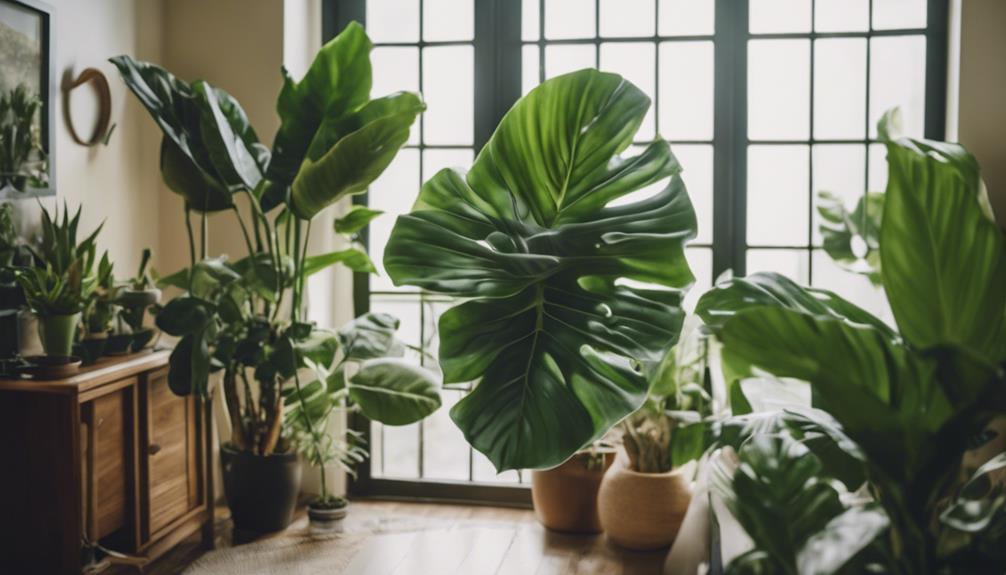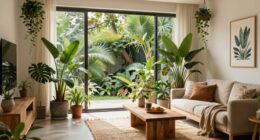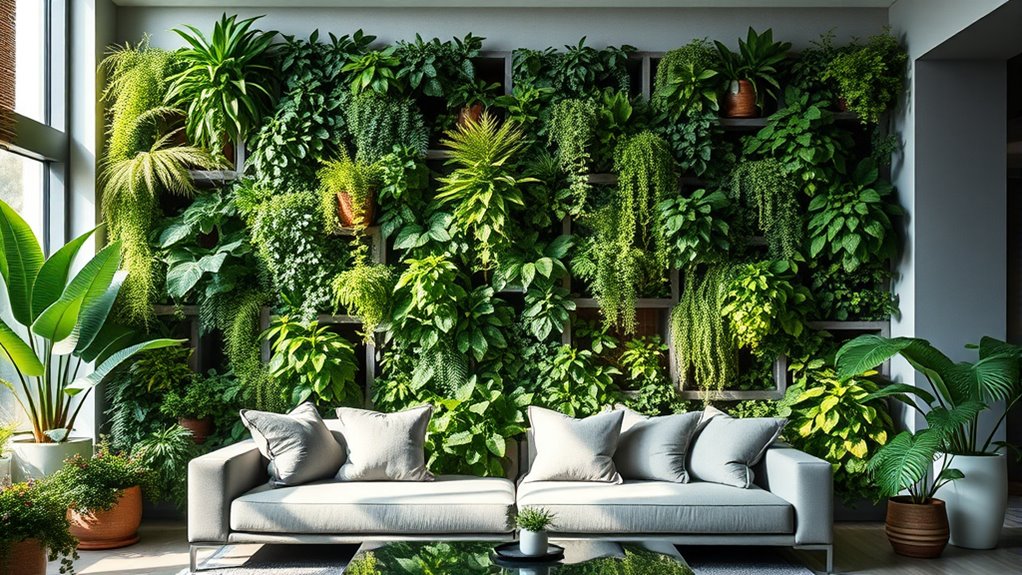

To design a stunning living wall in your home, consider selecting plants suited to your light conditions and environmental needs, such as pothos for low light or succulents for sunnier spots. Focus on a balanced mix of trailing and upright plants to create visual interest while ensuring maintenance is manageable. Prioritize non-toxic options if pets or children are around, and adjust humidity and temperature for ideal growth. Explore these tips further to craft your perfect living wall.
Key Takeaways
- Assess your indoor space’s light, temperature, and humidity to select suitable plants for a thriving living wall.
- Choose non-toxic, air-purifying plants like pothos, snake plants, or peace lilies for safety and improved indoor air quality.
- Mix trailing and upright plants to create visual interest and ensure diverse growth habits.
- Incorporate maintenance plans, including watering and pruning, tailored to each plant’s needs for longevity.
- Use modular panels or vertical planters designed for living walls to facilitate installation and ongoing care.
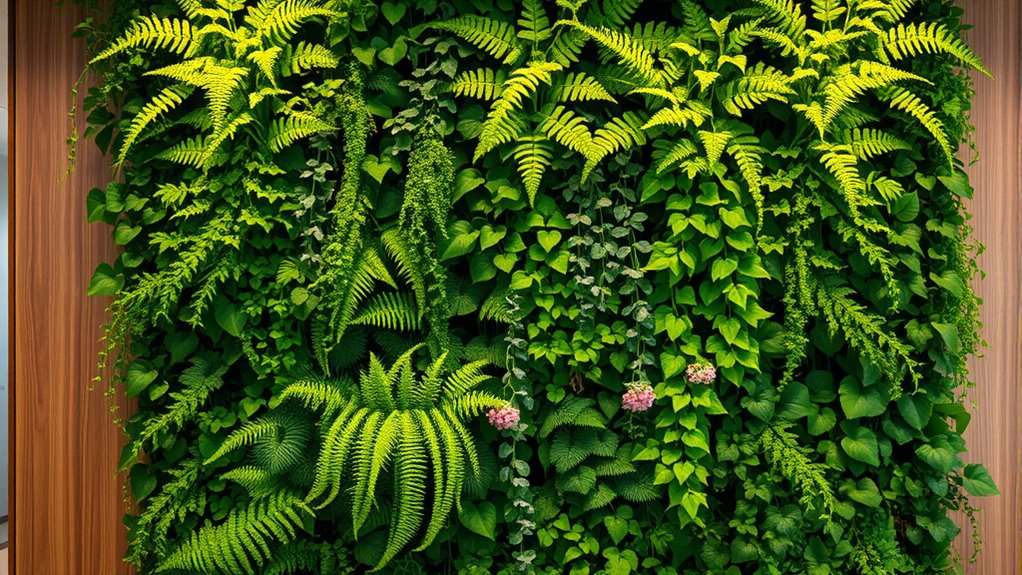
Creating a living wall transforms any space into a vibrant, natural sanctuary that boosts aesthetics and improves air quality. When designing your living wall, one of your first considerations should be indoor air. Plants are natural air purifiers, helping to filter toxins and increase oxygen levels inside your home. To maximize these benefits, you need to be strategic about plant selection. Choose varieties known for their air-cleaning properties, such as pothos, snake plants, or peace lilies. These plants are not only effective at improving indoor air, but they’re also relatively easy to care for, making them perfect for a living wall.
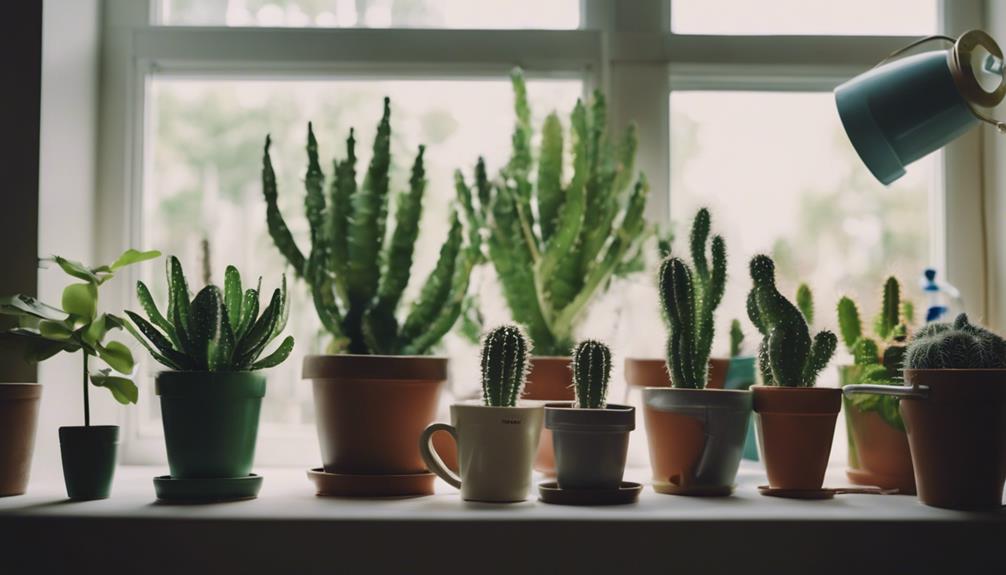
As you plan your plant selection, consider the light conditions in your space. Some plants thrive in low light, while others need direct sunlight to flourish. For shaded areas, opt for plants like pothos or philodendrons, which tolerate lower light levels. If your wall is near a window with ample sunlight, select sun-loving plants such as succulents or certain ferns. Mixing different types can add visual interest and ensure your wall remains lush and healthy across varying conditions.
Another key aspect of plant selection involves understanding the growth habits and maintenance needs of your chosen plants. For example, trailing plants like ivy or creeping fig can cascade beautifully down the wall, creating a dynamic display. Upright plants like snake plants or dracaenas add height and structure. Consider how much time you can dedicate to watering and pruning. Some plants require more frequent attention, while others are more forgiving. Selecting low-maintenance options can make your living wall a sustainable feature that stays vibrant over time.
Additionally, think about the environment’s humidity and temperature. Many indoor plants thrive in typical home conditions, but some, like certain ferns, prefer higher humidity. Using a moisture meter or observing your plants’ leaves can help you gauge their needs and make adjustments as necessary. Proper plant selection also involves choosing plants that are non-toxic, especially if you have pets or children.
Frequently Asked Questions
How Much Does a Living Wall Typically Cost to Install?
A living wall typically costs between $1,000 and $25,000 to install, depending on size, materials, and complexity. Cost factors include the wall’s dimensions, plant selection, irrigation systems, and labor. To stay within your budget, plan carefully and consider DIY options or scalable designs. Remember, investing in quality materials and professional installation can save you money and effort in the long run.
What Are the Best Plant Varieties for Indoor Living Walls?
You should choose indoor plant selection like pothos, snake plants, and ferns for your wall garden varieties. These plants thrive in indoor environments, require minimal maintenance, and add vibrant greenery to your space. Opt for varieties that are lightweight and adaptable to vertical growth, ensuring your living wall stays lush and healthy. Incorporating these options creates a stunning, sustainable indoor garden that enhances your home’s aesthetic.
How Often Should I Water and Maintain My Living Wall?
You should water your living wall once or twice a week, depending on the plants and indoor humidity. Check the soil moisture regularly, keeping it slightly damp but not soggy. Follow maintenance tips like trimming dead leaves and inspecting for pests to keep your wall healthy. Adjust your watering schedule based on plant needs and season changes, ensuring your wall stays vibrant and thriving.
Can I Install a Living Wall in a Low-Light Room?
A low-light room isn’t a plant graveyard—you can still create a stunning living wall. While natural light is ideal, you might consider artificial lighting or light enhancement options to keep your plants thriving. Opt for shade-tolerant varieties and mix in some artificial or natural light sources to boost growth. Remember, with the right care and lighting, your living wall can flourish even in the dimmest corners.
What Are Common Troubleshooting Issues With Living Walls?
You might face pest management issues or structural support problems with your living wall. To fix pests, regularly inspect plants and use natural deterrents. Guarantee your wall has proper structural support to prevent sagging or collapse, especially if you add heavier plants. Proper watering and drainage help avoid mold and root rot. Keep an eye on plant health, and address issues early to maintain a thriving, safe living wall.
Conclusion
Creating a living wall transforms your home into a lush oasis, turning walls into vibrant canvases of nature. With a little planning and care, your green masterpiece will breathe life and serenity into your space, much like a heartbeat echoing energy. Think of it as inviting a piece of the outdoors inside, where every leaf and bloom whispers the promise of growth and renewal. Embrace your green thumb, and let your living wall flourish like a wild garden of your own making.