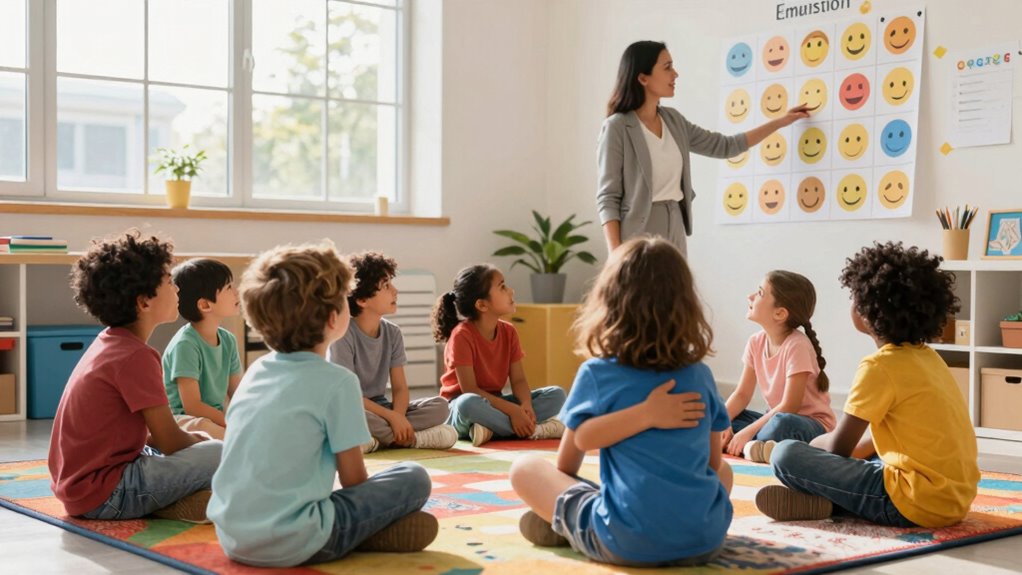

In everyday learning, you play a key role in fostering emotional literacy, which enhances students’ social, emotional, and academic growth. By integrating activities like reflection and emotional recognition into lessons, you help students develop empathy, emotional regulation, and better relationships. Modeling emotional awareness yourself creates a supportive environment where feelings are understood and respected. If you keep exploring, you’ll discover more ways to make emotional literacy a natural part of every classroom moment.

Turn your quiet moments into listening time
- Thousands of audiobooks, podcasts and originals
- Listen on your phone, tablet or Echo — also offline
- Cancel anytime
Key Takeaways
- Emotional literacy enhances students’ social, emotional, and academic success by integrating feelings into daily learning routines.
- Recognizing emotions in stories and daily interactions promotes empathy and emotional understanding among students.
- Teachers modeling emotional skills create a safe environment that encourages students to express and regulate their feelings.
- Incorporating reflection and mindfulness practices helps students develop emotional awareness and resilience consistently.
- Embedding emotional literacy fosters respectful, inclusive classrooms that support lifelong emotional health and interpersonal skills.
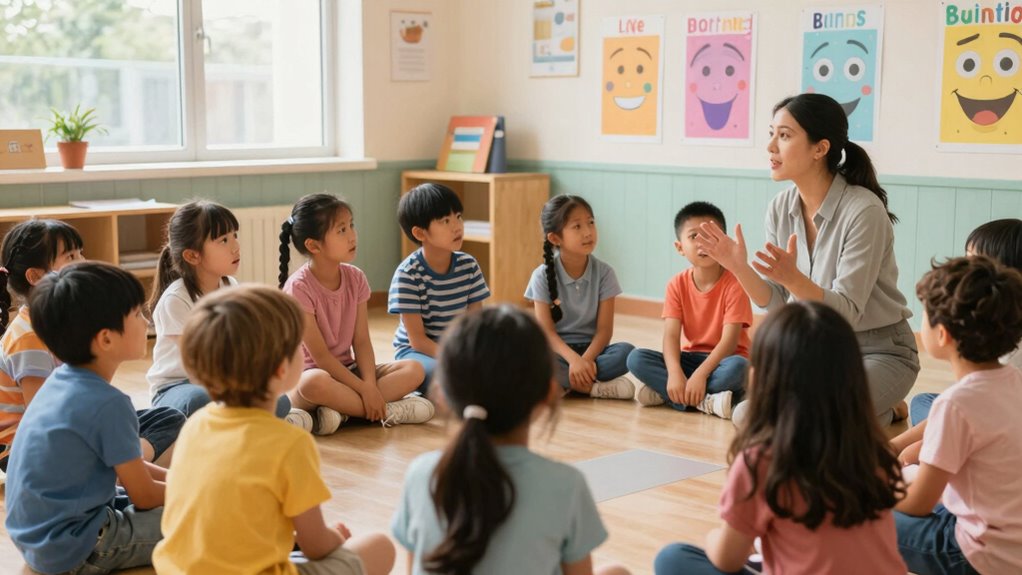
Have you ever wondered why some students excel not just academically but also socially and emotionally? It’s often because they develop strong emotional intelligence, which helps them navigate relationships, manage their feelings, and understand others better. Incorporating emotional literacy into everyday learning isn’t just a nice addition; it’s essential for well-rounded development. When you focus on emotional intelligence, you’re equipping students with tools that extend beyond textbooks—skills that influence their entire lives.
One of the core aspects of emotional literacy is empathy development. When you teach students to recognize and understand their own emotions, they become more attuned to the feelings of others. This awareness fosters genuine empathy, allowing them to connect on a deeper level. Instead of just knowing facts or solving problems, they learn to listen actively, validate others’ experiences, and respond thoughtfully. These skills create a classroom environment where respect and understanding thrive, making learning more engaging and inclusive.
Incorporating emotional literacy into daily lessons can be straightforward and impactful. For instance, starting the day with a brief reflection on feelings or discussing how characters in stories might feel encourages students to consider emotions as part of the learning process. When students recognize their own emotional states, they can better regulate reactions, reducing conflicts and promoting a calmer, more focused classroom. This emotional regulation is a key component of emotional intelligence that benefits academic performance and social interactions alike. Recognizing the importance of emotional regulation strategies can further support students in managing their reactions effectively. Additionally, incorporating mindfulness practices can help students become more aware of their emotional responses in real time. Understanding the role of mental health in emotional literacy can also foster a more supportive classroom atmosphere.
You also play a vital role in modeling these skills. When you demonstrate empathy and emotional awareness, students see firsthand how to handle their feelings constructively. Sharing your own experiences or emotions, in an appropriate way, creates a safe space for students to open up and develop their emotional vocabulary. Over time, this nurtures a classroom culture where emotions are acknowledged and understood, not ignored or dismissed. Additionally, incorporating elements like landscaping to create a welcoming environment can further support emotional well-being and comfort in the learning space. Creating such calming spaces can also serve to reinforce the importance of emotional well-being within the educational environment.
In the end, integrating emotional literacy into everyday learning isn’t just about making students more empathetic or emotionally intelligent; it’s about preparing them for real life. When they learn to recognize, understand, and manage their feelings, they build resilience and confidence. They become better communicators and more compassionate individuals. Your role in fostering this environment helps students develop these vital skills naturally, making emotional literacy an indispensable part of their educational journey.
Frequently Asked Questions
How Can Parents Support Emotional Literacy at Home?
You can support emotional literacy at home by actively practicing emotion recognition with your child, helping them identify feelings in themselves and others. Encourage empathy building through open conversations about emotions, listening attentively, and sharing your own feelings. Use stories and role-playing to strengthen understanding. By consistently engaging in these activities, you help your child develop essential emotional skills, fostering better relationships and emotional resilience over time.
What Are Common Challenges in Teaching Emotional Literacy?
You might face challenges like limited emotional awareness or difficulty helping children understand their feelings. Developing empathy can be tricky if kids struggle to see others’ perspectives, which hampers emotional growth. You’ll need patience and consistent practice to overcome these hurdles, encouraging your child to recognize emotions and build empathy. Fostering a safe space where feelings are openly discussed helps improve emotional literacy and supports healthier social interactions.
How Does Emotional Literacy Impact Academic Performance?
When you nurture emotional literacy, you boost academic performance by strengthening emotional regulation and social skills. These skills help you manage stress, stay focused, and navigate classroom interactions smoothly. As you become more emotionally aware, you’re better equipped to handle challenges calmly and collaborate effectively. This emotional foundation creates a positive learning environment, allowing you to excel academically while building essential life skills that support your overall success.
Are There Age-Specific Strategies for Developing Emotional Literacy?
Yes, there are age-appropriate strategies for developing emotional literacy that align with emotional development stages. For young children, use simple language and stories to identify feelings. As they grow, encourage reflection through journaling or discussions. For adolescents, promote empathy and self-awareness with real-world scenarios. Tailoring activities to their developmental level helps deepen emotional understanding, making it easier for them to navigate relationships and manage emotions effectively.
How Is Emotional Literacy Assessed in Educational Settings?
You assess emotional literacy in educational settings through emotional assessment tools and literacy measurement techniques. These include observing students’ ability to recognize, understand, and express feelings, alongside self-report questionnaires and teacher evaluations. You can also use scenario-based assessments to gauge emotional responses. Regularly analyzing these results helps you track progress, identify areas needing support, and tailor your teaching strategies to foster stronger emotional skills.
Conclusion
By embracing emotional literacy as part of daily learning, you’re not just teaching facts—you’re nurturing empathy, resilience, and self-awareness. Research suggests that students who develop strong emotional skills perform better academically and socially. So, consider this: could integrating emotional literacy into your routine truly transform the classroom experience? The evidence points to yes, making it clear that understanding and expressing feelings isn’t just a soft skill—it’s essential for lifelong success.
Products Worth Considering
emotional literacy teaching resources
As an affiliate, we earn on qualifying purchases.
As an affiliate, we earn on qualifying purchases.