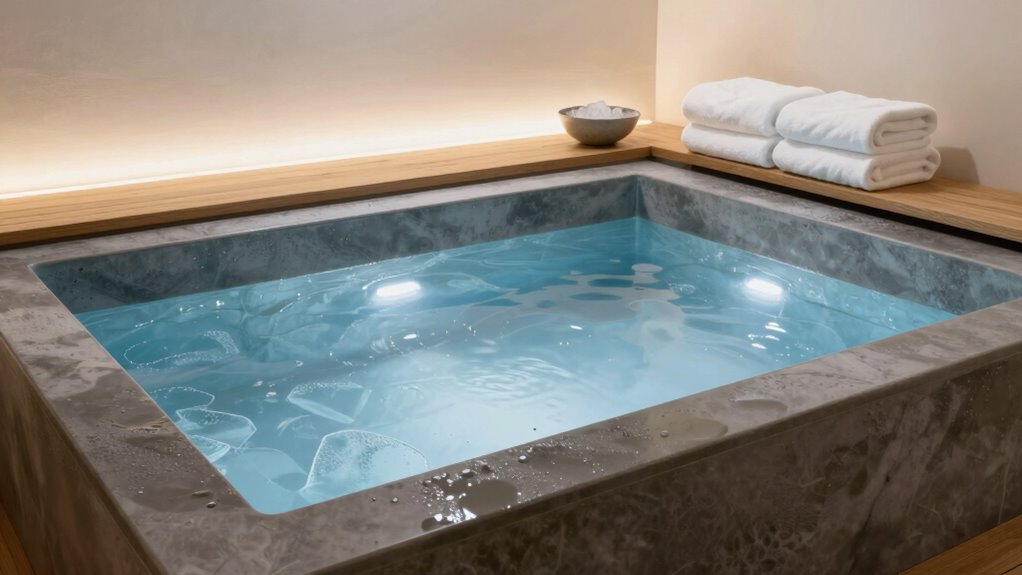

To start a cold plunge at home, use a sturdy, insulated container and fill it with cold water, gradually adding ice until temperatures reach 50-59°F (10-15°C). Begin with short sessions of 30 seconds to a minute, listening to your body and stopping if you feel dizzy or numb. Focus on deep breathing to manage shock and build resilience. Consistency and patience are key, and if you keep going, you’ll discover how to safely maximize its benefits.

Turn your quiet moments into listening time
- Thousands of audiobooks, podcasts and originals
- Listen on your phone, tablet or Echo — also offline
- Cancel anytime
Key Takeaways
- Ensure water temperature stays between 50-59°F (10-15°C) for safety and effectiveness.
- Start with short sessions (30 seconds to 1 minute) and gradually increase duration.
- Use a sturdy, insulated container and add ice gradually to control cold exposure.
- Listen to your body; stop if you feel dizzy, numb, or overly uncomfortable.
- Incorporate deep breathing to manage shock, build resilience, and stay calm during immersion.
Taking a cold plunge at home is an increasingly popular way to boost your recovery, improve circulation, and enhance mental clarity. If you’re new to this practice, it’s essential to understand that cold therapy isn’t just about submerging yourself in icy water; it’s a mental and physical challenge that can build resilience over time. Starting with this understanding will help you approach cold plunges safely and effectively. Ice therapy, when done correctly, helps reduce inflammation, ease muscle soreness, and speed up recovery, especially after intense workouts. However, it’s equally important to recognize that this practice also trains your mind to handle discomfort, which can markedly improve your mental resilience. The mental toughness you develop from enduring cold exposure can translate into better stress management and emotional stability in daily life.
Before you begin, make sure your setup is safe and accessible. You don’t need a fancy tub—any sturdy, well-insulated container that fits your body will do. Fill it with cold water and add ice gradually, monitoring the temperature to stay within a safe range, typically between 50-59°F (10-15°C). Start with shorter durations, around 30 seconds to a minute, and gradually increase as your body adapts. Remember, the goal isn’t to endure unbearable cold but to create a controlled discomfort that your body can handle and learn from. Consistency is key; regular cold plunges will help your body get used to the stress and build mental resilience over time. Gradual adaptation is essential for safe and effective cold therapy. Additionally, incorporating proper safety measures ensures that your cold plunging practice remains risk-free and beneficial. Developing an understanding of cold therapy principles can further optimize your experience and outcomes.
It’s crucial to listen to your body during each session. If you start feeling dizzy, numb, or overly uncomfortable, it’s best to get out immediately. Hydrate well beforehand and consider warming up gradually afterward to restore your core temperature. Incorporate deep breathing techniques to manage the initial shock and stay calm through the process. This practice of controlled breathing not only makes cold therapy more tolerable but also enhances your mental resilience, helping you face other stressful situations with greater ease. Additionally, understanding the importance of safe practices ensures that your cold plunging experience remains beneficial and injury-free. Keep in mind that patience is essential—your body and mind need time to adapt. With each session, you’ll likely notice improvements in your recovery times, circulation, and mental clarity. Over time, these cold plunges can become a powerful tool for fostering discipline, focus, and resilience, making your daily routine stronger both physically and mentally.
Frequently Asked Questions
How Long Should Beginners Stay in a Cold Plunge?
As a beginner, you should start with 1-3 minutes in the cold plunge to prevent cold shock and build mental resilience gradually. Listen to your body and avoid pushing too hard initially. Staying too long can increase risks, so increase your time slowly as you become more comfortable. Short, consistent sessions help your body adapt without overwhelming you, promoting both mental resilience and safety.
Are There Any Health Conditions That Prevent Cold Plunging?
If you have heart conditions or circulatory issues, cold plunging might not be safe. Studies show that rapid temperature changes can trigger serious complications in these individuals. You could experience increased blood pressure or irregular heart rhythms. Always consult your doctor before trying cold plunges, especially if you have underlying health problems. Your safety comes first, so don’t ignore medical advice when considering this invigorating but potentially risky activity.
What Temperature Is Safest for a Home Cold Plunge?
The safest temperature for a home cold plunge is around 50-59°F (10-15°C). You should focus on temperature regulation to avoid hypothermia or shock. Always follow safety precautions, such as limiting your time in the water and consulting with a healthcare professional if you have health concerns. Monitoring the water temperature consistently helps guarantee you stay within a safe range, making your cold plunge both effective and safe.
How Often Should I Use a Cold Plunge Weekly?
Think of your cold plunge routine as a mental gym session—regular yet mindful. You should aim for 2-3 times weekly, allowing your body to adapt without risking cold shock. Consistent exposure helps build mental resilience and reduces shock responses over time. Listen to your body, and don’t push too hard initially. Balance your plunge schedule with adequate recovery, and you’ll harness the full benefits safely and effectively.
Can Cold Plunging Help With Muscle Recovery?
Cold plunging can definitely help with muscle recovery by reducing inflammation and soreness. The cold shock constricts blood vessels, which helps flush out metabolic waste and speeds up healing. Plus, regular cold plunges may boost your immune system, making you less prone to illness. Just start gradually, listen to your body, and incorporate cold plunges into your routine to experience these benefits safely and effectively.
Conclusion
So, there you have it—your icy ticket to becoming a superhero, or at least impressing your friends with your “extreme” bathing skills. Just remember, cold plunges aren’t for the faint-hearted or those who hate a good shock to their system. Plunge into wisely, embrace the shivers, and maybe—just maybe—you’ll emerge feeling invincible. Or at least, slightly braver. Either way, happy frozen adventuring!
Products Worth Considering
As an affiliate, we earn on qualifying purchases.