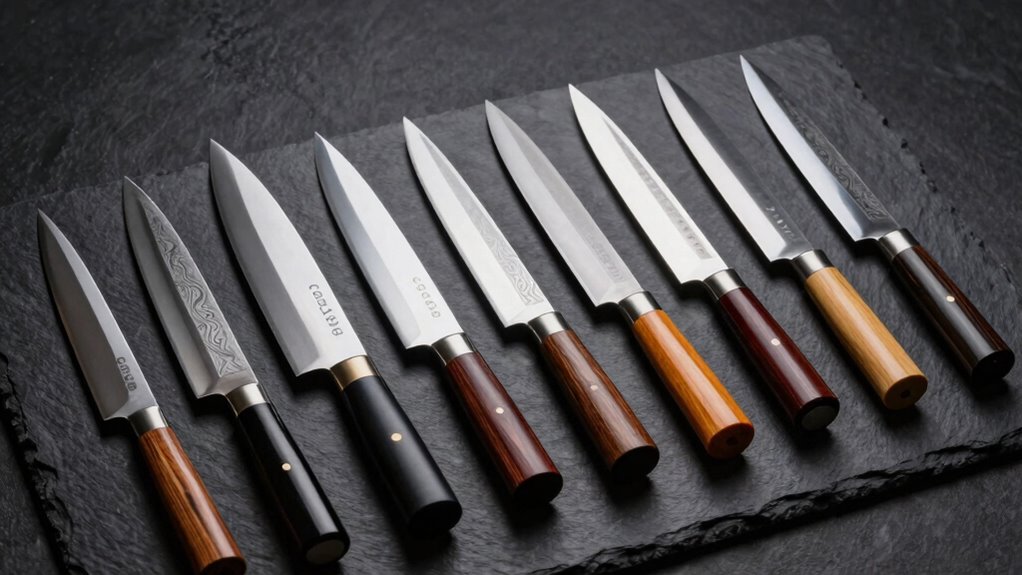

Traditional Japanese knives range from versatile gyutos to specialist blades, and the best choice depends on your cooking habits, sharpening routine, and comfort with upkeep. My best overall pick is the TONMA TCK-1 Gyuto, which pairs Japanese manufacture with an everyday chef-knife shape. The Tojiro Professional VG10 is a strong alternative for cooks who want a straightforward workhorse, while the Yoshihiro Blue Steel #2 Kiritsuke suits experienced users seeking a more specialized blade. The main tradeoff is between easy-care stainless steel and the sharper feel and greater maintenance demands of high-carbon steel. Read on for how all 15 options compare and which one fits your kitchen.

Turn your quiet moments into listening time
- Thousands of audiobooks, podcasts and originals
- Listen on your phone, tablet or Echo — also offline
- Cancel anytime
Key Takeaways
Japanese manufacture and blade shape matter more than a Damascus pattern: the TONMA and Tojiro offer practical gyuto forms, while patterned finishes alone do not establish traditional construction.
The TONMA TCK-1 is the most balanced everyday pick: its 8.2-inch gyuto format suits varied prep better than the specialist kiritsuke, nakiri, or compact Matsato.
Sets trade individual fit for coverage: the imarku five-piece and Mitsumoto Sakari four-piece options provide multiple knives, while a single well-chosen gyuto may serve more cooks better.
High-carbon Blue Steel #2 brings more upkeep: the Yoshihiro kiritsuke is aimed at attentive cooks who can manage reactivity and a demanding blade shape.
Some products serve different meanings of “Japanese knife”: the Higo no Kami is a folding pocket knife, and the HexClad nakiri and Western-style sets should be judged by their own kitchen roles rather than grouped with traditional Japanese-made gyutos.
| imarku 5-Piece Japanese Kitchen Knife Set with Pakkawood Handles |  | Best Multi-Knife Starter Set | Pieces: 5 knives | Included knives: 8-inch chef, 7-inch santoku, 8-inch bread, 6.8-inch boning, 3.5-inch paring | Blade material: High-carbon stainless steel; boning knife uses 1.4116 steel | VIEW ON AMAZON | See Our Full Breakdown |
| HOSHANHO 8-Inch Damascus Chef Knife with Olive Wood Handle |  | Best Damascus Gyuto-Style Pick | Blade length: 8 inches | Blade steel: 10Cr15CoMoV core with 67-layer Damascus construction | Hardness: 62 HRC | VIEW ON AMAZON | See Our Full Breakdown |
| Japanese Kitchen Knife Set of 5 with Wooden Box Case by Takaaki Nakamura |  | Best Traditional Specialist Set | Pieces: 5 knives | Included knife types: Sushi/sashimi, nakiri, chef’s, petty, and small deba | Material: Stainless steel | VIEW ON AMAZON | See Our Full Breakdown |
| Mitsumoto Sakari 9-Inch Japanese Kiritsuke Knife |  | Best for Long Slicing and Push Cuts | Blade length: 9 inches | Blade material: Three-layer 9Cr18MoV high-carbon stainless steel | Hardness: 60±2 HRC | VIEW ON AMAZON | See Our Full Breakdown |
| TONMA TCK-1 Chef Knife, 8.2″ Japanese Gyuto, Made in Japan |  | Best Made-in-Japan Everyday Gyuto | Model: TCK-1 | Blade length: 8.2 inches | Steel: AUS-8 stainless steel | VIEW ON AMAZON | See Our Full Breakdown |
| FIVE COWS 10-Piece Japanese Kitchen Knife Set – Star Collection, Damascus Pattern, 440A Stainless Steel, Rosewood |  | Best for Building a Full Knife Set | Pieces: 10 | Blade material: High-carbon 440A stainless steel | Hardness: 54+ Rockwell | VIEW ON AMAZON | See Our Full Breakdown |
| Sunnecko 8 Inch Japanese Damascus Chef Knife – Ultra Sharp VG10 Steel |  | Best for a Fine Slicing Edge | Blade length: 8 inches | Blade material: 67-layer Damascus steel with VG10 core | Edge angle: 10–12° | VIEW ON AMAZON | See Our Full Breakdown |
| imarku 7-Inch Santoku Knife, Japanese High Carbon Stainless Steel |  | Best for Everyday Vegetable Prep | Blade length: 7 inches | Blade material: Japanese high-carbon stainless steel | Blade thickness: 2.5 mm | VIEW ON AMAZON | See Our Full Breakdown |
| Yoshihiro Kurouchi High Carbon Blue Steel #2 Stainless Clad Kiritsuke Japanese Knife, 8.25″ (210mm), Ebony Handle with Saya |  | Best Traditional Japanese Craft Pick | Blade length: 8.25 inches (210 mm) | Core steel: Blue Steel #2 high-carbon steel | Cladding: Two layers of Kurouchi stainless steel | VIEW ON AMAZON | See Our Full Breakdown |
| HexClad 6.5-Inch Japanese Damascus Stainless Steel Nakiri Knife |  | Best for Produce-Focused Chopping | Blade length: 7 inches | Overall knife length: 12.3 inches | Handle length: 4.4 inches | VIEW ON AMAZON | See Our Full Breakdown |
| Tojiro Professional Chef Knife, 8.2 in (21 cm), VG10 |  | Best Japanese-Made Gyuto Pick | Blade length: 8.2 in (21 cm) | Steel: VG10 | Origin: Japan | VIEW ON AMAZON | See Our Full Breakdown |
| MITSUMOTO SAKARI 4-Piece Japanese Chef Knife Set |  | Best Traditional-Style Task Set | Model: MS-2680 | Knife count: 4 | Included knives: Gyuto, Santoku, Nakiri, and paring knife | VIEW ON AMAZON | See Our Full Breakdown |
| TIVOLI 3-Piece VG10 Damascus Kitchen Knife Set |  | Best for a Damascus-Style Trio | Pieces: 3 | Included knives: Chef knife, kiritsuke knife, and utility knife | Blade core: VG10 high-carbon steel | VIEW ON AMAZON | See Our Full Breakdown |
| Matsato Japanese Stainless Steel Chef Knife, 6.3-Inch Blade |  | Best Compact Everyday Chef Knife | Blade material: Japanese stainless steel | Blade length: 6.3 in (16 cm) | Care: Hand wash and dry | VIEW ON AMAZON | See Our Full Breakdown |
| Higo no Kami 10 Folding Pocket Knife by Nagao Seisakusho, Brass Finish | 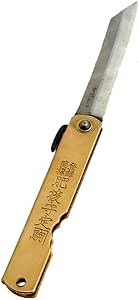 | Best Traditional Pocket Knife | Blade length: Approximately 3 in | Handle length: Approximately 4 in | Blade steel: Warikomi steel | VIEW ON AMAZON | See Our Full Breakdown |
| traditional japanese knife | Blade length | Handle material | Hardness |
|---|---|---|---|
| imarku 5-Piece Japanese Kitche | — | FSC-certified Pakkawood | 56±2 HRC |
| HOSHANHO 8-Inch Damascus Chef | 8 inches | Olive wood | 62 HRC |
| Japanese Kitchen Knife Set of | — | — | Not specified |
| Mitsumoto Sakari 9-Inch Japane | 9 inches | Rosewood | 60±2 HRC |
| TONMA TCK-1 Chef Knife | 8.2 inches | — | 59±1 HRC |
| FIVE COWS 10-Piece Japanese Ki | — | — | 54+ Rockwell |
| Sunnecko 8 Inch Japanese Damas | 8 inches | ABS with decorative rivet | — |
| imarku 7-Inch Santoku Knife | 7 inches | Pakkawood | — |
| Yoshihiro Kurouchi High Carbon | 8.25 inches (210 mm) | — | HRC 62–63 |
| HexClad 6.5-Inch Japanese Dama | 7 inches | Pakkawood | — |
| Tojiro Professional Chef Knife | 8.2 in (21 cm) | — | — |
| MITSUMOTO SAKARI 4-Piece Japan | — | Rosewood | HRC 58±2 |
| TIVOLI 3-Piece VG10 Damascus K | — | G10 carbon fiber | — |
| Matsato Japanese Stainless Ste | 6.3 in (16 cm) | — | — |
| Higo no Kami 10 Folding Pocket | Approximately 3 in | Brass | — |
More Details on Our Top Picks
imarku 5-Piece Japanese Kitchen Knife Set with Pakkawood Handles
For cooks who want several Japanese-style blade shapes at once, this five-knife set covers everyday prep with a chef knife, santoku, bread knife, boning knife, and paring knife. That range makes it more adaptable than the single-blade HOSHANHO Damascus Chef Knife, though the imarku set provides less detail about steel and blade performance. Its 15°-per-side edges and full-tang Pakkawood handles point to a familiar, balanced feel, while the 56±2 HRC hardness is less specialized than the harder HOSHANHO blade. I’d pick it for a kitchen building out its basic knife options, not for someone seeking a traditional Japanese single-purpose set such as the Takaaki Nakamura collection. The tradeoffs are practical: there’s no storage block, and the knives need hand washing and prompt drying.
Pros:- Five different knife types cover a broad range of everyday prep
- 15° edge per side supports a relatively acute cutting profile
- Full-tang Pakkawood handles are designed for balanced control
Cons:- No knife block or other dedicated storage is included
- Hand washing and drying add care after each use
- The 56±2 HRC specification is less hard than the HOSHANHO chef knife’s 62 HRC
Best for: Home cooks starting with multiple knife shapes for routine vegetable, bread, meat, and small-detail prep
Not ideal for: Cooks seeking a traditional Japanese assortment with named specialist blades, or anyone who wants a storage block included
- Pieces:5 knives
- Included knives:8-inch chef, 7-inch santoku, 8-inch bread, 6.8-inch boning, 3.5-inch paring
- Blade material:High-carbon stainless steel; boning knife uses 1.4116 steel
- Handle material:FSC-certified Pakkawood
- Blade angle:15° per side
- Hardness:56±2 HRC
- Storage:No knife block included
- Care:Hand wash with warm water and dry after use
Our verdict“Choose this set if you need several useful blade shapes in one purchase and can provide your own storage.”
HOSHANHO 8-Inch Damascus Chef Knife with Olive Wood Handle
This is the lineup’s focused choice for cooks who want one hard, keen-edged chef knife rather than a collection. The 10Cr15CoMoV core, 67-layer Damascus construction, and 62 HRC hardness distinguish it from the more approachable AUS-8 TONMA TCK-1, while its 15° edge per side suits precise slicing and mincing. That harder blade can hold a fine edge, but it calls for more careful technique: avoid bones and hard cutting surfaces to reduce chipping risk. The olive wood handle also asks for more care than the TONMA’s Pakkawood. Unlike the Takaaki Nakamura set, this is not a specialist assortment for sashimi, vegetables, and small tasks. I’d choose it for a cook comfortable maintaining a single premium-feeling blade, not for rough, all-purpose use.
Pros:- 67-layer Damascus construction surrounds a 10Cr15CoMoV steel core
- 62 HRC hardness and a 15°-per-side edge support fine, precise cuts
- Olive wood handle offers a natural material and ergonomic shape
Cons:- Hard blade can chip if used on bones or hard surfaces
- Olive wood handle needs more care than the TONMA TCK-1’s Pakkawood
- Single chef knife offers less task-specific range than the Takaaki Nakamura five-knife set
Best for: Experienced home cooks who want a single sharp chef knife for slicing and mincing and will use careful cutting technique
Not ideal for: Beginners who may twist the blade or cut through bones, and cooks who prefer low-maintenance synthetic handles
- Blade length:8 inches
- Blade steel:10Cr15CoMoV core with 67-layer Damascus construction
- Hardness:62 HRC
- Edge angle:15° per side
- Handle material:Olive wood
- Model:HSHPCS-2022-001
- Included components:8-inch chef knife and gift box
Our verdict“Pick this chef knife if edge sharpness and Damascus construction matter more to you than a forgiving blade or a full set.”
Japanese Kitchen Knife Set of 5 with Wooden Box Case by Takaaki Nakamura
Among these five picks, this set makes the clearest case for traditional Japanese task-specific knife shapes: it includes a sushi/sashimi knife, nakiri, chef’s knife, petty, and small deba. That mix gives it a more specialized identity than the imarku set, whose bread and boning knives lean toward general kitchen coverage. The stainless steel is described as rust resistant and easy to clean, a practical advantage over the HOSHANHO knife’s harder high-carbon core, but the available details do not specify hardness or edge retention. I’d treat that missing information as a real limit for buyers comparing sharpening intervals or cutting feel. Its wooden box keeps the five knives together, although it doesn’t replace the versatility of choosing a single well-specified chef knife like the TONMA TCK-1.
Pros:- Includes five distinct Japanese knife types, including nakiri and small deba
- Stainless steel is described as rust resistant and easy to clean
- Wooden box case provides storage for the set
Cons:- No blade hardness or edge-retention information is provided
- A five-knife specialist assortment may be less useful than the imarku set’s bread and boning knives for general tasks
- The available product details do not specify blade lengths or handle material
Best for: Cooks interested in Japanese specialist forms who want dedicated blades for sashimi, vegetables, and small prep
Not ideal for: Buyers who need detailed steel and hardness specifications, or who mainly want one all-purpose chef knife
- Pieces:5 knives
- Included knife types:Sushi/sashimi, nakiri, chef’s, petty, and small deba
- Material:Stainless steel
- Storage:Wooden box case
- Craftsman:Takaaki Nakamura
- Hardness:Not specified
Our verdict“Choose this set if named Japanese specialist blades matter more to you than detailed steel specifications or a single versatile gyuto.”
Mitsumoto Sakari 9-Inch Japanese Kiritsuke Knife
The 9-inch kiritsuke profile gives this knife a different job from the rounder, shorter chef blades here: its angled tip and flatter edge favor push cuts, long slices, and controlled vegetable prep. The hammered tsuchime texture and kurouchi finish also give it a more visibly forged character than the HOSHANHO Damascus chef knife. Its three-layer 9Cr18MoV blade is listed at 60±2 HRC, a substantial specification, but that does not make it a bone cutter; the product is intended for boneless proteins. Compared with the 8.2-inch TONMA TCK-1, the Mitsumoto offers more reach and a more specialized shape, at the cost of maneuverability in a small workspace. I’d choose it for cooks already comfortable guiding a long blade, while beginners may find the TONMA easier to handle.
Pros:- Long, flatter edge suits push cuts and extended slicing strokes
- Three-layer 9Cr18MoV stainless steel blade has a stated 60±2 HRC hardness
- Tsuchime and kurouchi finishes give the blade a forged surface treatment
- Octagonal rosewood handle and sandalwood storage box are included
Cons:- The 9-inch blade can feel unwieldy in compact kitchens or for smaller hands
- Designed for boneless proteins and should not be used to cut through bones
- Its specialized kiritsuke shape is less straightforward for beginners than the TONMA TCK-1 gyuto
Best for: Confident cooks who prepare large vegetables and boneless proteins with long slices and board-level push cuts
Not ideal for: New knife users, cooks with limited board space, or anyone needing a blade for cutting through bones
- Blade length:9 inches
- Blade material:Three-layer 9Cr18MoV high-carbon stainless steel
- Hardness:60±2 HRC
- Finish:Tsuchime hammered texture with kurouchi black forged finish
- Handle material:Rosewood
- Handle shape:Octagonal
- Included storage:Sandalwood box
Our verdict“Choose this kiritsuke if you want a long, specialized slicer and have the space and control to use it comfortably.”
TONMA TCK-1 Chef Knife, 8.2″ Japanese Gyuto, Made in Japan
For a buyer who wants one Japanese-made knife for daily prep, the 8.2-inch gyuto offers a middle path between the HOSHANHO’s harder Damascus blade and the long Mitsumoto Sakari kiritsuke. Its AUS-8 stainless steel at 59±1 HRC is described as rust resistant and easy to resharpen, which favors practical upkeep over chasing the harder HOSHANHO’s edge characteristics. The traditional clam-shaped hamaguri blade and full-tang Pakkawood handle support a balanced, all-purpose format for meat, fish, vegetables, and fruit. Seki City origin and a lifetime warranty add useful provenance and support details, though they do not establish cutting performance by themselves. I’d favor this over the Mitsumoto for routine, varied prep; cooks seeking a specialist sashimi or nakiri blade should look to the Takaaki Nakamura set instead.
Pros:- AUS-8 stainless steel is described as rust resistant and easy to resharpen
- 8.2-inch gyuto format covers meat, fish, vegetables, and fruit
- Full-tang Pakkawood handle is designed for comfort and balance
- Made in Seki City, Japan, with a stated lifetime warranty
Cons:- Pakkawood is not natural wood, which may disappoint traditional-material purists
- A single gyuto does not provide the specialist range of the Takaaki Nakamura set
- At 8.2 inches, it is longer than compact chef knives such as the 6.3-inch Matsato
Best for: Home cooks who want a Japanese-made, resharpenable stainless gyuto for varied daily ingredients
Not ideal for: Knife collectors seeking natural-wood handles or cooks who need a specialist blade for sashimi, vegetables, or bones
- Model:TCK-1
- Blade length:8.2 inches
- Steel:AUS-8 stainless steel
- Hardness:59±1 HRC
- Construction:One-piece integrated forging, full tang
- Handle:Black Pakkawood, ergonomic
- Origin:Seki City, Gifu Prefecture, Japan
- Warranty:Lifetime
Our verdict“Pick the TONMA if you want a practical Japanese-made gyuto for varied prep and straightforward resharpening.”
FIVE COWS 10-Piece Japanese Kitchen Knife Set – Star Collection, Damascus Pattern, 440A Stainless Steel, Rosewood
Ten knives for a broad range of kitchen tasks make this the most coverage-focused pick in the group, with chef, slicer, bread, cleaver, santoku, boning, utility, and paring blades included. That breadth suits a household starting without a knife collection better than the imarku 7-Inch Santoku, which is a single-purpose purchase. Its 13–15° edges are relatively acute for stainless steel, but the 54+ Rockwell hardness is softer than the Yoshihiro Kiritsuke’s 62–63 HRC Blue Steel #2, so expect more frequent sharpening. The 440A steel offers corrosion resistance and less demanding day-to-day care than the Yoshihiro’s carbon steel core. The Damascus look is laser-etched, and no storage block is listed, so the set’s presentation and organization are less complete than its piece count suggests.
Pros:- Ten included knives cover a wide range of food preparation tasks
- 440A stainless steel offers corrosion resistance
- Hand-sharpened 13–15° edges support fine slicing
- Lifetime warranty is included
Cons:- 54+ Rockwell hardness is softer than the Yoshihiro Kiritsuke’s steel and may need more frequent sharpening
- No storage block or other storage solution is specified
- Damascus pattern is laser-etched rather than layered cladding
Best for: Households equipping a kitchen from scratch that want dedicated knives for varied prep tasks and prefer corrosion-resistant steel.
Not ideal for: Cooks seeking a single premium Japanese knife with long edge retention, or buyers who need a knife block included.
- Pieces:10
- Blade material:High-carbon 440A stainless steel
- Hardness:54+ Rockwell
- Edge angle:13–15° per side
- Handle:Rosewood
- Included knives:Chef, slicer, utility, bread, cleaver, two santoku, boning, and paring knives
- Warranty:Lifetime
Our verdict“Choose this set if you need a broad, corrosion-resistant knife lineup at once and accept more frequent sharpening and separate storage.”
Sunnecko 8 Inch Japanese Damascus Chef Knife – Ultra Sharp VG10 Steel
A VG10 core sharpened to 10–12° gives this 8-inch chef knife a notably acute edge for slicing meat, vegetables, and seafood. It offers a more focused purchase than the FIVE COWS ten-piece set, which spreads its value across many knives with softer 440A steel. The 67-layer Damascus blade and full tang provide a more dressed-up, substantial format, while its ABS handle favors practical grip and easy cleaning over the wood-handled feel of the Yoshihiro Kiritsuke. That fine edge can cut cleanly, but it calls for careful handling and maintenance; the description also cautions that maintaining sharpness and the Damascus finish takes care. Buyers looking for the traditional Japanese experience of a handcrafted wa-style knife may find the Yoshihiro’s ebony handle and Saya more compelling, though it requires more involved carbon-steel care.
Pros:- VG10 core is sharpened to a fine 10–12° edge
- Full tang construction supports balanced handling
- ABS handle offers a secure grip and straightforward care
- 67-layer blade has a Damascus pattern
Cons:- Acute edge and Damascus finish call for careful maintenance
- ABS handle may feel less premium than the Yoshihiro’s ebony wa handle
- Description does not specify a hardness value or country of manufacture
Best for: Home cooks who want one sharp, full-size chef knife for precise slicing and prefer a low-maintenance synthetic handle.
Not ideal for: Buyers who prefer a traditional wa handle, want minimal edge upkeep, or need a knife designed for rough cutting.
- Blade length:8 inches
- Blade material:67-layer Damascus steel with VG10 core
- Edge angle:10–12°
- Handle material:ABS with decorative rivet
- Construction:Full tang
- Model number:Sonne-ABS-S-8IN
Our verdict“Pick the Sunnecko for a fine-edged, full-size chef knife with a practical synthetic handle, provided you are prepared to maintain its edge and finish.”
imarku 7-Inch Santoku Knife, Japanese High Carbon Stainless Steel
The 7-inch santoku format is a practical middle ground for cooks who want Japanese-style chopping without committing to a full-size chef knife. Its scalloped hollow edge is intended to reduce food sticking, a useful distinction from the Sunnecko’s smooth 8-inch chef blade when prepping vegetables in repeated cuts. The hand-polished edge is listed at 15–18° per side, less acute than the Sunnecko’s 10–12° edge; that suggests a less specialized slicing profile, though the product data does not provide a hardness figure to compare edge retention. Pakkawood handles add a wood-like feel, while stainless steel eases corrosion concerns compared with the Yoshihiro’s carbon steel core. This pick is narrower in scope than the FIVE COWS set, and the listed warranty is limited to an exchange year after a three-month refund period.
Pros:- Seven-inch santoku shape suits everyday chopping and slicing
- Scalloped hollow edge is designed to reduce food sticking
- Pakkawood handle provides a comfortable, wood-like grip
- Japanese high-carbon stainless steel resists rust and corrosion
Cons:- Single knife offers less task coverage than the FIVE COWS set
- 15–18° edge is less acute than the Sunnecko’s listed edge
- Warranty coverage is limited to a one-year exchange after the stated refund period
Best for: Home cooks who mostly prepare vegetables and want a compact santoku with a hollow edge and familiar Pakkawood grip.
Not ideal for: Buyers who need a full set, a long chef knife for larger ingredients, or a documented high-hardness steel specification.
- Blade length:7 inches
- Blade material:Japanese high-carbon stainless steel
- Blade thickness:2.5 mm
- Edge angle:15–18° per side
- Handle material:Pakkawood
- Model number:I-KSK0064DB
- Warranty:Three-month refund period and one-year exchange warranty
Our verdict“Choose this santoku for compact vegetable prep and a Pakkawood grip, but look elsewhere if you need a versatile set or a longer blade.”
Yoshihiro Kurouchi High Carbon Blue Steel #2 Stainless Clad Kiritsuke Japanese Knife, 8.25″ (210mm), Ebony Handle with Saya
Handcrafted in Japan with a Blue Steel #2 core, this kiritsuke is the lineup’s clearest choice for buyers prioritizing traditional materials and a high-hardness cutting edge. At 62–63 HRC, it is harder than the FIVE COWS set’s 54+ steel, supporting stronger edge retention but demanding more careful upkeep. Its stainless Kurouchi cladding helps shield the sides from moisture, yet the carbon core can still oxidize if left wet; this is less forgiving than the Sunnecko’s stainless VG10 construction. The 8.25-inch blade combines chef-knife and vegetable-knife roles, and the octagonal ebony wa handle plus wooden Saya give it a distinctly traditional format. That specialization comes with limits: it is unsuitable for bones, nutshells, and frozen food, and it calls for hand washing, prompt drying, oiling, and water-stone sharpening.
Pros:- Blue Steel #2 core at 62–63 HRC is built for sharpness and edge retention
- Stainless Kurouchi cladding adds moisture resistance
- Handcrafted in Japan with an octagonal ebony wa handle
- Wooden Saya is included for blade protection
Cons:- Carbon steel core can oxidize if neglected and requires regular care
- Not suitable for bones, nutshells, or frozen foods
- Water-stone sharpening and regular oiling demand more upkeep than the Sunnecko
Best for: Experienced cooks who want a handcrafted Japanese kiritsuke, sharpen on water stones, and will maintain a carbon-steel core.
Not ideal for: Beginners seeking easy-care stainless steel, cooks who cut bones or frozen food, or anyone unwilling to dry and oil a knife promptly.
- Blade length:8.25 inches (210 mm)
- Core steel:Blue Steel #2 high-carbon steel
- Cladding:Two layers of Kurouchi stainless steel
- Hardness:HRC 62–63
- Handle:Ebony octagonal wa-style
- Sheath:Wooden Saya included
- Origin:Handcrafted in Japan
- Care:Hand wash and dry; sharpen with water whetstones; oil regularly
Our verdict“Choose the Yoshihiro if traditional Japanese construction and edge retention matter more to you than low-maintenance care or rough-use tolerance.”
HexClad 6.5-Inch Japanese Damascus Stainless Steel Nakiri Knife
A double-bevel nakiri with a 12° edge gives vegetable prep a dedicated tool, with the tall, straight profile suited to repeated chopping. Compared with the imarku santoku, the HexClad is more specifically oriented toward produce, while the santoku’s shape better supports a broader mix of slicing and chopping. Its 67-layer Damascus stainless steel and Pakkawood handle offer a stainless alternative to the Yoshihiro kiritsuke’s reactive carbon core, but the HexClad lacks the Yoshihiro’s stated Japanese handcrafted origin and included Saya. The listed blade length is 7 inches, despite the 6.5-inch wording in the title, so the specification is the clearer guide. Hand washing and frequent honing are required; the lifetime warranty covers manufacturer defects, with improper use or storage excluded.
Pros:- Nakiri profile is designed for chopping produce
- 67-layer Damascus stainless steel blade
- 12° double-bevel cutting edge
- Pakkawood handle and lifetime warranty against manufacturer defects
Cons:- Hand washing is required and frequent honing is recommended
- More specialized for vegetables than the imarku santoku
- Warranty excludes damage from improper use or storage
Best for: Vegetable-heavy home cooks who want a dedicated double-bevel nakiri and are comfortable hand washing and honing regularly.
Not ideal for: Cooks who need one knife for varied tasks, want a low-maintenance dishwasher-safe blade, or prioritize documented Japanese artisan origin.
- Blade length:7 inches
- Overall knife length:12.3 inches
- Handle length:4.4 inches
- Blade material:Japanese Damascus stainless steel
- Damascus layers:67
- Cutting edge:12° double bevel
- Handle material:Pakkawood
- Care and warranty:Hand wash; frequent honing recommended; lifetime warranty against manufacturer’s defects
Our verdict“Choose the HexClad for dedicated produce chopping and a fine double-bevel edge if regular hand care and honing fit your routine.”
Tojiro Professional Chef Knife, 8.2 in (21 cm), VG10
For a buyer who wants a Japanese-made, full-size chef knife, this Tojiro is the most direct fit in this group. Its 8.2-inch VG10 blade gives it more reach for larger prep jobs than the Matsato’s 6.3-inch blade, while the single-knife format avoids the extra pieces in the MITSUMOTO SAKARI set. The listing describes it as handmade and easy to maintain, and includes a lifetime warranty, which adds reassurance for a frequently used kitchen tool. Its tradeoff is breadth: there are no specialized shapes for vegetable work or fine detail, and the supplied information does not specify handle material or blade construction. Choose it for a straightforward main knife; skip it if you want a multi-knife set or more detailed construction data.
Pros:- Made in Japan with a handmade construction description
- VG10 steel is specified
- 8.2-inch blade offers more reach than the Matsato
- Lifetime warranty is listed
Cons:- One chef knife does not cover specialized tasks like a nakiri or paring knife
- Handle material and blade construction details are not provided
Best for: Home cooks seeking a Japanese-made, full-size chef knife as their main everyday prep tool
Not ideal for: Buyers who want several specialized blades, a shorter knife, or detailed information about handle and blade construction
- Blade length:8.2 in (21 cm)
- Steel:VG10
- Origin:Japan
- Construction:Handmade
- Style:Samurai-style
- Warranty:Lifetime
Our verdict“Choose the Tojiro if you want one Japanese-made, full-size VG10 chef knife with a stated lifetime warranty.”
MITSUMOTO SAKARI 4-Piece Japanese Chef Knife Set
This set makes sense for cooks who want distinct blade shapes for distinct jobs: the gyuto handles general prep, the santoku and nakiri suit slicing and vegetable work, and the paring knife covers detail tasks. That range is a practical contrast with the Tojiro Professional Chef Knife, which is a single full-size chef knife. The three-layer San-Mai construction, stated HRC 58±2 hardness, and hammered finish give the blades a more specified build than several single-knife listings in this roundup. Rosewood handles and a sandalwood box add a traditional presentation. The compromise is that individual blade dimensions are missing, so it is hard to judge fit before buying, and four knives take more storage and care than one. Choose it for task coverage, not minimalism.
Pros:- Four different knife shapes cover general prep, vegetables, and detail work
- Three-layer San-Mai construction and HRC 58±2 hardness are specified
- Rosewood handles and a sandalwood storage box give the set a traditional presentation
- Knife blade oil is included
Cons:- Individual blade dimensions are not provided
- Four knives require more storage and upkeep than the Tojiro’s single-knife format
Best for: Home cooks building a varied knife setup who regularly prepare vegetables, make general cuts, and do detail work
Not ideal for: Minimalist cooks who need only one main knife or buyers who want individual blade dimensions before choosing
- Model:MS-2680
- Knife count:4
- Included knives:Gyuto, Santoku, Nakiri, and paring knife
- Blade steel:9Cr18MoV high-carbon stainless steel
- Blade construction:Three-layer San-Mai
- Hardness:HRC 58±2
- Blade finish:Tsuchime hammered finish
- Handle material:Rosewood
- Included accessories:Sandalwood storage box and knife blade oil
Our verdict“Pick this set if you want several traditional Japanese knife shapes for varied kitchen tasks and can accept missing blade dimensions.”
TIVOLI 3-Piece VG10 Damascus Kitchen Knife Set
The TIVOLI set pairs a chef knife with a kiritsuke and utility knife, making it a focused three-piece lineup for cooks who want more than a single blade but do not need four distinct tools. Its VG10 core and 67-layer Damascus construction are the clearest material details among this set’s stated specs; the MITSUMOTO SAKARI set, by comparison, includes a nakiri and paring knife and gives a stated hardness figure. The 15-degree sharpening angle and octagonal G10 handles suggest a grip and edge format aimed at controlled kitchen prep. There are practical information gaps: no blade dimensions or individual weights are supplied, and care instructions are absent. The kiritsuke also gives the set a more specialized shape than a basic chef-and-utility pairing. Choose it for the stated steel build and trio; skip it if sizing and care guidance are priorities.
Pros:- Includes chef, kiritsuke, and utility knives
- VG10 core with 67 layers of Damascus steel is specified
- 15-degree blade angle is listed
- Octagonal G10 handles are designed for a secure grip
Cons:- Blade dimensions and individual knife weights are not provided
- No care or maintenance instructions are supplied
- Unlike the MITSUMOTO SAKARI set, it does not include a nakiri or paring knife
Best for: Cooks who want a chef knife, kiritsuke, and utility knife in one coordinated set
Not ideal for: Buyers who need blade dimensions, individual knife weights, care instructions, or a dedicated nakiri and paring knife
- Pieces:3
- Included knives:Chef knife, kiritsuke knife, and utility knife
- Blade core:VG10 high-carbon steel
- Blade construction:67 layers of Damascus steel
- Blade angle:15 degrees
- Handle material:G10 carbon fiber
- Handle shape:Octagonal
- Included accessory:Gift box
Our verdict“Choose the TIVOLI if you want a three-knife VG10 Damascus-style lineup and are comfortable choosing without dimensions or care guidance.”
Matsato Japanese Stainless Steel Chef Knife, 6.3-Inch Blade
At 6.3 inches, the Matsato offers a shorter, more compact alternative to the 8.2-inch Tojiro Professional Chef Knife. That can suit cooks who prefer a smaller blade for routine chopping or have less room to maneuver, while its stated uses span meat, vegetables, and herbs. The listing describes a balanced weight and solid handle, but does not identify the steel grade, handle material, or blade construction. That makes it a less specified choice than the VG10 Tojiro or the three-layer MITSUMOTO SAKARI set. Its care requirement is clear: hand wash and dry it, since it is not dishwasher safe. This is a simple, compact pick for everyday prep, but buyers seeking a traditional Japanese profile or detailed material information may prefer another option in the roundup.
Pros:- 6.3-inch blade offers a compact alternative to the longer Tojiro
- Described for cutting meat, vegetables, and herbs
- Balanced weight is listed to support control
- Hand-wash and dry care guidance is provided
Cons:- Not dishwasher safe and requires hand washing and drying
- Steel grade, handle material, and blade construction are not specified
- Shorter blade offers less reach than the Tojiro’s 8.2-inch blade
Best for: Cooks who prefer a shorter chef knife for everyday prep and want a blade suited to meat, vegetables, and herbs
Not ideal for: Buyers who want a longer blade, a specified steel grade, or a dishwasher-safe knife
- Blade material:Japanese stainless steel
- Blade length:6.3 in (16 cm)
- Care:Hand wash and dry
- Dishwasher safe:No
- Handle:Solid handle
- Stated uses:Cutting, slicing, and chopping meat, vegetables, and herbs
Our verdict“Choose the Matsato if you want a compact everyday chef knife and are comfortable with limited material details and hand washing.”
Higo no Kami 10 Folding Pocket Knife by Nagao Seisakusho, Brass Finish
This Higo no Kami stands apart from the kitchen-focused options: it is a handmade folding pocket knife intended for uses such as camping, fishing, and hiking. Its Warikomi steel blade and satin brass handle connect it to a distinct Japanese knife-making tradition, while its roughly three-inch blade and four-inch handle make it compact to carry. Compared with the Matsato chef knife, it is not a substitute for a kitchen prep blade; its role is portable utility. Handmade construction can also mean slight variation in specifications and appearance, so buyers looking for uniform dimensions should take that into account. The supplied details do not describe a locking mechanism or care guidance. Choose it for its traditional pocket-knife form and listed outdoor uses, not as your main kitchen knife.
Pros:- Handmade by Nagao Seisakusho, identified as the last maker of the Higo no Kami trademarked knife
- Warikomi steel blade is specified
- Compact folding design has an approximately 3-inch blade
- Satin brass handle gives it a traditional finish
Cons:- Handmade construction may lead to slight variations in appearance and specifications
- Not designed as a replacement for the Tojiro or Matsato kitchen chef knives
- Locking mechanism and care guidance are not specified
Best for: Collectors and outdoor users seeking a compact Higo no Kami pocket knife for camping, fishing, or hiking
Not ideal for: Cooks looking for a primary kitchen knife or buyers who require uniform dimensions and detailed mechanism information
- Blade length:Approximately 3 in
- Handle length:Approximately 4 in
- Blade steel:Warikomi steel
- Handle material:Brass
- Finish:Satin
- Recommended uses:Camping, fishing, and hiking
- Model number:10
- Manufacturer:Iwachu
- Unit count:1
Our verdict“Choose this Higo no Kami for a traditional Japanese folding knife for portable use, rather than kitchen prep.”

How We Picked
I compared the 15 listed products by the details that shape daily use: blade type and length, steel description, handle and construction, intended kitchen role, and the upkeep each design is likely to ask of its owner. I gave more weight to usable Japanese forms such as gyuto, santoku, nakiri, and kiritsuke than to decorative Damascus styling or a Japanese-inspired name on its own. I also considered whether the product is a single focused tool, a multi-knife set, or a pocket knife, since these are not direct substitutes.
The order favors versatility, clear specifications, and a believable fit for traditional Japanese knife use. The TONMA and Tojiro lead as practical gyuto options; focused shapes and high-carbon steel rank higher for buyers who know they want those tradeoffs. Sets rank lower for cooks seeking one excellent primary blade, while the Higo no Kami sits last for this kitchen-focused roundup because it is a folding pocket knife rather than a chef’s knife. Product descriptions do not establish every detail of grind, heat treatment, or provenance, so I avoid treating visual patterns or broad marketing claims as proof of performance.
Factors to Consider When Choosing Traditional Japanese Knives
Choosing a traditional Japanese knife starts with matching the blade to your prep and maintenance habits. These broader checks can help you avoid buying a specialized shape or steel that does not suit the way you cook.
Choose the blade shape around your usual prep
A gyuto is the closest all-purpose option for cooks who want one knife for vegetables, meat, and fish. Santoku blades are shorter and often feel approachable for compact boards and push-cutting, while a nakiri is designed around vegetable prep. Kiritsuke profiles can cover several tasks, but their flatter edge and pointed tip ask for more deliberate technique. A common mistake is choosing a specialist shape because it looks distinctive before checking whether its cutting motion fits your habits. If you are unsure, begin with a gyuto or santoku and add a dedicated blade only when a real gap appears.
Match steel to your cleaning and sharpening routine
Stainless steels are generally easier to live with when a knife may sit damp briefly or be used by several people. High-carbon steel can develop patina and may react with acidic foods, so it calls for prompt hand washing and drying. Steel names alone do not tell you how a blade will feel: heat treatment, grind, and edge geometry also shape cutting behavior. Avoid assuming that a harder or more elaborate steel automatically makes the better kitchen choice. Think about whether you will maintain the blade consistently before paying for a steel that asks more of you.
Treat sharpening as part of the purchase
A sharp Japanese knife still needs regular edge care, and the right sharpening method depends on the blade and your confidence. Before buying, check whether you can access a suitable whetstone or a skilled sharpener familiar with thinner kitchen blades. Pull-through sharpeners can remove material aggressively and may not suit every profile. Small chips often come from twisting the edge in dense food or using the knife on hard surfaces, rather than ordinary slicing. A board made from wood or a forgiving plastic and a controlled cutting motion help protect the edge.
Check handle fit, balance, and blade length
Blade length affects reach and control, but the longest option is not automatically the most useful. Measure your board and consider how much clear counter space you have before choosing an 8-inch or longer knife. Handle shape and weight distribution also influence comfort during repeated chopping, especially for smaller or larger hands. Japanese and Western handle styles can feel quite different, so product photos alone may not settle the question. When possible, compare dimensions and return terms before committing to a blade that will be used every day.
Buy a set only when the included roles make sense
A knife set can cover several jobs at once, but extra pieces are useful only when they match tasks you actually perform. Some bundles put more emphasis on matching handles, storage, or appearance than on a carefully chosen primary blade. Compare the individual blade types and lengths with what you already own, then account for how the set will be stored and sharpened. A single gyuto plus a paring knife may be a more practical start than several overlapping chef knives. Sets make better sense for a new kitchen with a clear need for multiple tools than for an experienced cook filling one specific gap.
Look beyond the word “Japanese”
“Japanese” may refer to a knife’s shape, steel, design inspiration, or place of manufacture, and those meanings are not interchangeable. Check the stated origin and construction details if Japanese manufacture is part of your reason for buying. Damascus patterning describes a visible finish and does not by itself prove a traditional forging method or superior cutting. A folding Higo no Kami has a different purpose from a kitchen gyuto, even though both are Japanese knife styles. Let the intended use and verifiable specifications guide the choice instead of relying on a label alone.
Frequently Asked Questions
Which knife here makes the most sense as my first traditional Japanese kitchen knife?
I would start with the TONMA TCK-1 if you want a Japanese-made gyuto with an everyday chef-knife role. The Tojiro Professional is another sensible route for someone who wants a VG10 chef knife without stepping into a specialist profile. A shorter santoku can feel easier to control on a small board, though it gives up some reach. Skip the kiritsuke and high-carbon Blue Steel option as a first purchase if you are unsure about technique or care. Choose the shape you will use often, then build your knife collection around actual needs.
Do I need a Damascus knife to get traditional Japanese cutting performance?
No. Damascus is a visible pattern, while cutting behavior depends more on the blade’s geometry, steel treatment, and edge condition. A plain-finish knife with a suitable grind can be a better tool for your kitchen than a patterned blade that does not match your grip or maintenance habits. Compare stated steel and blade details rather than using the pattern as a performance shortcut. If you like the look, treat it as a style preference and verify the care instructions separately.
Is high-carbon steel a poor choice if I cook with tomatoes or citrus?
It can still work, but acidic ingredients may encourage patina or discoloration on reactive steel. Wiping the blade during prep and washing and drying it promptly reduces unwanted exposure. The Yoshihiro Blue Steel #2 kiritsuke is better suited to someone willing to build that routine into cooking. If multiple people share the knife or cleanup tends to wait, a stainless option such as the TONMA or Tojiro is likely easier to manage. Patina is not the same as rust, but active rust should be cleaned and prevented.
Should I buy one Japanese knife or a multi-piece set?
For most cooks replacing a main kitchen knife, I would choose one versatile gyuto first. It lets you learn what you value in length, balance, and edge feel before spending on overlapping blades. A set is more compelling when you are equipping a kitchen from scratch and can identify a use for each included knife. Check the exact pieces rather than assuming a larger bundle offers more useful coverage. You can add a santoku, nakiri, or paring knife later when your prep shows a clear need.
Can I use a Japanese kitchen knife for bones or frozen food?
I would not use these kitchen knives to cut through bones or frozen food unless the maker explicitly says the blade is suited to that job. Thin edges can chip under impact or twisting, especially when the knife is hard or finely sharpened. Use a cleaver or a suitable saw for bones, and thaw frozen ingredients before cutting. Keep the knife on a forgiving cutting board and avoid scraping food with the edge; turn the blade over or use the spine instead. Those habits protect the edge and reduce the need for repair sharpening.
Conclusion
For the strongest all-around fit, I recommend the TONMA TCK-1 Gyuto; its Japanese manufacture and familiar chef-knife shape make it the most versatile lead pick here. For a practical value-minded single knife, the Tojiro Professional VG10 is the simpler alternative, while the imarku 7-inch Santoku suits cooks who prefer a shorter blade. Beginners should favor a stainless gyuto or santoku and postpone a reactive, specialized kiritsuke until their care routine is established. For a premium, more demanding choice, the Yoshihiro Blue Steel #2 Kiritsuke fits attentive cooks seeking a specialist blade. Choose the HexClad Nakiri for vegetable-focused prep, a multi-piece set only when its pieces fill real needs, and the Higo no Kami only if you are shopping for a pocket knife rather than a kitchen blade.
Halloween Picks
halloween
As an affiliate, we earn on qualifying purchases.