Handmade Japanese knives span everything from traditional folding blades to chef knives, so the right choice depends on where and how you plan to use one. My best overall pick is the Tenkumun 8-Inch Gyuto for its versatile chef-knife shape and VG-10 Damascus construction; the Mitsumoto Sakari Gyuto is another strong kitchen-focused option, while the Higo no Kami 7 suits pocket-knife buyers. The main tradeoffs are blade shape, cutting feel, care demands, and whether you want a kitchen tool or a compact utility knife. Damascus patterning can be appealing, but it does not by itself establish cutting performance or handmade provenance. Read on for the full comparison and guidance on choosing a knife that fits your work and maintenance habits.

Turn your quiet moments into listening time
- Thousands of audiobooks, podcasts and originals
- Listen on your phone, tablet or Echo — also offline
- Cancel anytime
Key Takeaways
- The Tenkumun Gyuto ranks first for broad kitchen use: its familiar 8-inch chef-knife profile is more adaptable for everyday prep than the specialized nakiri or long kiritsuke.
- The lineup includes two distinct kinds of knife: the Higo no Kami and DRGSKL are pocket or outdoor-style options, while most other picks are intended for kitchen cutting.
- VG-10 appears across several chef knives: shape, handle, and intended task help distinguish those models more than the shared steel label does.
- The KAWAHIRO Nakiri has a clear vegetable-prep role: its straight-edged profile prioritizes repeated chopping, though it is less flexible than a gyuto for general tasks.
- Handmade claims need scrutiny: product names and decorative Damascus patterns alone do not establish where or how a knife was made, so buyers should check maker and construction details.
| Higo no Kami 7 Pocket Knife by Nagao Seisakusho, Parkerized Black Satin Finish |  | Best Traditional Pocket Knife | Knife type: Pocket knife | Blade length: Approximately 3 inches | Handle length: Approximately 4 inches | VIEW ON AMAZON | See Our Full Breakdown |
| HOSHANHO 8-Inch Japanese High-Carbon Steel Chef’s Knife |  | Best for Everyday Kitchen Use | Knife type: Chef’s knife | Blade length: 8 inches | Steel: 10Cr15CoMoV Japanese high-carbon steel | VIEW ON AMAZON | See Our Full Breakdown |
| 8-Inch Japanese Damascus Chef Knife with VG-10 Steel Core |  | Best Damascus Balance | Knife type: Chef knife | Blade length: 8 inches | Core steel: VG-10 | VIEW ON AMAZON | See Our Full Breakdown |
| KAWAHIRO 7-Inch Japanese Nakiri Vegetable Knife, VG-10 Steel, Ruby Wood Handle |  | Best for Vegetable Prep | Knife type: Nakiri | Blade length: 7 inches | Blade steel: VG-10 high-carbon stainless steel core | VIEW ON AMAZON | See Our Full Breakdown |
| 8-Inch Japanese Damascus Chef Knife with VG10 Steel Core |  | Best for a Fine Edge | Knife type: Chef knife | Blade length: 8 inches | Blade construction: 67-layer Damascus steel | VIEW ON AMAZON | See Our Full Breakdown |
| DRGSKL D2 Steel Fixed Blade Knife with Walnut Handle and Sheath |  | Best for Outdoor Utility | Blade material: D2 steel | Handle material: Natural walnut wood | Sheath material: Natural walnut wood | VIEW ON AMAZON | See Our Full Breakdown |
| Tenkumun 8-Inch Japanese Gyuto Chef Knife, VG-10 Damascus Steel |  | Best for Hand-Forged Gyuto Appeal | Knife type: Gyuto chef knife | Blade length: 8 inches | Blade material: VG-10 Damascus steel | VIEW ON AMAZON | See Our Full Breakdown |
| HOSHANHO 9-Inch Kiritsuke Chef Knife |  | Best for Long, Precise Prep | Blade length: 9 inches | Blade thickness: 2.5 mm | Steel core: 10Cr15CoMoV | VIEW ON AMAZON | See Our Full Breakdown |
| Mitsumoto Sakari 8-Inch Japanese Gyuto Chef Knife |  | Best for Traditional Layered Detail | Blade length: 8 inches | Blade construction: 3-layer San-Mai | Core steel: 9Cr18MoV high-carbon stainless steel | VIEW ON AMAZON | See Our Full Breakdown |
| Higo no Kami 10 Folding Pocket Knife, Brass Handle | 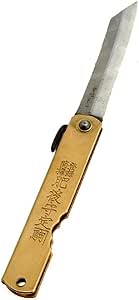 | Best Traditional Pocket Knife | Blade length: Approximately 3 inches | Handle length: Approximately 4 inches | Blade steel: Warikomi steel | VIEW ON AMAZON | See Our Full Breakdown |
| handmade japanese knife | Blade length | Knife type | Handle material |
|---|---|---|---|
| Higo no Kami 7 Pocket Knife by | Approximately 3 inches | Pocket knife | — |
| HOSHANHO 8-Inch Japanese High- | 8 inches | Chef’s knife | Wood |
| 8-Inch Japanese Damascus Chef | 8 inches | Chef knife | Stabilized wood and resin |
| KAWAHIRO 7-Inch Japanese Nakir | 7 inches | Nakiri | — |
| 8-Inch Japanese Damascus Chef | 8 inches | Chef knife | — |
| DRGSKL D2 Steel Fixed Blade Kn | — | — | Natural walnut wood |
| Tenkumun 8-Inch Japanese Gyuto | 8 inches | Gyuto chef knife | — |
| HOSHANHO 9-Inch Kiritsuke Chef | 9 inches | — | Natural rosewood |
| Mitsumoto Sakari 8-Inch Japane | 8 inches | — | Rosewood |
| Higo no Kami 10 Folding Pocket | Approximately 3 inches | — | Brass |
More Details on Our Top Picks
Higo no Kami 7 Pocket Knife by Nagao Seisakusho, Parkerized Black Satin Finish
The Higo no Kami 7 is the pocket-sized choice for buyers drawn to the handmade Japanese knife tradition rather than a full kitchen blade. It is made by Nagao Seisakusho, identified in the product data as the last remaining maker of this trademarked design, and pairs a roughly 3-inch Warikomi steel blade with a parkerized black satin handle. That makes it a more heritage-focused pick than the 8-inch HOSHANHO chef’s knife, which is built for routine food preparation. The tradeoff is a smaller blade suited to light pocket-knife tasks, not broad kitchen work. Handmade production can also bring slight variations in appearance and specifications, so buyers who want a uniform finish should look elsewhere.
Pros:- Made by Nagao Seisakusho, the last remaining manufacturer of this trademarked design according to the product data.
- Handmade construction gives it a traditional character.
- Warikomi steel blade.
- Compact blade and handle suit pocket carry.
Cons:- Its roughly 3-inch blade is not a substitute for the full-size kitchen knives in this roundup.
- Handmade production may cause slight variations in specifications and appearance.
Best for: Collectors and everyday carry buyers seeking a handmade Japanese pocket knife from the remaining maker of the Higo no Kami design.
Not ideal for: Home cooks looking for one knife for meal preparation, or buyers who need exact dimensions and a consistent appearance.
- Knife type:Pocket knife
- Blade length:Approximately 3 inches
- Handle length:Approximately 4 inches
- Blade steel:Warikomi steel
- Handle finish:Parkerized black satin
- Manufacturer:Nagao Seisakusho
Our verdict“Choose the Higo no Kami 7 for a traditional handmade Japanese pocket knife; choose a chef’s knife for kitchen versatility.”
HOSHANHO 8-Inch Japanese High-Carbon Steel Chef’s Knife
The HOSHANHO 8-inch chef’s knife is the practical all-rounder here: its hand-sharpened edge and familiar chef’s profile suit everyday chopping, slicing, and dicing. Its 10Cr15CoMoV steel is ice tempered and heat treated, with stated 60 HRC hardness; those details make this a firmer-edged option than the Higo no Kami 7 pocket knife, which serves a different, portable role. The sloped bolster is designed to make a pinch grip easier, helping cooks guide the blade during repeated prep. Compared with the VG-10 Damascus chef knives in this group, this model puts less emphasis on layered styling. Its wood handle needs more care than a synthetic one, and the product data does not specify care instructions.
Pros:- Eight-inch blade handles a broad range of everyday kitchen prep.
- Hand-sharpened 13-degree-per-side edge is designed for chopping, slicing, and dicing.
- Sloped bolster supports a pinch grip.
- Ice-tempered and heat-treated steel is specified at 60 HRC.
Cons:- Wood handle may need more care than synthetic materials.
- Compared with the listed VG-10 Damascus chef knives, it has no stated layered cladding.
Best for: Home cooks who want a full-size Japanese-style chef’s knife for varied daily prep and prefer a wood handle with a pinch-grip-friendly bolster.
Not ideal for: Buyers seeking a vegetable-specific straight edge, a pocket knife, or a handle that needs minimal maintenance.
- Knife type:Chef’s knife
- Blade length:8 inches
- Steel:10Cr15CoMoV Japanese high-carbon steel
- Hardness:60 HRC
- Edge angle:13 degrees per side
- Handle material:Wood
- Finish:Matte
- Included components:Knife
Our verdict“Pick the HOSHANHO for everyday kitchen versatility and a pinch-grip-friendly shape, provided you are comfortable caring for a wood handle.”
8-Inch Japanese Damascus Chef Knife with VG-10 Steel Core
This 8-inch Damascus chef knife brings together a VG-10 core, 67-layer cladding, and a hand-sharpened edge in a balanced design with a stabilized wood and resin handle. It suits cooks who want the layered finish and stated 62 HRC hardness without choosing the unusually acute 10-degree edge of the other Damascus chef knife in this batch. Against the HOSHANHO, it offers a more distinctive layered blade and a different handle material, while the HOSHANHO’s specs spell out its edge angle and pinch-grip bolster more clearly. The product description positions this knife for precise cutting and comfortable prep, but gives no care or sharpening instructions. Buyers who prefer clear maintenance guidance may find that omission a drawback.
Pros:- VG-10 core is specified at 62 HRC.
- 67-layer Damascus cladding gives the blade a layered construction.
- Hand-sharpened edge is intended for precise cutting.
- Stabilized wood and resin handle is designed for a balanced, slip-resistant grip.
Cons:- No specific care or sharpening instructions are provided.
- The product data does not state an edge angle, making direct edge comparisons harder.
Best for: Home cooks who want an eight-inch chef’s knife with VG-10 steel, layered Damascus cladding, and a stabilized wood and resin handle.
Not ideal for: Buyers who need explicit care and sharpening guidance, or who prefer a stated edge angle and bolster design.
- Knife type:Chef knife
- Blade length:8 inches
- Core steel:VG-10
- Hardness:62 HRC
- Cladding:67-layer Damascus
- Handle material:Stabilized wood and resin
- Sharpening:Hand-sharpened edge
Our verdict“Choose this model for a balanced VG-10 Damascus chef knife with a stabilized handle, if you are comfortable working out its care routine.”
KAWAHIRO 7-Inch Japanese Nakiri Vegetable Knife, VG-10 Steel, Ruby Wood Handle
The KAWAHIRO 7-inch Nakiri gives vegetable work a dedicated shape: its straight, hand-sharpened edge is intended for slicing, dicing, and julienning, where repeated vertical cuts matter more than the rounded profile of a chef’s knife. Its VG-10 core and stated 62 HRC hardness place it closer in steel specification to the Damascus chef knives here, but the Nakiri is the more specialized choice. The HOSHANHO chef’s knife is a better fit for cooks who want one blade for mixed prep; this KAWAHIRO makes more sense when vegetables are the main task. The ruby wood, turquoise, and ebony handle adds distinctive materials, though the product description does not spell out their care needs. Its narrow role is its main limitation.
Pros:- Nakiri profile is designed for vegetable slicing, dicing, and julienning.
- VG-10 high-carbon stainless steel core is specified at 62 HRC.
- Edge is hand-sharpened using a wet stone.
- Handle combines ruby wood, turquoise, and ebony.
Cons:- Specialized Nakiri shape is primarily intended for vegetable preparation.
- Care and maintenance requirements are not specified.
Best for: Vegetable-forward home cooks who want a dedicated straight-edge knife for slicing, dicing, and julienning.
Not ideal for: Buyers who want one knife for vegetables, meat, and fish, or who need detailed maintenance guidance.
- Knife type:Nakiri
- Blade length:7 inches
- Blade steel:VG-10 high-carbon stainless steel core
- Hardness:62 HRC
- Handle materials:Ruby wood, turquoise, and ebony
- Sharpening:Hand-sharpened using a wet stone
- Model:KH-6610
- Included components:Knife, certificate of authenticity, manual, and wipe cloth
Our verdict“Choose the KAWAHIRO if vegetable prep is your priority; choose the HOSHANHO chef’s knife for broader kitchen coverage.”
8-Inch Japanese Damascus Chef Knife with VG10 Steel Core
This VG10 Damascus chef knife is the edge-focused pick: its listed 10-degree edge is more acute than the unspecified hand-sharpened edge on the other 8-inch Damascus chef knife in this batch. That geometry is aimed at fine slicing and controlled prep, while the full-tang Pakkawood handle with triple rivets offers a more traditional, secure construction. A freestanding ash wood sheath also gives it a dedicated storage option absent from the product details for the other Damascus model. The tradeoff is upkeep: the description itself flags that the 10-degree edge may need careful handling and maintenance, and it supplies no care instructions. This is a more exacting choice than the HOSHANHO for cooks who want a straightforward everyday blade.
Pros:- Stated 10-degree edge is designed for fine slicing and controlled cuts.
- VG10 core and 67-layer Damascus construction.
- Full-tang Pakkawood handle has triple rivets.
- Includes a freestanding ash wood sheath for storage.
Cons:- The acute edge may require careful handling and maintenance.
- No dishwasher or care instructions are provided.
Best for: Confident home cooks who prioritize fine slicing, want a stated acute edge, and will handle and maintain it carefully.
Not ideal for: Beginners seeking a forgiving everyday edge, or cooks who need clear care instructions before buying.
- Knife type:Chef knife
- Blade length:8 inches
- Blade construction:67-layer Damascus steel
- Core steel:VG10
- Blade hardness:62 HRC
- Edge angle:10 degrees
- Handle:Full-tang Pakkawood with triple rivets
- Sheath:Freestanding ash wood
Our verdict“Choose this knife for its acute slicing edge and included sheath if you are prepared for more careful handling and upkeep.”
DRGSKL D2 Steel Fixed Blade Knife with Walnut Handle and Sheath
The DRGSKL D2 is the outlier in this roundup: a fixed blade for outdoor cutting and light household tasks, rather than a Japanese-style kitchen knife. Its hand-finished blade and matching walnut handle and sheath give it a wood-forward look that contrasts with the kitchen-focused Tenkumun 8-Inch Gyuto. The product data does not identify this as Japanese-made, so buyers seeking Japanese knife-making provenance should look elsewhere. D2 steel is the stated blade material, but no dimensions or weight are supplied, making fit and handling harder to judge before buying. It also calls for cleaning, drying, and oiling after use. That care routine and its non-kitchen format make it a niche pick for someone who wants a compact outdoor tool with natural wood details, not an everyday chef knife.
Pros:- Hand-finished blade with a polished surface
- Natural walnut handle and sheath have distinct wood grain
- Listed for outdoor and light household cutting tasks
Cons:- Requires cleaning, drying, and oiling after use
- Blade dimensions and weight are not provided
- Fixed outdoor format is less suited to routine kitchen prep than the Tenkumun Gyuto
Best for: Outdoor users who want a fixed blade with a walnut handle and sheath for general cutting tasks
Not ideal for: Cooks seeking a Japanese-made kitchen knife or shoppers who need blade dimensions and weight before choosing
- Blade material:D2 steel
- Handle material:Natural walnut wood
- Sheath material:Natural walnut wood
- Included component:Sheath
- Recommended use:Outdoor and light household cutting tasks
- Number of items:1
Our verdict“Choose the DRGSKL for outdoor utility and walnut styling, but pick a gyuto if your priority is Japanese-style kitchen prep.”
Tenkumun 8-Inch Japanese Gyuto Chef Knife, VG-10 Damascus Steel
The Tenkumun 8-Inch Gyuto makes the strongest case here for buyers drawn to a hand-forged Japanese-style chef knife: it pairs a VG-10 Damascus blade with hand polishing and a tapered profile intended for precise cuts. Its familiar 8-inch gyuto format should suit cooks who want one multipurpose kitchen shape, while the HOSHANHO 9-Inch Kiritsuke offers a longer, more specialized profile. The Tenkumun’s stated 67-layer construction adds layered steel character, but the listing gives no handle material, weight, or care guidance, leaving practical details unresolved. Those gaps matter when comparing comfort and upkeep. I’d place it ahead of the outdoor-focused DRGSKL for kitchen use, while reserving it for shoppers comfortable choosing without fuller handling and maintenance information.
Pros:- VG-10 Damascus steel blade
- Hand-forged, heat-treated, and hand-polished construction
- Tapered profile is designed for precise cutting
- 8-inch gyuto format suits a range of kitchen prep
Cons:- Handle material and weight are not specified
- No care or maintenance instructions are provided
- Less specialized than the longer HOSHANHO 9-Inch Kiritsuke for buyers seeking a kiritsuke profile
Best for: Home cooks seeking an 8-inch Japanese-style gyuto with stated hand-forged VG-10 Damascus construction
Not ideal for: Buyers who need handle, weight, or care details before selecting a kitchen knife
- Knife type:Gyuto chef knife
- Blade length:8 inches
- Blade material:VG-10 Damascus steel
- Blade construction:67 layers
- Craftsmanship:Hand-forged and hand-polished
- Blade treatment:Heat-treated
Our verdict“Pick the Tenkumun if hand-forged VG-10 and a familiar gyuto shape matter more than having complete handling and care details.”
HOSHANHO 9-Inch Kiritsuke Chef Knife
Among the kitchen knives here, the HOSHANHO 9-Inch Kiritsuke is the pick for cooks who want extra blade length and a defined slicing and chopping role. Its 10Cr15CoMoV core, hand-sanded edge, and 12–15-degree-per-side angle point toward precise work; the octagonal rosewood handle is described as ambidextrous. Compared with the Tenkumun 8-Inch Gyuto, this knife gives more reach but asks for more board space and control. The hammered texture is intended to help food release, though that does not remove the need for careful cleaning. It must be hand washed and dried, and the listing rules out bones and frozen foods. This makes sense for practiced prep with produce, meat, or sushi, less so as a rough-use all-purpose blade.
Pros:- 9-inch blade offers reach for longer slicing strokes
- Hand-sanded edge with a stated 12–15-degree angle per side
- Octagonal rosewood handle is designed for ambidextrous grip
- Hammered texture is intended to help food release
Cons:- Not suitable for cutting bones or frozen foods
- Requires hand washing and thorough drying
- Longer blade may be less manageable than the Tenkumun 8-inch Gyuto in a small workspace
Best for: Experienced home cooks who want a longer kiritsuke for slicing, mincing, and dicing on a spacious board
Not ideal for: Cooks who need a compact knife or regularly cut bones and frozen foods
- Blade length:9 inches
- Blade thickness:2.5 mm
- Steel core:10Cr15CoMoV
- Blade construction:8-layer composite steel
- Edge angle:12–15 degrees per side
- Handle material:Natural rosewood
- Handle shape:Octagonal
- Care:Hand wash, rinse, and dry completely; avoid bones and frozen foods
Our verdict“Choose the HOSHANHO for long, precise prep if you have room to handle a 9-inch blade and can follow its care limits.”
Mitsumoto Sakari 8-Inch Japanese Gyuto Chef Knife
The Mitsumoto Sakari 8-Inch Gyuto stands out for its mix of a versatile kitchen shape and visible layered-blade finishes. Its three-layer San-Mai construction centers on a 9Cr18MoV stainless steel core, with tsuchime hammering and a black kurouchi finish. The octagonal rosewood handle offers a clear orientation cue, while the sandalwood box gives the knife a dedicated storage place. Compared with the Tenkumun Gyuto, Mitsumoto specifies more about the core, handle, hardness, and storage; Tenkumun instead states VG-10 steel and a 67-layer build. This listing supplies no care instructions, so buyers must plan for careful knife maintenance without product-specific guidance. It suits cooks drawn to traditional Japanese-style details, though the 8-inch size is less suited to those who want the HOSHANHO Kiritsuke’s extra reach.
Pros:- Versatile 8-inch gyuto shape for meat, fish, and vegetables
- Three-layer blade with a 9Cr18MoV stainless steel core
- Tsuchime and kurouchi finishes give the blade distinct surface details
- Octagonal rosewood handle and sandalwood storage box are included
Cons:- No care or maintenance instructions are provided
- Shorter than the HOSHANHO 9-Inch Kiritsuke for long slicing strokes
Best for: Home cooks who want an 8-inch gyuto with San-Mai construction, a rosewood handle, and included storage
Not ideal for: Buyers who need explicit care instructions or prefer a longer blade for broad slicing strokes
- Blade length:8 inches
- Blade construction:3-layer San-Mai
- Core steel:9Cr18MoV high-carbon stainless steel
- Blade hardness:Approximately 60±2 HRC
- Blade finish:Tsuchime hammered texture with kurouchi black forged finish
- Handle material:Rosewood
- Handle shape:Octagonal
- Included storage:Sandalwood box
Our verdict“Choose the Mitsumoto if you want a detailed 8-inch gyuto with specified core steel, rosewood handle, and included storage.”
Higo no Kami 10 Folding Pocket Knife, Brass Handle
The Higo no Kami 10 is the roundup’s clearest choice for a traditional Japanese handmade pocket knife, rather than kitchen prep. It is made by Nagao Seisakusho, identified in the product description as the last remaining maker authorized to use the Higo no Kami name. Its Warikomi blade, satin brass handle, and lever-style opening mechanism give it a distinct format beside the Higo no Kami 7 Pocket Knife in this roundup. At roughly 3 inches, the blade keeps the knife compact for camping, fishing, or hiking. The listing does not mention a locking mechanism, a practical limitation for buyers who want a folding blade that locks open. Handmade construction may also bring small variations in appearance or specifications. Choose it for heritage and portability, not as a substitute for a gyuto.
Pros:- Made by Nagao Seisakusho, identified as the last authorized Higo no Kami maker
- Traditional lever-style opening mechanism
- Compact folding format with an approximately 3-inch blade
- Satin brass handle and Warikomi steel blade
Cons:- No locking mechanism is mentioned in the product information
- Handmade construction may bring slight variations in appearance or specifications
- Not suited to kitchen prep like the Tenkumun 8-Inch Gyuto
Best for: Outdoor users and collectors seeking a compact, traditionally made Japanese folding knife
Not ideal for: Cooks seeking a kitchen knife or pocket-knife buyers who require a stated locking mechanism
- Blade length:Approximately 3 inches
- Handle length:Approximately 4 inches
- Blade steel:Warikomi steel
- Handle material:Brass
- Opening mechanism:Lever-style
- Manufacturer:Nagao Seisakusho
- Model:10
- Recommended uses:Camping, fishing, and hiking
Our verdict“Choose the Higo no Kami 10 for a compact traditional Japanese pocket knife if its non-locking mechanism suits your needs.”

How We Picked
I ranked these options by matching their stated blade style and construction to a clear buyer need. For kitchen knives, I gave more weight to versatile shapes, practical blade lengths, handle comfort cues, and the likely care required by the named steel than to decorative finishes. A gyuto with an all-purpose profile ranks ahead of a specialist blade for a broad recommendation; the nakiri and kiritsuke remain useful choices for narrower preferences. Pocket and fixed-blade models are judged as utility knives, not substitutes for a chef knife.
When products share VG-10 or Damascus descriptions, those labels do not settle the order: intended use and format matter more to choosing well. I also treated the word handmade carefully, since the supplied product names do not independently verify maker, origin, or production method. Buyers should look for specific provenance and construction information before treating that claim as established. Drawbacks such as specialist geometry, greater care needs, or limited kitchen versatility count against a pick when they could complicate ownership.
| handmade japanese knife | Knife type | Handle material |
|---|---|---|
| Higo no Kami 7 Pocket Knife by | Pocket knife | — |
| HOSHANHO 8-Inch Japanese High- | Chef’s knife | Wood |
| 8-Inch Japanese Damascus Chef | Chef knife | Stabilized wood and resin |
| KAWAHIRO 7-Inch Japanese Nakir | Nakiri | — |
| 8-Inch Japanese Damascus Chef | Chef knife | — |
| DRGSKL D2 Steel Fixed Blade Kn | — | Natural walnut wood |
| Tenkumun 8-Inch Japanese Gyuto | Gyuto chef knife | — |
| HOSHANHO 9-Inch Kiritsuke Chef | — | Natural rosewood |
| Mitsumoto Sakari 8-Inch Japane | — | Rosewood |
| Higo no Kami 10 Folding Pocket | — | Brass |
Factors to Consider When Choosing Handmade Japanese Knives
Before choosing among handmade Japanese knives, decide what job the knife must do and what evidence you expect from a handmade claim. A useful purchase balances geometry, steel care, fit, and the maker information available to you.
Start With the Work, Not the Steel Name
Think about the cuts you make most often before comparing alloys or finishes. A gyuto is a flexible starting point for slicing, chopping, and general prep, while a nakiri favors vegetable work and a kiritsuke-style profile can feel less familiar. Pocket knives belong to a different use case and should not be chosen as kitchen substitutes. A common mistake is buying a specialized silhouette because it looks distinctive, then finding it awkward for everyday tasks. If one knife must cover most meal preparation, prioritize a comfortable general-purpose shape. Add a specialist blade only when you can name the recurring task it improves.
Treat Steel as a Care Commitment
Steel descriptions matter because they influence edge behavior and maintenance, but a label alone cannot tell you how a finished knife performs. High-carbon steels can react to moisture and acidic foods, while stainless or semi-stainless options may be easier to maintain; exact behavior depends on the steel and heat treatment. Wash and dry a kitchen knife promptly, and avoid leaving it wet in a sink or dishwasher. Buyers sometimes focus on hardness or a steel name and overlook whether they are willing to sharpen and care for the blade. Ask the seller for the exact steel, care instructions, and sharpening guidance. Choose the easier routine if regular maintenance is unlikely to fit your habits.
Check What Handmade Means for This Knife
Handmade can refer to different stages of production, and a product title may not explain which parts were made by hand. Look for a named maker or workshop, stated place of manufacture, details about forging and finishing, and a clear account of the blade construction. Damascus patterning describes visible layered appearance, but it does not prove traditional hand forging or superior cutting. Vague origin language is a reason to ask questions, not a reason to assume a specific heritage. Compare the seller’s claims with maker documentation when provenance matters to your purchase. If those details are absent, base your decision on the verifiable specifications and return terms.
Match Blade Length and Profile to Your Space
An 8-inch blade suits many home cooks, but it can feel large on a short board or in a crowded kitchen. A longer knife can make broad cuts easier, yet needs more storage room and control from the user. Straight-edged vegetable knives can support a push-chopping motion, while curved profiles may better suit rocking cuts. New owners often choose length by appearance without checking board size, grip, or storage. If possible, compare the listed blade length with a knife you already handle comfortably. Consider a blade guard or dedicated storage so a sharp edge does not rub against other utensils.
Evaluate the Handle and Balance for Your Grip
Handle material is only one part of comfort; shape, thickness, texture, and the balance point affect control during repeated cuts. A handle that suits a pinch grip may not feel as secure to someone who holds the full handle. Wood can offer a warm feel, though it may need more care than a synthetic material depending on its finish. Do not assume a heavier knife is more stable or a lighter one is automatically easier to use. Check dimensions and product photos for the handle profile, and seek return options if fit is uncertain. Comfort matters especially for a knife used through a long prep session.
Pay More for Fit, Finish, and Support
A higher-cost knife makes sense when it brings documented craftsmanship, consistent fit and finish, dependable sharpening support, or a handle and geometry that suit you better. Decorative patterning alone is a weak reason to pay more because it may not improve cutting or ownership. Check whether the maker provides care instructions, sharpening guidance, warranty terms, and replacement or repair support. For a first Japanese-style kitchen knife, a practical gyuto with clear specifications may be a safer choice than a highly specialized profile. If you already know your preferred shape and maintenance routine, a more tailored blade can justify the added spend. Weigh the whole ownership experience rather than one headline feature.
Frequently Asked Questions
How can I tell whether a Japanese knife is genuinely handmade?
Look for a named maker or workshop and specific information about where the knife was made and which steps were performed by hand. Details about forging, grinding, heat treatment, and finishing are more useful than a broad handmade label. Damascus lines show a layered pattern, but they do not establish the maker’s process or the knife’s origin. If provenance is central to your choice, ask the seller for documentation or a direct explanation of production. When the evidence remains vague, compare the knife using only the specifications you can verify.
Should I choose VG-10 or high-carbon steel for my first kitchen knife?
Choose based on how much upkeep you are comfortable doing, not the appeal of a steel name. A VG-10 knife is often presented as a stainless option, while high-carbon blades may need faster drying and closer attention to staining or rust; confirm the exact composition and care guidance for the individual knife. Both steel type and heat treatment affect sharpening and edge behavior. If you regularly leave dishes until later, prioritize a blade with clearer low-maintenance care instructions. Either way, use an appropriate cutting board and avoid the dishwasher.
Is a Damascus knife a better cutter than a plain-finish knife?
Damascus refers to a visible layered pattern, not a guarantee of superior cutting. Cutting feel depends more on blade geometry, grind, sharpness, and heat treatment. A plain-finish knife with well-described construction may suit your work better than a patterned blade with limited specifications. Patterning can be a valid aesthetic preference, but it should not be your only performance criterion. Compare the edge profile, blade thickness, and maker details alongside the finish.
Can I use a kiritsuke or nakiri as my only kitchen knife?
You can, if its shape fits the way you prepare food, but each is more specialized than a general-purpose gyuto. A nakiri is oriented toward vegetable prep, while a kiritsuke’s profile can demand more familiarity and control. A gyuto is usually the easier single-knife choice when tasks vary from vegetables to meat and herbs. Consider your usual cutting motion and board space before committing to a specialist. If possible, handle a similar profile first or buy from a seller with a clear return policy.
Are the Higo no Kami models suitable for kitchen prep?
They are folding pocket knives, so their format and intended role differ from the kitchen gyutos, nakiri, and kiritsuke in this roundup. A compact folding blade can be handy for light utility tasks, but it does not offer the blade length, grip, or open working surface most cooks want for meal preparation. Pocket knives also require safe handling around the pivot and secure storage when closed. Choose one for portability and small utility cuts rather than as your main food-prep tool. For kitchen work, select a fixed-blade chef knife sized to your board and tasks.
Conclusion
For one kitchen knife with broad use, I recommend the Tenkumun 8-Inch Gyuto as the best overall pick, while the Mitsumoto Sakari Gyuto is another practical all-purpose choice to compare. Buyers seeking a potentially simpler entry point should favor the familiar gyuto shape and clear care guidance; the listed details do not establish a definitive best-value pick, so compare specifications and seller support before deciding. For a premium choice, choose the VG-10 Damascus model whose maker, construction, and provenance are best documented rather than paying for pattern alone. The KAWAHIRO Nakiri is the specific pick for vegetable-heavy prep, and the Higo no Kami 7 fits compact pocket use. If you want a broad kitchen tool, skip the folding and fixed-blade utility options; if portability is the priority, the kitchen knives are the wrong format.
Halloween Picks
halloween
As an affiliate, we earn on qualifying purchases.