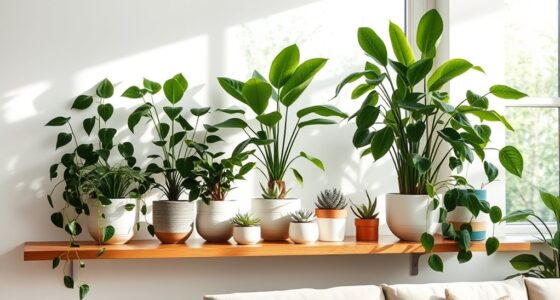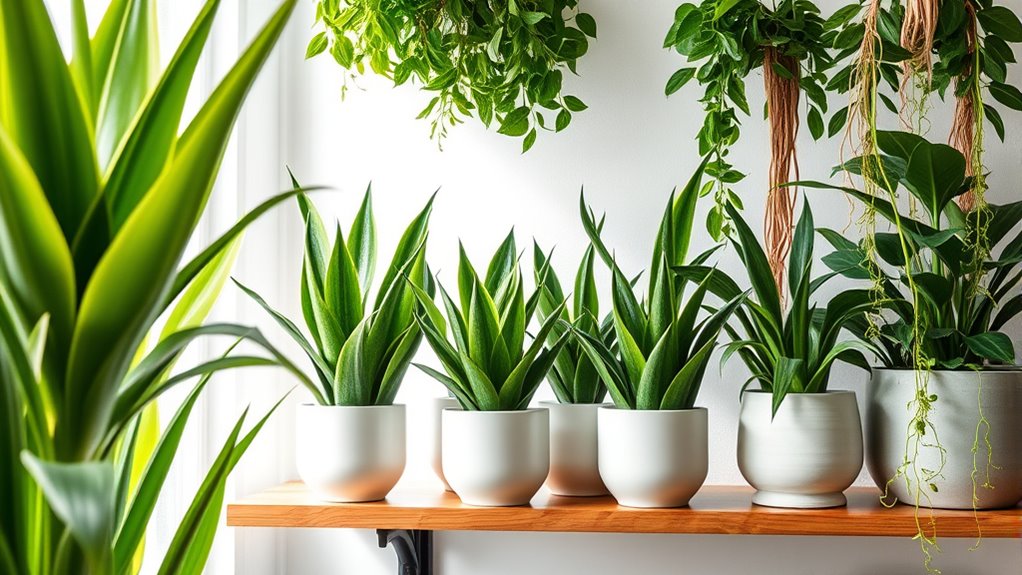

To improve your indoor air quality, choose plants like snake plants, pothos, peace lilies, and spider plants. They’re easy to care for, thrive in various light conditions, and effectively filter toxins such as benzene and formaldehyde. These plants not only purify the air but also add beauty to your space. Want to discover more about choosing the right plants and maintaining their health? Keep exploring for helpful tips.
Key Takeaways
- Snake Plant (Sansevieria) is low-maintenance, tolerates low light, and effectively filters toxins for indoor air purification.
- Pothos removes formaldehyde and benzene, thrives in low to bright indirect light, and requires minimal watering.
- Peace Lily offers high air purification, with striking white blooms, and prefers medium to low light.
- Spider Plant is resilient, easy to care for, and removes pollutants while adding decorative arching leaves.
- Indoor plants like these improve air quality, enhance decor, and are suitable for various light and maintenance levels.

Indoor plants not only brighten up your living space but also improve the air you breathe. When choosing the right plants for air purification, you want options that are easy to care for and add a decorative touch to your home. The key is to select plants that not only filter toxins effectively but also fit your lifestyle and aesthetic preferences. Proper plant care is essential to keep them healthy and thriving, ensuring they continue to purify the air efficiently and maintain their decorative appeal.
Indoor plants brighten your space and purify the air effortlessly with easy care and decorative appeal.
For starters, the snake plant, also known as Sansevieria, is an excellent choice. It’s hardy, requires minimal watering, and can tolerate low light conditions. Its upright, sword-like leaves give it a modern, decorative appeal that complements various interior styles. Because snake plants are forgiving and low-maintenance, you don’t need to be a plant expert to keep them healthy. Regularly dusting the leaves and avoiding overwatering will help maintain its vibrant appearance and air-purifying capabilities.
Another popular option is the pothos, which is renowned for its ability to remove indoor toxins like formaldehyde and benzene. Pothos plants are incredibly versatile—they thrive in low to bright indirect light and only need watering when the top inch of soil dries out. Their trailing vines can cascade from shelves or hang in pots, adding a lush, decorative element to any room. With proper plant care, including occasional pruning and ensuring good drainage, pothos will stay lush and attractive, enhancing your space’s visual appeal while cleaning the air.
The peace lily is also highly effective at air purification and boasts beautiful, glossy green leaves paired with elegant white flowers. It prefers medium to low light and needs regular watering to keep its leaves healthy. Its decorative appeal lies in its graceful form and striking blooms, making it a popular choice for living rooms and offices. Just remember, peace lilies are sensitive to overwatering, so monitoring soil moisture is essential for both plant care and maintaining their aesthetic charm.
Finally, consider the spider plant, which is known for its resilient nature and ability to remove pollutants. It thrives in bright, indirect light and prefers watering when the soil feels dry. The spider plant’s arching leaves and dangling offshoots add a distinctive, decorative appeal, making it a lively addition to any space. Its ease of care means you’ll spend less time tending to it and more time enjoying its air-purifying benefits.
Frequently Asked Questions
How Often Should Indoor Plants Be Watered for Optimal Air Purification?
You should water your indoor plants about once a week to maintain a suitable watering schedule, which promotes plant health and air purification. Keep an eye on the soil; it should be moist but not soggy. During warmer months, you might need to water more frequently, while in cooler months, less often. Proper watering guarantees your plants stay healthy and effectively improve indoor air quality.
Do Indoor Plants Remove All Types of Indoor Air Pollutants?
Indoor plants can considerably reduce many pollutant types, but they don’t remove all. Different plant species excel at filtering specific pollutants like formaldehyde or benzene, yet some airborne toxins may require additional ventilation or air purifiers. You should choose plant species based on the pollutant types present in your space, and remember that combining plants with proper ventilation offers the best air purification results.
Can Indoor Plants Help With Indoor Humidity Levels?
Indoor plants can help with humidity regulation by increasing indoor moisture levels through plant transpiration. As you care for them, their leaves release water vapor into the air, which can boost humidity, especially in dry environments. This natural process makes your space more comfortable and can reduce issues like dry skin or respiratory irritation. So, keeping a few plants around not only beautifies your home but also supports healthier indoor humidity levels.
Are There Any Toxic Indoor Plants to Pets or Children?
Did you know that nearly 300 indoor plants are considered toxic to pets and children? You should be cautious and choose pet safe plants or child friendly greenery to keep your home safe. Many popular indoor plants, like lilies or philodendrons, can be harmful if ingested. Always research and select non-toxic options to enjoy the benefits of indoor greenery without risking your loved ones’ health.
How Much Sunlight Do Indoor Air-Purifying Plants Typically Need?
Indoor air-purifying plants generally need bright, indirect sunlight to thrive, but many have shade tolerance and can tolerate lower light levels. You should aim for about 4-6 hours of sunlight daily, adjusting based on the plant’s specific sunlight preferences. If your space lacks natural light, consider placing plants near windows with sheer curtains or using grow lights to supplement their sunlight needs and keep them healthy.
Conclusion
Now that you know the best indoor plants for air purification, it’s time to bring them into your space. Imagine transforming your home into a lush, breathing oasis where toxins vanish like magic—your indoor jungle will be your secret weapon for cleaner, fresher air. With just a few green friends, you can turn your living area into a health-boosting paradise. So go ahead, embrace these plants and let your home breathe easier than ever before!