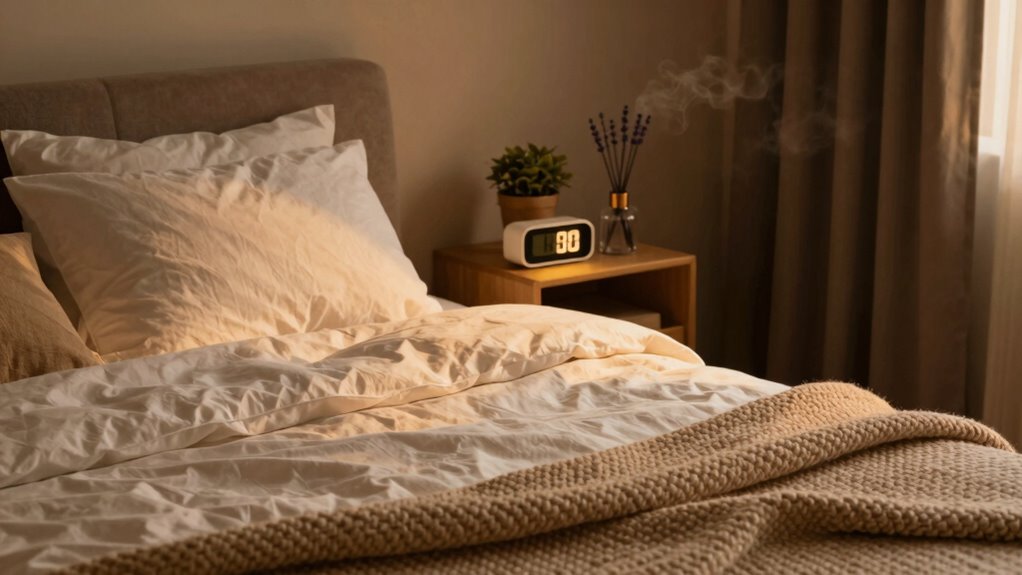

Better sleep hygiene means maintaining consistent habits that prepare your body for rest. You prioritize a regular sleep schedule, go to bed and wake up at the same time, and avoid caffeine or heavy meals before bed. Creating a relaxing environment with cool temperatures, minimal light, and calming scents helps you sleep better. Cutting screens an hour before sleep and sticking to calming routines signal your body it’s time to rest. Keep exploring to discover more ways to improve your sleep quality.
Key Takeaways
- Maintaining a consistent sleep schedule by going to bed and waking up at the same times daily.
- Creating a calming pre-sleep routine, such as reading or taking a warm bath, to signal your body it’s time to rest.
- Ensuring a comfortable and dark sleep environment with supportive bedding and minimal light pollution.
- Avoiding caffeine, heavy meals, and electronics close to bedtime to promote easier sleep onset.
- Tracking sleep patterns and adjusting habits to reduce awakenings and improve overall sleep quality.
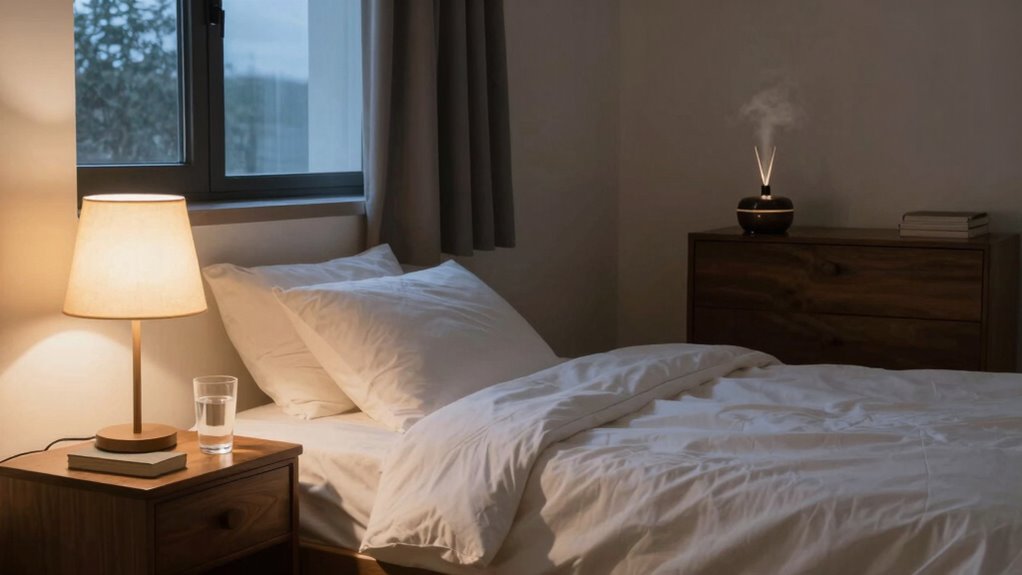
Have you ever wondered why some nights you fall asleep easily while others feel restless and exhausting? The difference often lies in your sleep hygiene — the habits and environment that influence your rest. One effective way to understand your sleep patterns is through dream journaling. When you keep a dream journal, you jot down what you remember from your dreams each morning. This practice helps you become more aware of your sleep quality and patterns. If you notice vivid dreams or frequent awakenings, it might signal disruptions in your sleep cycle. Recording your dreams also encourages you to reflect on your mental and emotional state, which can impact how restful your sleep feels. Over time, dream journaling can reveal connections between your daily stressors and sleep disturbances, guiding you to make necessary adjustments. Additionally, understanding how factors like contrast ratio influence your visual comfort can help you create a more relaxing sleep environment by reducing eye strain and promoting better rest. Creating a sleep-friendly environment also involves minimizing light pollution that can interfere with melatonin production. Paying attention to air quality by ensuring proper ventilation can also significantly improve sleep quality, as fresh air helps your body relax more effectively. You can also explore sound therapy options, such as calming sounds, to deepen your relaxation before sleep. A critical component of better sleep hygiene is creating a sleep environment that promotes relaxation. Your bedroom should be a sanctuary dedicated to rest. Keep it cool, dark, and quiet — these elements are essential for falling asleep and staying asleep. Use blackout curtains or an eye mask to block out light, and consider earplugs if noise is an issue. The temperature should be comfortably cool, around 60 to 67 degrees Fahrenheit, to help your body settle into sleep. Your bed and pillows also matter; invest in comfortable, supportive bedding that makes you look forward to bedtime. Keep electronic devices out of the bedroom or at least turn them off an hour before bed, as screens emit blue light that can interfere with melatonin production. Incorporating calming scents, like lavender, can further enhance your sleep environment. Additionally, paying attention to visual comfort by adjusting lighting and screen settings can further support your ability to wind down. By fine-tuning these aspects, you create a space that signals to your brain it’s time to wind down. Your sleep routine is another vital part of good hygiene. Going to bed and waking up at the same time every day helps regulate your internal clock, making falling asleep easier. Avoid caffeine and heavy meals close to bedtime, as they can disrupt your ability to relax. Instead, develop calming pre-sleep rituals, such as reading a book or taking a warm bath. Consistency is key — even on weekends, sticking to your schedule boosts sleep quality over time. Combine this with dream journaling and your optimized sleep environment, and you’ll notice a significant improvement in your sleep patterns. Better sleep hygiene isn’t about drastic changes; it’s about establishing habits that support your body’s natural rhythms and creating a space that invites restful nights. When these elements come together, you’ll find yourself falling asleep faster, experiencing fewer awakenings, and waking up feeling genuinely refreshed.
Frequently Asked Questions
Can Sleep Hygiene Improve Insomnia Without Medication?
Yes, sleep hygiene can improve insomnia without medication. You can establish consistent sleep routines, such as going to bed and waking up at the same time daily. Also, optimize your bedroom environment by keeping it cool, dark, and quiet. Avoid screens before bed and limit caffeine or heavy meals in the evening. These habits help signal your body it’s time to sleep, making it easier to fall asleep and stay asleep.
How Long Does It Take to See Sleep Improvements?
You can start noticing sleep improvements within a few days to weeks of improving your sleep environment and sticking to a consistent bedtime routine. Creating a calm, dark, and cool sleep space helps your body relax faster, while a regular sleep schedule trains your internal clock. Stay patient, as noticeable changes often appear gradually, but with persistence, you’ll likely see better sleep quality within one to two weeks.
Is Napping Beneficial or Disruptive to Sleep Hygiene?
Napping can be beneficial if you choose power naps, lasting about 20 minutes, as they boost alertness without disrupting your sleep schedule. However, long or late-day naps may be disruptive, making it harder to fall asleep at night and reducing your overall sleep quality. To maintain good sleep hygiene, keep naps brief and earlier in the day, ensuring they complement rather than interfere with your nighttime rest.
Should I Adjust Sleep Hygiene Habits on Weekends?
Should you adjust your sleep hygiene habits on weekends? Absolutely, but with care. Think of your weekend routines as the bridge to better sleep consistency, not a detour. By maintaining similar bedtimes and wake times, you keep your internal clock steady. Small tweaks can help you unwind and recharge without throwing off your rhythm. Consistent habits, even on weekends, strengthen your sleep quality and overall well-being.
Are Sleep Hygiene Tips Different for Shift Workers?
Yes, sleep hygiene tips differ for shift workers. You need to prioritize managing shift work-related circadian disruption by creating a dark, quiet sleep environment during daylight hours and using blackout curtains or sleep masks. Consistency helps, so try to keep your sleep schedule as steady as possible, even on days off. Limiting caffeine and screen time before sleep further supports your rest, helping your body adjust despite irregular hours.
Conclusion
By making these simple adjustments, you’ll find better sleep becomes a natural part of your routine, like a gentle tide steadying the shore. Prioritize consistent bedtimes, create a relaxing environment, and limit screen time before bed. Remember, good sleep hygiene isn’t a quick fix but a journey toward feeling more refreshed and energized each day. Embrace these habits gradually, and you’ll discover that restful nights are within your reach, just like a calm lake reflects the morning sky.
Products Worth Considering
As an affiliate, we earn on qualifying purchases.