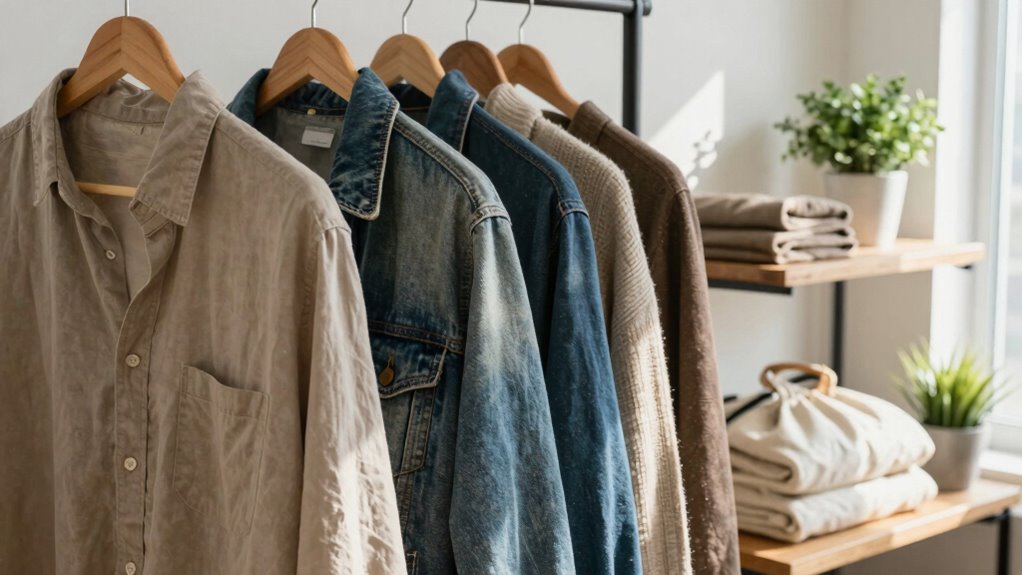

Start by evaluating your current wardrobe; keep and wear what you love while donating or reselling items you no longer need. Focus on buying fewer, high-quality pieces made from sustainable fabrics like organic cotton, linen, or recycled materials. Take good care of your clothes to make them last longer, and consider shopping secondhand for unique, eco-friendly options. Small, thoughtful shifts can make a big difference—Continue exploring ways to build a more sustainable wardrobe.
Key Takeaways
- Audit your wardrobe to identify favorite, well-worn pieces and donate or resell items you no longer need.
- Choose sustainable fabrics like organic cotton, linen, or recycled materials for future purchases.
- Practice proper clothes care to extend the lifespan of your garments and reduce waste.
- Shop secondhand or from brands committed to eco-friendly practices for unique, sustainable options.
- Adopt mindful shopping habits, prioritizing quality and necessity over fast fashion trends.
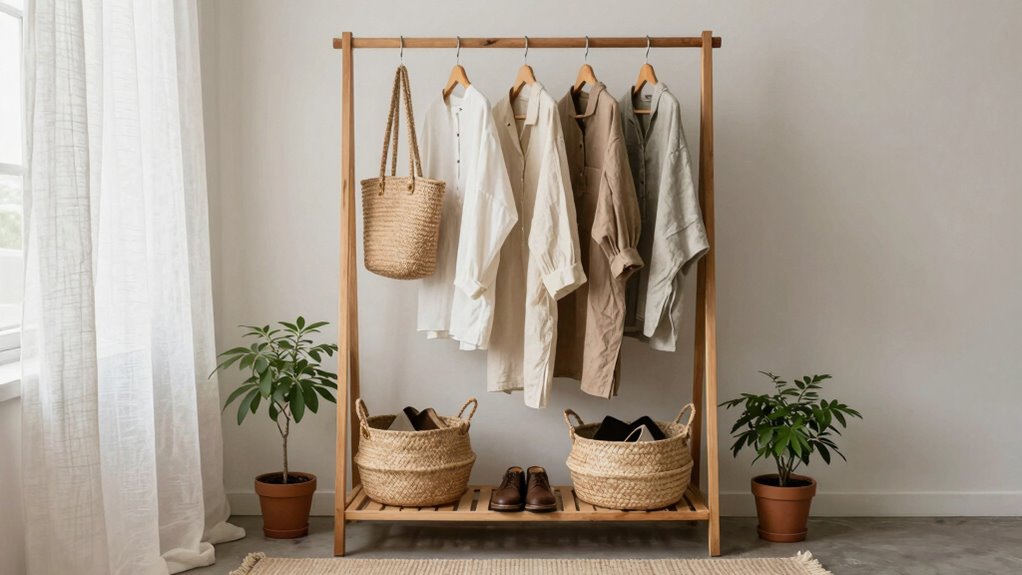
Have you ever wondered how your wardrobe choices impact the environment? The fashion industry impact is significant, contributing to pollution, waste, and resource depletion. Luckily, you don’t need to overhaul your entire closet to make a difference. Small, intentional changes can lead to a more sustainable wardrobe, starting with your fabric choices. When selecting new items, prioritize sustainable fabric choices like organic cotton, linen, hemp, or recycled fabrics. These materials use fewer chemicals and less water, reducing the environmental footprint of your clothing. You might also look for brands that emphasize eco-friendly production methods, which support the shift toward a more sustainable fashion industry impact.
Choosing sustainable fabrics like organic cotton, linen, and recycled materials reduces your fashion footprint.
You can start by auditing your current wardrobe. Keep what you love and wear often, and donate or resell anything that no longer fits or feels right. This reduces waste and extends the life of your existing clothing. As you shop for new pieces, focus on quality over quantity. Buying fewer, better-made items means you won’t need to replace them as often, which cuts down on consumption and waste. It’s better to invest in durable garments crafted from sustainable fabrics than to buy cheap, fast-fashion pieces that fall apart quickly.
Another way to dress more sustainably without replacing everything is to learn some simple ways to care for your clothes. Proper washing, drying, and storing extend their lifespan, meaning you won’t need to buy new items as often. Use eco-friendly detergents, wash clothes in cold water, and hang or fold your clothes instead of tumble drying. These habits help preserve your clothes and lessen their environmental impact. Additionally, choosing clothing with higher contrast ratios can enhance your wardrobe’s versatility, allowing you to mix and match pieces more easily and reduce unnecessary purchases. Developing a mindful approach to shopping is also crucial, as it helps you build a wardrobe rooted in sustainability and intentionality.
Furthermore, embracing secondhand shopping can significantly reduce your clothing’s environmental footprint while adding unique pieces to your collection. Thrift stores, consignment shops, and online resale platforms are fantastic sources for stylish, affordable, and sustainable clothing options. Choosing secondhand reduces demand for new production, which directly lessens the fashion industry impact. It also gives you access to unique pieces that add personality to your wardrobe. Learning about the environmental impact of fast fashion can motivate you to make more sustainable choices and prioritize quality over quantity in your wardrobe.
Finally, develop a mindful shopping approach. Before buying anything new, ask yourself if you truly need it and if it aligns with your sustainability goals. By making intentional decisions, you support brands that prioritize eco-friendly practices and sustainable fabric choices. Over time, these small shifts can lead to a more conscious wardrobe that respects the environment without sacrificing style or quality. Remember, dressing sustainably isn’t about perfection; it’s about progress and making thoughtful choices every step of the way.
Frequently Asked Questions
How Can I Identify Sustainable Clothing Brands?
You can identify sustainable clothing brands by checking for ethical certifications like Fair Trade, GOTS, or B Corp, which guarantee responsible practices. Additionally, look for brand transparency—brands that openly share their supply chain details and sustainability efforts indicate genuine commitment. Research online reviews and visit their websites to understand their environmental impact. By combining certifications and transparency, you’ll confidently pick brands that align with your sustainability goals.
What Are Eco-Friendly Fabric Options?
You should consider eco-friendly fabrics like organic cotton, hemp, linen, and Tencel, which are made from sustainable textile options. Recycled fabrics, like recycled polyester, also reduce waste and energy use. Look for clothing labeled as using eco-friendly fabrics, and prioritize natural, biodegradable fibers over synthetic ones. By choosing these options, you support sustainable fashion and lessen your environmental impact without replacing your entire wardrobe.
How to Reduce Fast Fashion Consumption Effectively?
You can reduce fast fashion consumption by practicing eco-conscious shopping and prioritizing fashion ethics. Focus on buying fewer, higher-quality pieces that last longer, rather than trendy, disposable items. Research brands committed to sustainability and ethical production. Thrift, swap, or buy secondhand whenever possible to minimize waste. By making intentional choices, you support sustainable fashion practices and lessen your environmental impact, creating a more mindful wardrobe aligned with your values.
Are Thrift Shopping Tips for Beginners Available?
Yes, thrift shopping tips for beginners are available. Focus on thrift store basics like inspecting clothes for damage, checking sizing, and understanding store layouts. Stay patient and open-minded, as you might need multiple visits to find the best budget-friendly finds. Bring a list of what you need, wear comfortable clothes, and be prepared to try on items. With practice, you’ll become more confident in hunting for unique, sustainable pieces.
How to Care for Sustainable Garments Properly?
Caring for sustainable garments is like tending a delicate garden—you need the right care to guarantee they thrive. Use sustainable laundry practices, like cold washes and eco-friendly detergents, to protect fabric integrity. Always follow the care label, avoid over-washing, and hang or lay flat to dry whenever possible. These steps boost garment longevity, helping your eco-friendly wardrobe stay vibrant longer and reducing waste, one careful wash at a time.
Conclusion
Starting your sustainable wardrobe doesn’t mean you have to toss everything out like a Marie Kondo spring cleaning. Instead, focus on mindful choices—buy quality over quantity, choose timeless pieces, and mend what’s torn. Think of it as upgrading from a dusty, cobwebbed attic to a sleek, eco-friendly boutique. With each small step, you’ll find your style evolving, making a difference one thoughtfully chosen outfit at a time—like a modern-day Robin Hood, but for the planet.
Products Worth Considering

Allmade Unisex Organic Cotton T-Shirt, Herb Green, X-Large
- Eco-friendly organic cotton: Made from 100% organic cotton for comfort
- Mindful dying process: Uses environmentally friendly dyeing methods
- Unisex design: Suitable for men and women
As an affiliate, we earn on qualifying purchases.
As an affiliate, we earn on qualifying purchases.


![A Better Way To Tie Your Gym Shorts. (Or Any Drawstring) [Video]](https://soul-sanctuaries.com/wp-content/uploads/2026/07/a-better-way-to-tie-your-gym-shorts-or-any-drawstring-video-featured-560x300.jpg)