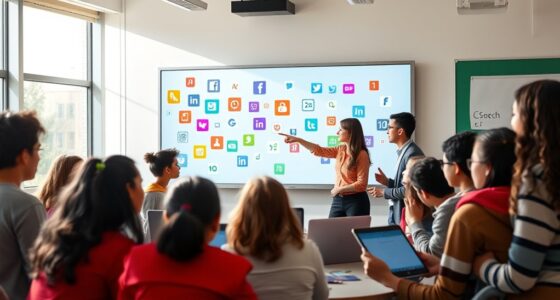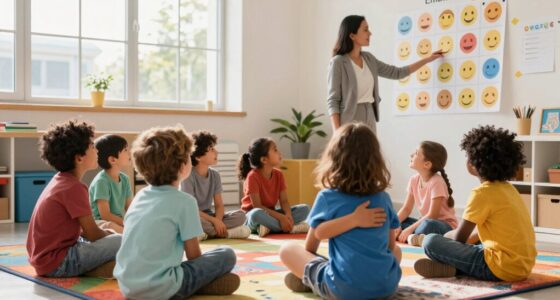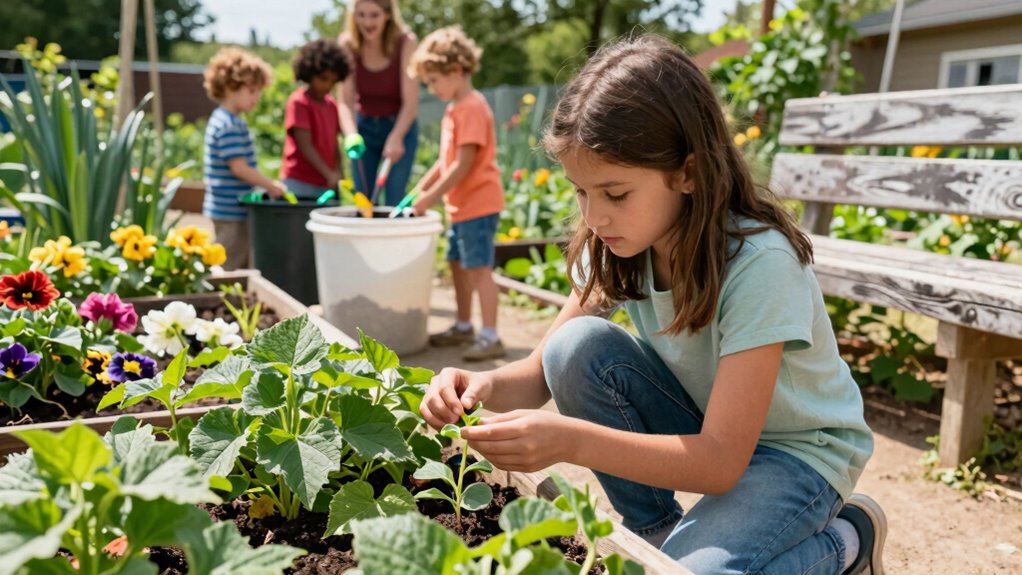

Real-life learning beyond formal curriculums happens when you actively participate in everyday situations, gaining practical skills through hands-on experiences. Whether troubleshooting a problem, managing a project, or resolving conflicts, you develop adaptability, resilience, and confidence. These experiences help you understand social dynamics and improve decision-making in unpredictable environments. By engaging in real-world challenges, you grow personally and professionally. Keep exploring, and you’ll discover even more ways to turn everyday moments into valuable learning opportunities.
Key Takeaways
- Gaining skills through hands-on experiences in daily life and unpredictable environments.
- Applying knowledge to solve real-world problems, adapting to specific situations.
- Engaging in active participation like fixing, planning, or resolving conflicts to develop diverse skills.
- Building resilience, adaptability, and a growth mindset through setbacks and continuous reflection.
- Enhancing personal and professional growth by developing leadership, communication, and practical problem-solving abilities.
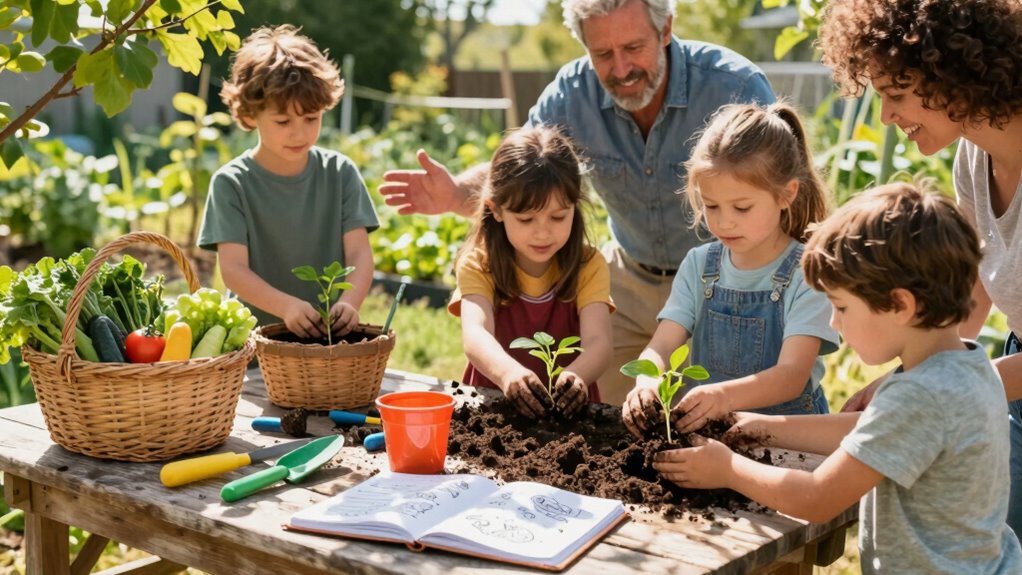
In today’s world, real-life experiences often teach us more than textbooks ever can. While formal education provides a solid foundation, it’s in everyday situations that you truly develop the skills and knowledge that stick with you. These moments help you acquire experiential skills—those abilities gained through direct involvement that can’t be learned from lectures alone. Practical knowledge, on the other hand, becomes evident when you’re faced with real-world challenges and find solutions on the spot. It’s about applying what you’ve learned in a context that’s unpredictable and often messy, pushing you to adapt and grow.
When you step outside the classroom, you encounter situations that require quick thinking and resourcefulness. For example, managing a small business, volunteering in your community, or even navigating a complex family issue can teach you more about leadership, communication, and problem-solving than any textbook. These experiences help you understand nuances and develop a deeper awareness of human behavior, social dynamics, and the practical implications of your decisions. This kind of learning isn’t passive; it involves active participation, reflection, and sometimes making mistakes that serve as valuable lessons. Recognizing the importance of experiential learning can help you intentionally seek out opportunities for growth beyond traditional settings.
Engaging in real-life scenarios allows you to learn by doing, which cements lessons in a way that passive reading can’t match. When you fix a broken appliance, plan an event, or handle a disagreement, you gain practical knowledge that’s immediately applicable. You learn to troubleshoot, prioritize, negotiate, and manage stress—all essential skills in both personal and professional spheres. These experiences also boost your confidence because you see your progress firsthand, recognizing that you’re capable of handling complex situations. Recognizing the importance of practical skills like project management or troubleshooting can significantly enhance your ability to adapt in real-world situations. Additionally, these hands-on experiences often foster resilience, teaching you to bounce back from setbacks and develop a growth mindset. Developing adaptability through such experiences is crucial for thriving amid changing circumstances.
Frequently Asked Questions
How Can Parents Support Informal Learning at Home?
You can support informal learning at home by encouraging playful exploration and spontaneous discovery. Create a rich environment with diverse materials and open-ended activities that invite curiosity. Join your child in their explorations, ask questions, and share in their discoveries. Allow them to experiment, take risks, and learn from mistakes. Your enthusiasm and involvement foster a love for learning, making everyday moments opportunities for meaningful growth beyond formal lessons.
What Are Some Examples of Everyday Skills Learned Naturally?
Have you ever watched your child negotiate a trade at the playground or help cook dinner? These are examples of everyday skills learned naturally. Practical skills like tying shoelaces or managing money develop through daily activities, while social interactions, such as sharing or resolving conflicts, grow through real-life experiences. These moments teach valuable lessons that no classroom can fully replicate, shaping your child’s confidence and independence over time.
How Do Workplaces Facilitate Real-Life Learning?
Workplaces facilitate real-life learning through workplace mentorship and experiential training programs. Mentorship allows you to learn directly from experienced colleagues, gaining practical insights and guidance. Experiential training offers hands-on opportunities to develop skills in real-world scenarios, boosting your confidence and competence. These approaches encourage continuous learning outside formal education, helping you adapt and grow professionally by applying knowledge in everyday work situations.
Can Hobbies Contribute to Lifelong Learning?
Yes, hobbies can definitely contribute to lifelong learning. Engaging in creative pursuits like painting, writing, or playing music fosters personal growth by challenging you to develop new skills and think differently. These activities encourage curiosity, perseverance, and problem-solving, which translate into real-life learning. As you pursue hobbies, you continuously expand your knowledge, adapt to new situations, and build confidence, making lifelong learning an enjoyable and integral part of your life.
What Role Does Community Engagement Play in Informal Education?
Community engagement plays a crucial role in informal education by fostering community collaboration and providing local mentorship opportunities. When you get involved, you learn from others’ experiences, gain practical skills, and build connections that support lifelong learning. By participating in local initiatives, you’re not only enriching your knowledge but also empowering others, creating a cycle of continuous growth and shared wisdom within your community.
Conclusion
As you navigate the world beyond textbooks, you’re planting seeds in the fertile soil of life’s lessons. Every challenge and conversation becomes a brushstroke on your personal masterpiece, shaping skills that no classroom can contain. Real-life learning is the wind that stirs your growth, pushing you toward horizons unseen. Embrace these moments—they’re the quiet symphony of experience, turning everyday life into a vibrant canvas of endless possibility.
Products Worth Considering

Marzano Resources Untangling Data-Based Decision Making: A Problem-Solving Model to Enhance MTSS (A practical tool to help you make sense of student data for effective use in MTSS)
As an affiliate, we earn on qualifying purchases.
As an affiliate, we earn on qualifying purchases.