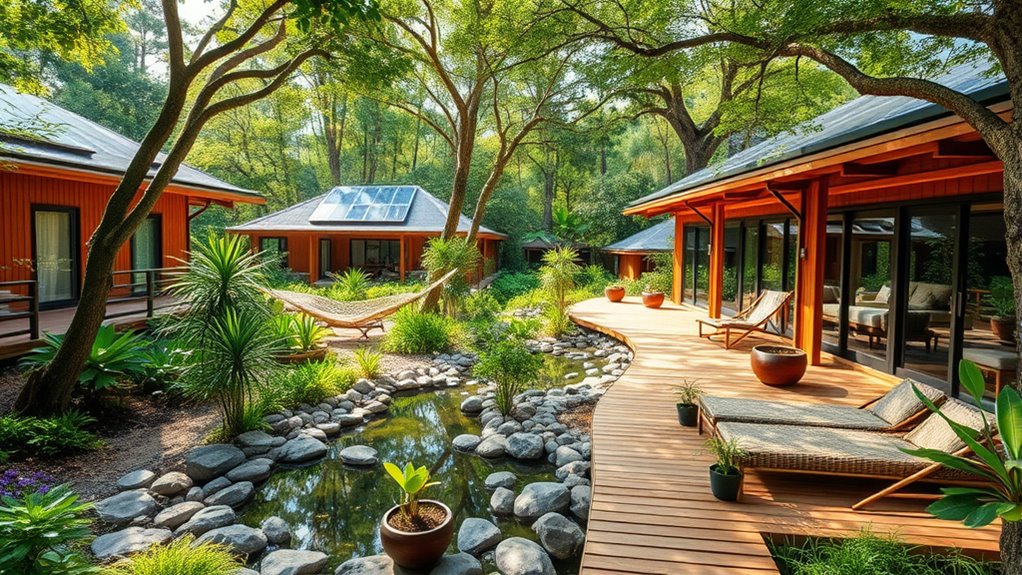

When designing eco-friendly retreat facilities, focus on integrating solar power with battery storage to harness renewable energy and reduce costs. Choose sustainable materials like reclaimed wood and bamboo for construction and furnishings, and use permeable pathways to manage stormwater. Maximize natural light and airflow through strategic layout, while selecting native, drought-tolerant plants for landscaping. These eco-conscious choices create a harmonious, low-impact environment that promotes health and sustainability—keep exploring to discover more ways to enhance your retreat’s green design.
Listen free for 30 days with Audible
Thousands of audiobooks and originals — cancel anytime.
As an affiliate, we earn on qualifying purchases.
Key Takeaways
- Incorporate solar panels and energy storage to utilize renewable energy and reduce operational costs.
- Select eco-friendly, locally sourced, and recycled building materials to minimize environmental impact.
- Design outdoor spaces with permeable surfaces and native plants to promote water conservation and ecosystem support.
- Maximize natural light and airflow through strategic building orientation and large windows to decrease energy use.
- Use sustainable landscaping practices that enhance biodiversity and require minimal maintenance.
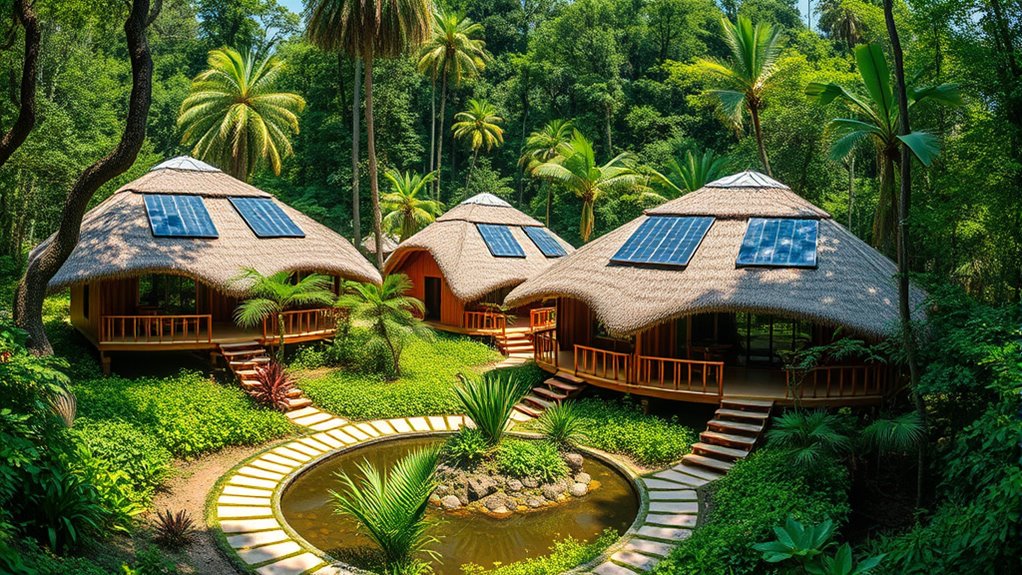
As more travelers seek sustainable ways to unwind, eco-friendly retreat facilities are gaining popularity for their commitment to environmental stewardship. When designing these retreats, you have the opportunity to make a real difference by integrating green technologies and sustainable practices from the ground up. One of the most impactful choices you can make is harnessing solar power. Installing solar panels allows you to generate clean energy directly from the sun, reducing reliance on fossil fuels and lowering your carbon footprint. Solar power not only diminishes operational costs over time but also demonstrates your dedication to renewable energy, attracting eco-conscious guests who value sustainability. To maximize efficiency, consider incorporating solar battery storage systems, which store excess energy for use during cloudy days or at night, ensuring a steady, reliable power supply. Additionally, exploring renewable energy options can further enhance your facility’s sustainability profile and reduce long-term energy costs. Equally important is your choice of sustainable materials. Selecting eco-friendly building materials minimizes environmental impact and supports healthier indoor air quality. Opt for locally sourced, renewable, and recycled materials whenever possible. For example, use reclaimed wood for furniture and structures, which reduces waste and preserves natural resources. Bamboo, known for its rapid growth and durability, makes an excellent flooring or wall paneling material. Low-VOC paints and finishes help maintain good indoor air quality, creating a healthier environment for your guests and staff. When constructing pathways or outdoor furniture, consider permeable materials like gravel or recycled rubber, which help manage stormwater runoff and prevent erosion, further aligning with your sustainability goals. Designings with sustainability in mind also involves thoughtful layout planning. Position buildings to maximize natural light and airflow, reducing the need for artificial lighting and climate control. Incorporate large windows and skylights, which bring in daylight and reduce energy use. Additionally, orienting structures to take advantage of the sun’s path can help with passive heating and cooling, decreasing your reliance on mechanical systems. Landscaping choices should emphasize native plants that require minimal watering and maintenance, conserving water resources and supporting local ecosystems.
Frequently Asked Questions
What Are the Initial Costs of Eco-Friendly Retreat Construction?
The initial costs of eco-friendly retreat construction vary, but you’ll likely spend more upfront on sustainable material sourcing and renewable energy integration. Expect higher expenses for eco-certified building materials, solar panels, and energy-efficient systems. However, these investments can reduce long-term operational costs. While the initial investment may be higher, you’ll benefit from lower energy bills and a smaller carbon footprint, making your retreat both eco-friendly and cost-effective over time.
How Can Existing Facilities Be Retrofitted Sustainably?
Did you know retrofitting existing facilities can cut energy costs by up to 30%? You can start by installing renewable energy sources like solar panels and wind turbines to reduce reliance on fossil fuels. Additionally, upgrade water systems with low-flow fixtures and rainwater harvesting to conserve water. These sustainable upgrades not only lower operational costs but also boost your eco-friendly credentials, making your retreat more appealing to environmentally conscious guests.
What Certifications Verify Eco-Friendly Retreat Practices?
You can verify your eco-friendly retreat practices through certifications like LEED Certification and Green Globe Certification. LEED focuses on sustainable building design, energy efficiency, and water conservation, while Green Globe emphasizes overall sustainability operations and community impact. Achieving these certifications demonstrates your commitment to eco-conscious practices, attracts environmentally-minded guests, and helps you meet industry standards for sustainability. Pursuing them proves your dedication to creating a responsible, eco-friendly retreat experience.
How Do Eco-Friendly Retreats Impact Local Wildlife?
You might think eco-friendly retreats harm local wildlife, but they actually support it. By creating wildlife corridors and planting native species, you help animals move safely and thrive. These practices minimize habitat disruption and foster biodiversity. While some worry about human impact, thoughtful planning guarantees your retreat enhances wildlife preservation. Your efforts directly contribute to healthier ecosystems, making your retreat a positive force for local wildlife.
What Are the Long-Term Maintenance Challenges?
You’ll face long-term maintenance challenges that test your commitment to landscape resilience and material durability. Over time, weather, pests, and wear can weaken eco-friendly materials, requiring regular inspections and repairs. You must stay proactive in preserving the integrity of natural surroundings while ensuring structures remain sustainable. Planning for ongoing upkeep helps maintain the retreat’s eco-credentials, protecting both the environment and your investment for years to come.
Conclusion
By choosing eco-friendly retreat facilities, you’re not only supporting sustainability but also creating a truly restorative experience. Imagine waking up surrounded by nature, knowing your stay leaves a positive impact on the environment. Isn’t it rewarding to relax while contributing to the planet’s well-being? Next time you plan a getaway, consider the benefits of eco-conscious options—because caring for nature means caring for yourself, too. Are you ready to make your next retreat more sustainable?
Products Worth Considering
solar panel with battery storage
As an affiliate, we earn on qualifying purchases.
As an affiliate, we earn on qualifying purchases.