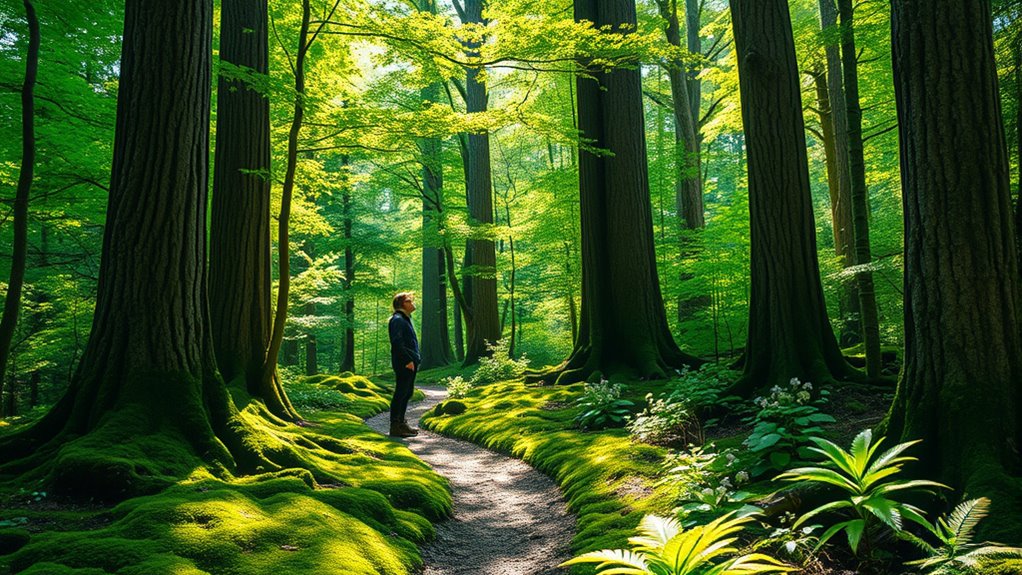

Forest bathing boosts your physical health by improving your immune system through phytoncides, natural compounds released by trees. It also enhances respiratory function with cleaner air and deep breathing, reducing stress and lowering blood pressure. The gentle activity of walking among trees supports circulation and joint flexibility, while the calming environment helps you relax and recharge. To find out how these benefits can make a difference in your overall wellness, keep exploring the positive effects of nature.
Key Takeaways
- Improves respiratory health by filtering pollutants and increasing oxygen intake during deep breathing.
- Lowers blood pressure and cortisol levels, reducing cardiovascular risk and promoting heart health.
- Enhances immune function through phytoncide inhalation, boosting resistance to illnesses.
- Supports physical activity, improving circulation, joint flexibility, and overall fitness.
- Reduces stress and mental fatigue, contributing to better sleep and physical resilience.
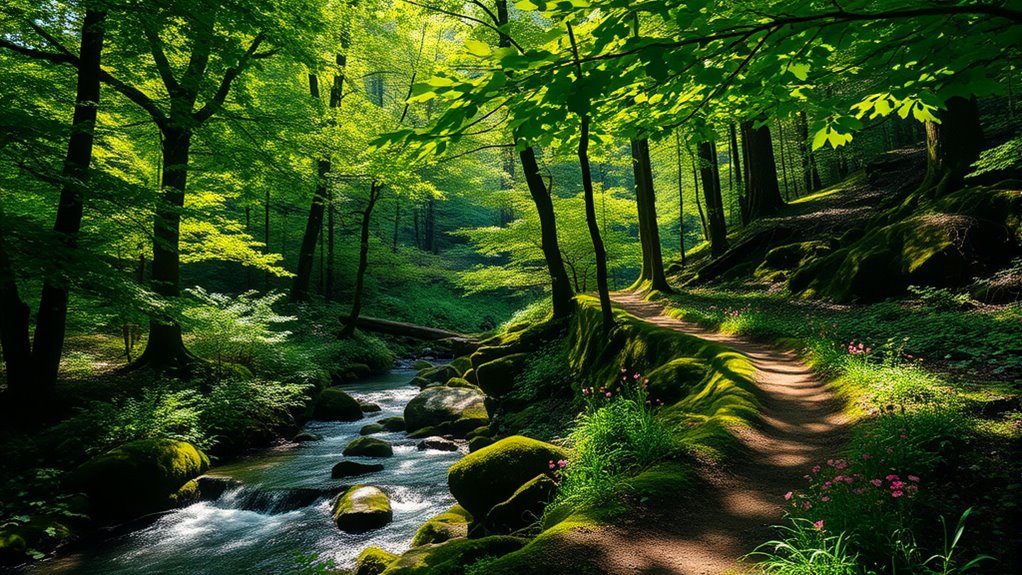
Have you ever wondered how spending time in nature can boost your well-being? One powerful way is through forest bathing, a practice that encourages you to immerse yourself fully in the natural environment. As you walk among towering trees and breathe in the fresh air, you naturally engage in mindfulness practices. This means paying close attention to your senses—feeling the texture of leaves, listening to birdsong, and noticing the scent of pine or cedar. These mindful moments help you stay present, reducing stress and fostering a sense of calm. When you’re fully engaged in nature, your mind shifts away from worries and daily distractions, allowing your mental state to reset and rejuvenate.
Immerse yourself in nature to boost your well-being through mindfulness and sensory connection.
Another significant benefit of forest bathing is the improvement in air quality. When you spend time in a forest, the abundance of trees and plants filters pollutants from the air. Trees absorb carbon dioxide and release oxygen, making the air you breathe cleaner and richer in fresh oxygen. This air quality improvement can have immediate positive effects on your respiratory health, especially if you suffer from asthma or allergies. Breathing deep in such an environment not only enhances lung function but also boosts your overall circulation. Better oxygen intake helps your body operate more efficiently, supporting immune function and reducing fatigue.
In addition to mental clarity and respiratory benefits, the physical health advantages of forest bathing extend to lowering blood pressure and reducing cortisol levels, the hormone associated with stress. Regular exposure to natural environments can help stabilize your heart rate and improve circulation, which, over time, decreases the risk of cardiovascular issues. The combination of fresh air and physical activity—walking slowly or gently exploring the surroundings—also promotes better joint health, flexibility, and muscle strength. It becomes a gentle form of exercise that doesn’t feel like a workout but still offers substantial health benefits.
Furthermore, the natural compounds released by trees, known as phytoncides, have been linked to immune system enhancement. When you breathe in these substances, they can help boost your body’s defenses against illness. This immune-boosting effect, combined with the stress reduction from mindfulness practices, creates a holistic benefit that supports your physical health. The more regularly you engage in forest bathing, the more you’ll notice improvements in your energy levels, sleep quality, and overall resilience. Engaging with high-quality projectors that support clear visuals can enhance your outdoor experience by providing immersive viewing options, even amidst nature. Spending time in nature isn’t just a break from daily life; it’s a proactive way to nurture your body and mind, supporting long-term health in simple, accessible ways.
Frequently Asked Questions
Can Forest Bathing Improve Mental Health Beyond Physical Benefits?
Yes, forest bathing can improve your mental health beyond physical benefits. When you practice mindfulness during your walk, you become more aware of your surroundings, which helps reduce stress. The calming effect of nature allows you to disconnect from daily worries, enhancing your mood and emotional resilience. Engaging in this mindful activity fosters relaxation and mental clarity, making it a powerful tool for overall mental well-being.
How Often Should I Practice Forest Bathing for Optimal Results?
You should aim for forest bathing sessions at least once a week to see notable benefits, following recommended frequency guidelines. Each session should last around 2 hours for ideal duration, allowing your mind and body to fully relax and absorb the environment. If you can, increase frequency or duration gradually, but consistency is key. Regular practice enhances mental clarity, reduces stress, and boosts your overall well-being.
Are There Any Risks or Contraindications for Forest Bathing?
You should be aware that forest bathing carries minimal risks, but allergic reactions to pollen or mold can occur if you’re sensitive. Additionally, wildlife encounters might pose safety concerns, so stay cautious and respectful of animals. To minimize risks, avoid forest bathing during high pollen seasons, stick to designated trails, and remain alert. If you have allergies or health issues, consult a healthcare provider before starting this practice.
Does Age Affect the Health Benefits of Forest Bathing?
Think of your body as a finely tuned instrument—age-related physiological changes can affect how you experience forest bathing, but they don’t silence its benefits. Older adults might notice differences due to lifespan considerations, like reduced lung capacity or slower circulation. Still, spending time among trees can boost your immune system and improve mood at any age. It’s never too late to let nature’s symphony heal and energize you.
Can Forest Bathing Help With Specific Health Conditions or Illnesses?
Yes, forest bathing can help with specific health conditions like respiratory issues and immune support. When you immerse yourself in nature, you’re breathing cleaner air, which can improve your respiratory health. The calming environment also boosts your immune system by reducing stress hormones. Regular forest walks may lessen allergy symptoms and strengthen your body’s defenses, making it a natural complement to managing certain illnesses and promoting overall wellness.
Conclusion
As you step into the forest’s embrace, you’ll find your health blossoming like a tree reaching for the sun. Forest bathing isn’t just a walk; it’s a remedy that nurtures your body, reduces stress, and boosts your immune system. Embrace this natural sanctuary and let nature’s quiet whispers heal you from the inside out. Remember, in the forest’s stillness, you plant the seeds for a healthier, happier you—like a gentle rain nourishing a thriving garden.
Products Worth Considering

Forest Bathing: Discovering Health and Happiness Through the Japanese Practice of Shinrin Yoku (A Start Here Guide) (A Start Here Guide for Beginners)
As an affiliate, we earn on qualifying purchases.
As an affiliate, we earn on qualifying purchases.