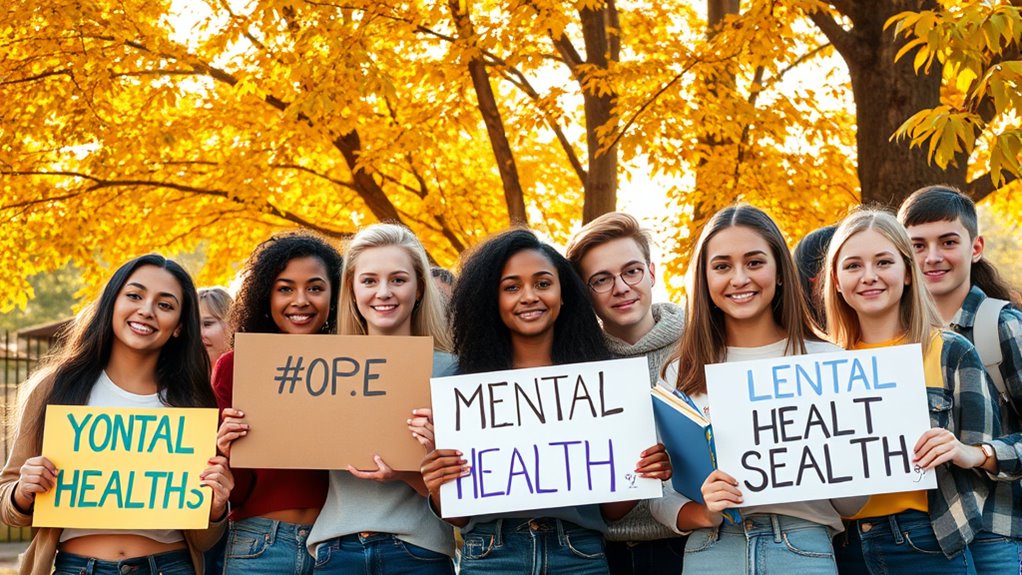

Youth-led mental health advocacy empowers you to shape conversations, challenge stigma, and drive real change in your community. When you step into leadership roles, you help normalize mental health discussions and break down barriers. Sharing your stories and supporting peers creates safe spaces and encourages others to seek help. Your efforts can influence policies and foster understanding. Keep exploring to discover how young voices are transforming mental health awareness around the world.
Key Takeaways
- Youth-led initiatives challenge stigma and promote open discussions about mental health in communities.
- Young leaders share personal stories to normalize mental health struggles and encourage support-seeking.
- Peer support networks create safe spaces, fostering connection and reducing feelings of isolation among youth.
- Youth advocacy influences policies and increases access to mental health resources and services.
- Active youth involvement inspires broader cultural shifts toward acceptance and prioritization of mental health.
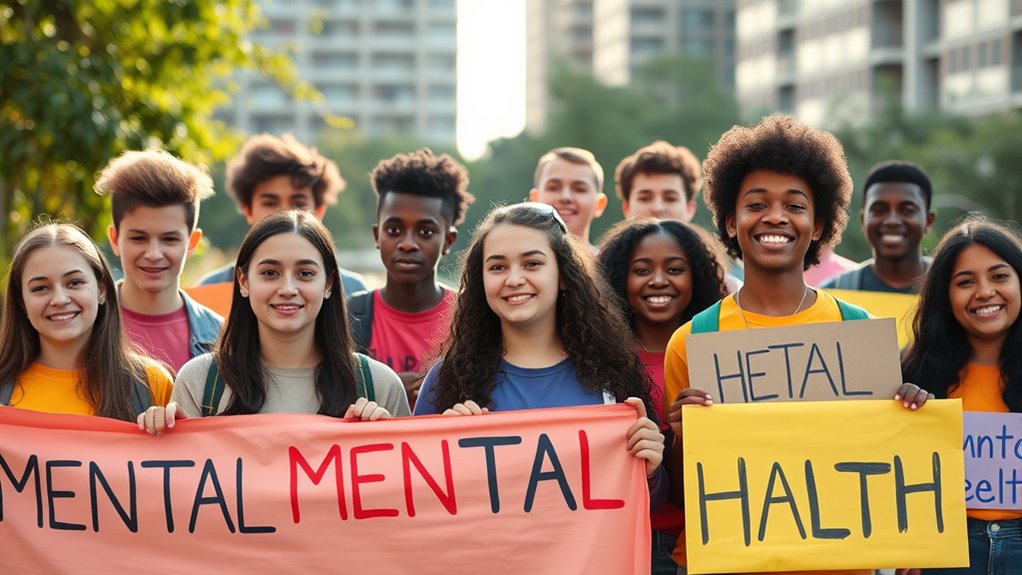
Young people are increasingly taking charge of mental health advocacy, recognizing that their voices can drive meaningful change. By stepping into leadership roles, they’re reshaping how mental health issues are discussed, understood, and addressed within their communities. One of the most powerful tools in this movement is peer support. When you connect with others who’ve faced similar struggles, you create a safe space where sharing experiences feels natural and empowering. Peer support helps break down feelings of isolation, reminding you that you’re not alone in your journey. It fosters a sense of community, encouraging open conversations that can lead to healing and resilience. As young advocates, you’re showing that support doesn’t always need to come from professionals—it can come from friends and peers who genuinely understand what you’re going through. This approach has a ripple effect, inspiring others to seek help and offer their own support, ultimately strengthening the fabric of mental health awareness within your circles.
Additionally, involving youth in mental health advocacy initiatives can challenge systemic barriers and promote policy changes that improve access to resources and services for all young people.
At the same time, youth-led advocacy plays a critical role in stigma reduction. For too long, mental health issues have been shrouded in shame and misunderstanding, discouraging many from seeking help. When you speak openly about mental health, challenge misconceptions, and share personal stories, you help dismantle the stereotypes that fuel stigma. Your voices highlight that mental health struggles aren’t a sign of weakness but a part of the human experience. By normalizing conversations around mental health, you make it easier for others to reach out and ask for support without fear of judgment. This cultural shift is essential—when stigma decreases, more young people feel empowered to access resources, participate in therapy, or simply talk about their feelings without shame. As a youth advocate, you’re demonstrating that change is possible when young people take the lead, breaking down barriers that have historically silenced many.
Your involvement in peer support initiatives and efforts to reduce stigma isn’t just about raising awareness—it’s about creating tangible change in how mental health is perceived and addressed. Each conversation you start, each story you share, and each community event you organize contributes to a broader movement focused on acceptance and understanding. When young people take these steps, they’re not only advocating for themselves but also paving the way for a future where mental health support is accessible, stigma-free, and normalized. Your leadership inspires others to join in, amplifying the message that mental health matters and that youth voices are powerful agents of change.
Frequently Asked Questions
How Can Youth Start Their Own Mental Health Advocacy Initiatives?
You can start your own mental health advocacy by leveraging digital platforms to share stories, spread awareness, and connect with peers. Build a supportive community around peer support, encouraging open conversations and resource sharing. Organize virtual events or campaigns to reach a wider audience and inspire others to join your cause. Stay informed about mental health issues, collaborate with local organizations, and use social media to amplify your message and create meaningful change.
What Challenges Do Youth Face When Advocating for Mental Health?
You might face challenges like overcoming stigma and gaining peer support when advocating for mental health. People often hesitate to discuss mental health openly, making stigma reduction difficult. Additionally, building peer support can be tough if others don’t see the importance of mental health issues. To succeed, you need to stay persistent, educate others, and foster a safe space where open conversations about mental health are encouraged and supported.
How Can Adults Best Support Youth-Led Mental Health Efforts?
Like a sturdy oak supports the forest, you can support youth-led mental health efforts through active community engagement and policy influence. Listen to their ideas, amplify their voices, and provide resources without overshadowing them. Trust their leadership, advocate for policies that empower youth, and create safe spaces for open dialogue. Your support helps turn their passion into impactful change, fostering resilience and understanding in the wider community.
What Impact Have Youth-Led Mental Health Campaigns Made so Far?
Youth-led mental health campaigns have made a significant impact by promoting peer support and reducing stigma. Your efforts inspire others to speak openly and seek help, creating a supportive community. These campaigns raise awareness about mental health issues, break down barriers, and encourage young people to take action. As a result, more youth feel empowered to share their struggles and access the resources they need, fostering positive change across communities.
How Can Schools Integrate Youth Voices Into Mental Health Programs?
Imagine your school as a garden where every plant’s voice matters. You can integrate youth voices into mental health programs by cultivating peer support networks, allowing students to share experiences. Incorporate mental health topics into the curriculum, making it part of everyday learning. This way, students feel valued and heard, strengthening the overall mental health ecosystem and nurturing a resilient, supportive environment for all.
Conclusion
You stand at the forefront of change, wielding your voice to challenge stigma and break down barriers. While the world often sees youth as inexperienced, your passion proves otherwise—powerful and transformative. In a landscape where silence can threaten mental health, your advocacy is a beacon of hope, shining brightly against the shadows. Together, you’re shaping a future where understanding and support aren’t just ideals, but realities born from your courage.