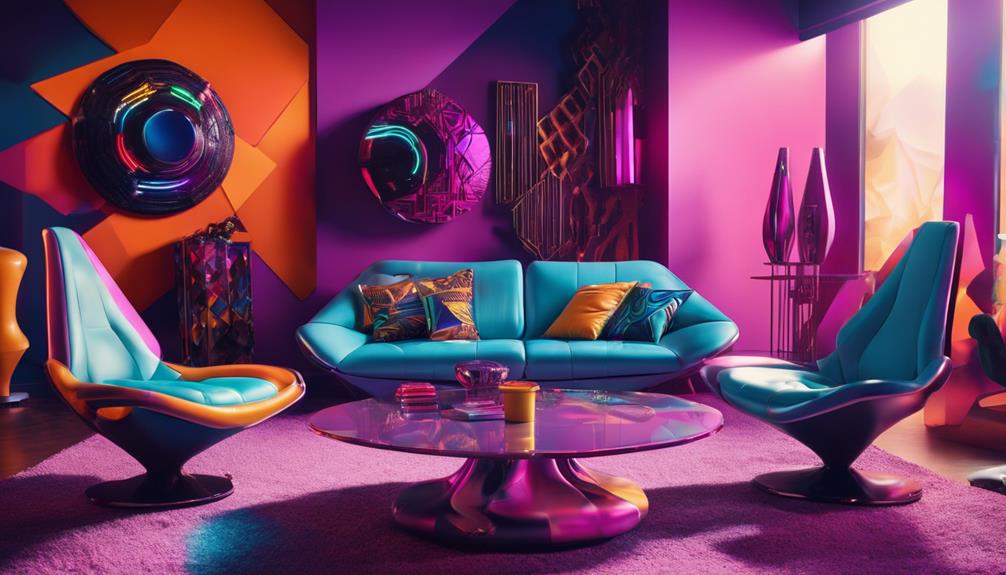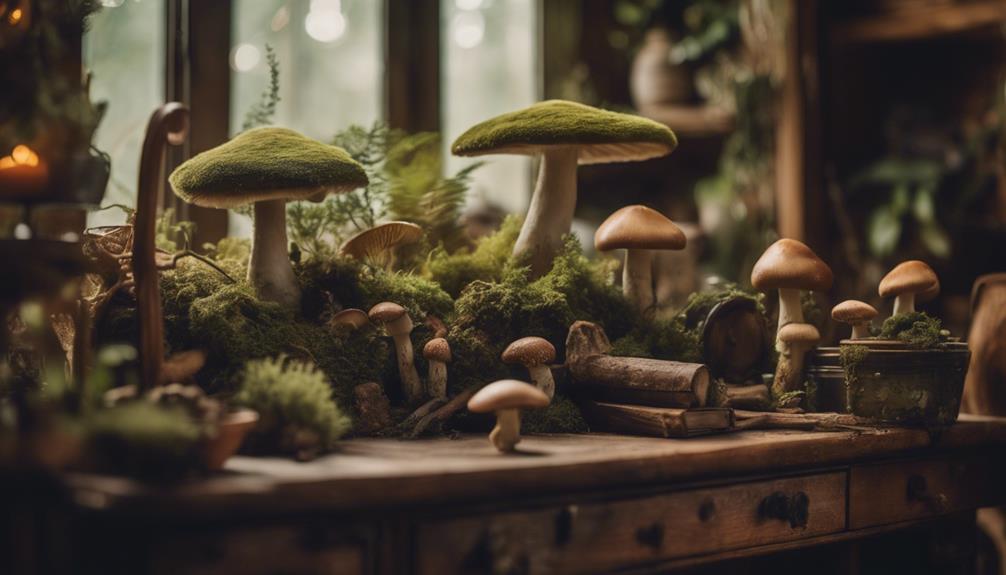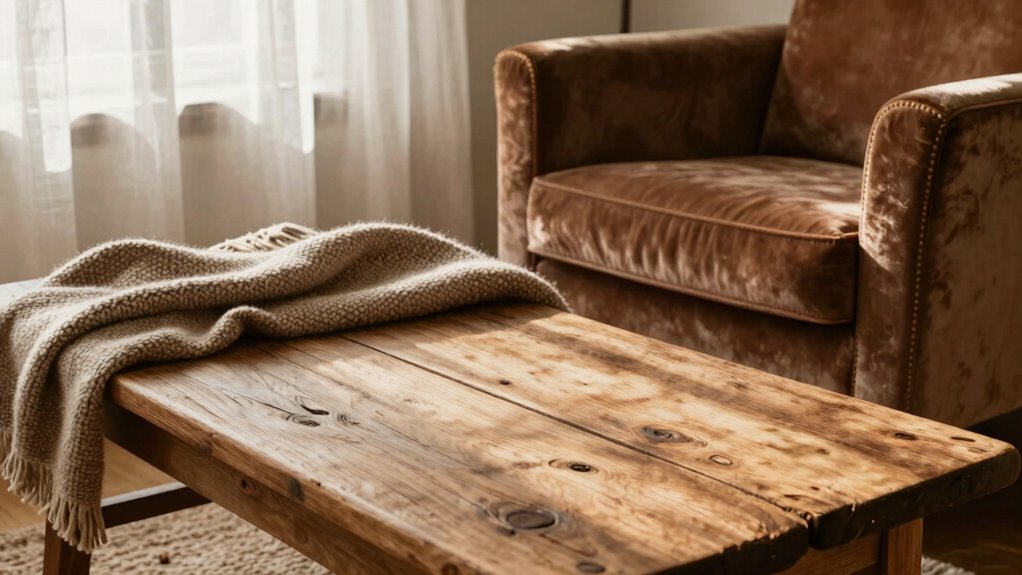

In soulful interiors, textures matter more than color because they create a richer, more authentic atmosphere that engages your senses. Tactile layers, like plush velvet or rough wood, evoke emotional responses and deepen your connection to the space. Unlike color, which can be fleeting, textures add depth and genuine character, making your environment feel warm and personal. Keep exploring to discover how carefully chosen textures can transform your space into a soulful retreat.
Key Takeaways
- Textures evoke emotional and sensory responses that color alone cannot fully achieve, deepening the soulful feel.
- Layering diverse tactile surfaces creates a rich, authentic atmosphere that reflects personal identity.
- Natural materials and varied textures add genuine depth and authenticity to interior spaces.
- Contrasts in textures foster emotional connection and create a dynamic, inviting environment.
- Tactile layering transforms interiors into soulful retreats, emphasizing feeling over visual aesthetics.
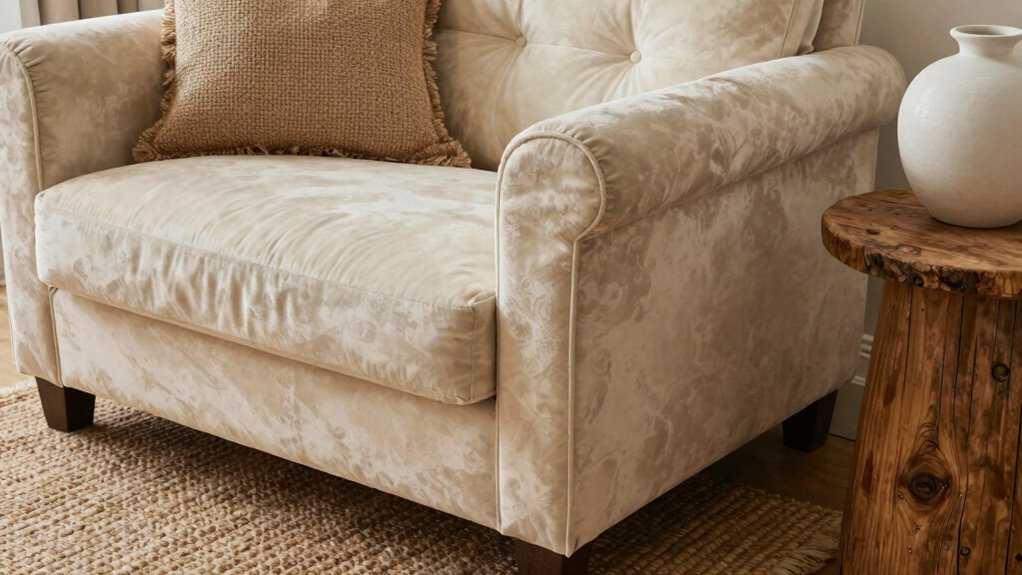
Have you ever noticed how the textures in a room can dramatically influence its feel and atmosphere? It’s not just about what you see; it’s about what you feel. Texture adds depth and personality, creating a space that resonates with your soul. When you focus on tactile layering—the way various surfaces interact—you deepen the room’s emotional impact. This approach is a key element of personalized interior design, where each texture contributes to a cohesive story. Instead of relying solely on color, you can craft a soulful interior through the thoughtful interplay of different textures. Imagine a plush velvet sofa paired with a rough-hewn wooden coffee table or a sleek leather chair against a textured, woven wall hanging. These contrasts don’t just look good; they invite you to touch and connect with the space on a sensory level. Incorporating natural materials like stone, wood, or linen further enhances eco-friendly design and adds authenticity. Tactile layering is about combining textures that complement and challenge each other, creating a dynamic environment that feels alive. You might layer a soft, fluffy rug beneath a hard, glossy floor or drape a chunky knit throw over a smooth leather armchair. The key is to balance these elements so they enhance one another rather than compete. When you master this, you craft a room that’s warm, inviting, and full of character—more than just visual appeal. It becomes a sanctuary where your senses are engaged, where every surface tells a story.
Textures create soulful spaces that invite touch, deepening emotional connection through tactile contrast and layered surfaces.
Textural contrast is also about choosing materials that evoke emotional responses. Rough textures can convey strength and grounding, while smooth or soft surfaces evoke calm and comfort. The way you blend these creates a soulful ambiance that resonates with your personal style. Think about incorporating natural materials like stone, wood, or linen, which bring authenticity and tactile richness. When you add layers of textures, you add layers of meaning. It’s about more than just aesthetics; it’s about creating a space that feels genuine and emotionally nourishing. Material variety plays a significant role in achieving this balance, ensuring your interior remains engaging and layered. Ultimately, you realize that color alone can’t evoke the same depth of feeling as varied textures. Texture invites you to experience a room on a visceral level. It’s an artful dance of tactile layering and contrast that transforms a simple space into a soulful retreat. When you prioritize texture, you craft an environment that’s not only visually compelling but also emotionally resonant—an interior that truly feels like home.
Frequently Asked Questions
How Do Textures Influence the Mood of a Space?
Textures influence the mood of your space by enhancing the sensory experience and creating tactile warmth. When you incorporate soft fabrics, textured wall coverings, or cozy rugs, you invite comfort and relaxation. These tactile details make your environment feel inviting and soulful, encouraging you to unwind. By playing with different textures, you can set a calming, energizing, or intimate mood—making your space truly resonate with your emotional vibe.
Can Mixing Textures Make a Room Feel Chaotic?
Mixing textures can sometimes make a room feel chaotic, but it largely depends on how you approach it. By balancing texture contrast thoughtfully, you create visual interest without overwhelming the space. Tactile harmony is key—you want different textures to complement rather than clash. When done right, mixing textures adds depth and character, making your interior feel soulful and inviting, rather than chaotic.
What Are the Best Textures for Small Interiors?
In small interiors, you want textures that add depth without clutter. Think of tactile sensations like a soft throw or a woven rug—these create perfect textural contrast, making your space feel larger and inviting. You can’t go wrong with smooth velvet, rough burlap, or sleek leather; they add dimension without overwhelming. Just like a well-choreographed dance, balance textures to keep your room feeling cozy yet spacious.
How Do I Balance Textures Without Overwhelming the Room?
To balance textures without overwhelming your room, start by layering patterns thoughtfully, mixing smooth and rough surfaces. Incorporate tactile accessories like soft throws, textured pillows, or woven baskets to add depth. Keep a neutral base to prevent cluttering the space visually. Use fewer, well-chosen textured pieces, allowing each to stand out. This approach creates harmony, making your interior inviting and soulful without feeling chaotic.
Are There Universal Textures That Suit All Interior Styles?
While no textures are truly universal, layered textiles and tactile surfaces often work well across styles. You’re encouraged to incorporate cozy woven throws, soft velvet cushions, or smooth leather accents—these elements add depth without overpowering. By mixing these textures thoughtfully, you create a room that feels inviting and balanced, capturing a soulful vibe. Embrace the subtle complexity of layered textiles, knowing they adapt beautifully to various interior styles.
Conclusion
Remember, in soulful interiors, texture often trumps color. While vibrant hues catch your eye, it’s the tactile richness—the soft velvet, rough linen, or smooth wood—that stirs emotion and invites connection. Imagine walking into a space where the gentle warmth of a chunky knit blanket contrasts with sleek, cool marble. It’s in these layered textures that your home truly breathes life, creating a sanctuary where your senses are awakened, and your soul feels at home.