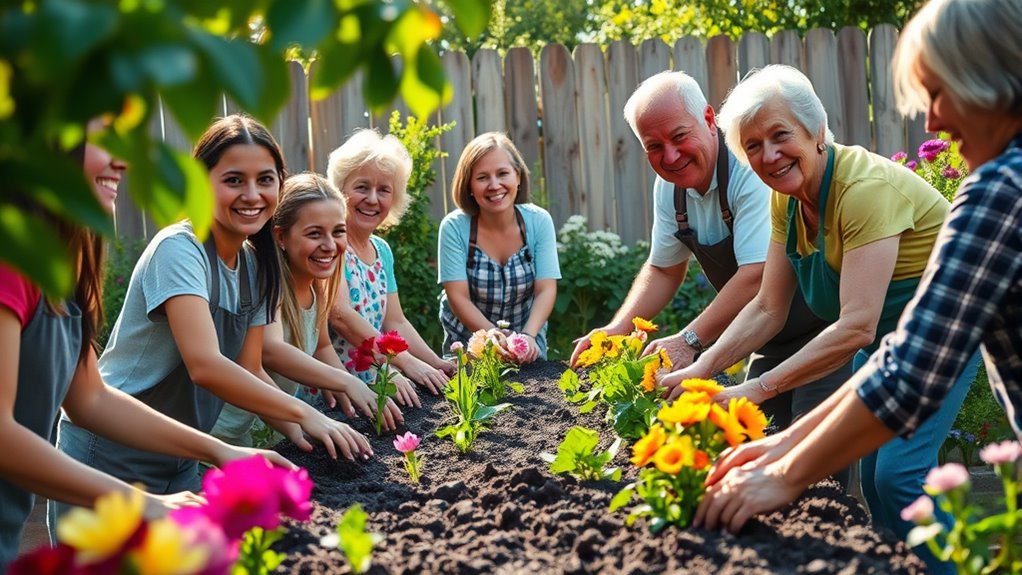

Volunteering helps you build strong connections by bringing together people with shared goals and interests. As you work on community projects or activities, you’ll meet diverse individuals, forming genuine relationships that often turn into lifelong friendships or professional networks. It’s a natural way to foster mutual support, empathy, and understanding. By engaging actively, you’ll uncover more about how these connections can continue to grow and benefit your personal and community life.
Key Takeaways
- Volunteering fosters shared goals and mutual support, leading to meaningful relationships within community projects.
- Engaging in volunteer activities helps meet diverse individuals, expanding personal and professional networks.
- Collaborative efforts during volunteering naturally develop genuine friendships and mentorship opportunities.
- Volunteering enhances communication and teamwork skills, strengthening connections through ongoing collaboration.
- Building relationships through volunteering creates a support system that promotes empathy and community resilience.
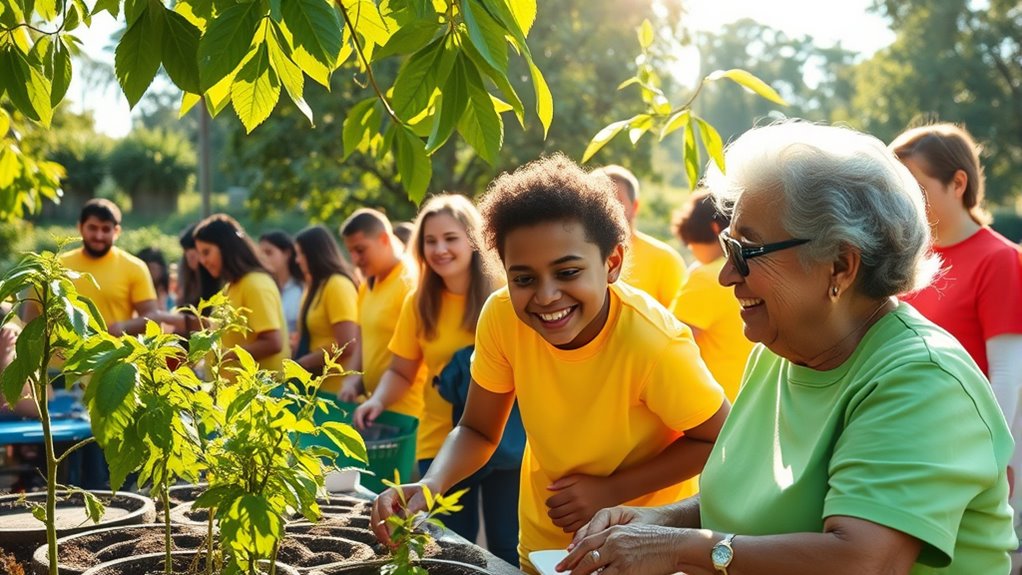
Volunteering isn’t just about giving back; it’s a powerful way to build meaningful connections with others. When you lend your time and effort to community projects, you become an active participant in a network of shared goals and mutual support. This process of community engagement allows you to meet diverse individuals who share your interests and values, creating bonds that often extend beyond the immediate task. As you work alongside others, you’ll find that genuine relationships form naturally, fostering a sense of belonging and trust. These connections can lead to lifelong friendships, mentorship opportunities, or even professional collaborations that enrich your personal and career development.
Engaging in volunteer activities puts you in situations where you can develop new skills while helping others. Whether it’s organizing events, tutoring, or participating in environmental cleanups, each experience sharpens your abilities and broadens your perspective. Skill development through volunteering isn’t just about acquiring specific competencies; it’s also about learning how to communicate effectively, work as part of a team, and adapt to different environments. These soft skills are highly valued in every aspect of life, making you more confident and versatile in your personal and professional spheres. As you overcome challenges and celebrate successes within your volunteer role, you build resilience and a proactive attitude that benefits all areas of your life.
Volunteering develops vital soft skills like communication, teamwork, and adaptability, boosting confidence and resilience in all areas of life.
Furthermore, volunteering often exposes you to different communities and cultures, deepening your understanding of societal issues. This awareness fosters empathy and a sense of shared responsibility, strengthening your commitment to community engagement. When you see firsthand the impact of your efforts, you become more motivated to continue contributing and to encourage others to get involved. The relationships you forge through volunteering aren’t limited to the immediate project; they can evolve into broader networks that support your growth and provide a sense of purpose. The connections aren’t just about socializing—they’re about creating a support system that recognizes your contributions and helps you grow.
In addition, engaging in volunteer work aligns with the benefits of curiosity, as it encourages exploration of new ideas, perspectives, and community needs, enriching your understanding and approach to life. The relationships you forge through volunteering aren’t limited to the immediate project; they can evolve into broader networks that support your growth and provide a sense of purpose. The connections aren’t just about socializing—they’re about creating a support system that recognizes your contributions and helps you grow.
In essence, volunteering is a mutually beneficial experience: you gain skills and build connections, while the community benefits from your efforts. It’s a dynamic way to foster personal growth, expand your network, and make a genuine difference. As you embrace volunteering, you’ll discover that the relationships you form and the skills you develop are valuable assets that last long after the project ends. This ongoing cycle of community engagement and skill development helps you become not just a volunteer, but a more connected, empathetic, and empowered individual.
Frequently Asked Questions
How Do I Find the Right Volunteering Opportunity for Me?
To find the right volunteering opportunity, consider what skills you’d like to develop and what brings you personal fulfillment. Reflect on your interests and strengths, then research organizations that align with those passions. Reach out to ask about roles that match your skill set, and choose opportunities where you feel motivated to contribute. This way, you’ll enjoy the experience and gain meaningful growth while making a positive impact.
Can Volunteering Help Improve My Professional Network?
Like Hercules completing his labors, volunteering can strengthen your professional network. It offers valuable networking benefits by connecting you with diverse people and potential mentors. Plus, it boosts your skill development, making you more attractive to future employers. As you contribute, you’ll build relationships that might lead to job opportunities or collaborations. So, volunteering isn’t just giving back — it’s a strategic move to grow your career.
What Are Some Common Challenges Faced When Volunteering?
When volunteering, you might face challenges like volunteer burnout, where exhaustion affects your motivation and effectiveness, or cultural barriers that hinder communication and understanding. You could also encounter mismatched expectations or limited time availability. To overcome these, set clear boundaries, seek diverse opportunities, and stay patient with cultural differences. Remember, addressing these challenges helps you grow personally and professionally, making your volunteer experience more rewarding and impactful.
How Much Time Should I Commit to Volunteering?
You should start by evaluating your available time commitment and volunteering frequency that fits your schedule. Ideally, dedicate a consistent amount of time each week or month, such as a few hours weekly or monthly, to build meaningful connections. Remember, even small, regular commitments can make a big impact. Balance your volunteering efforts with other responsibilities to stay engaged and avoid burnout.
Are Virtual Volunteering Options Effective for Building Connections?
Yes, virtual volunteering can be effective for building connections through virtual engagement. By actively participating in online projects, you create opportunities to develop meaningful online relationships with others who share your interests. Regular communication, collaboration, and shared goals foster a sense of community. While it might lack face-to-face interaction, consistent online engagement can still cultivate strong connections, making virtual volunteering a valuable way to expand your network.
Conclusion
By volunteering, you not only help others but also forge meaningful connections. Imagine joining a local cleanup event and meeting someone who shares your passion for the environment. Over time, those shared experiences can turn into lasting friendships and even new opportunities. So, next time you consider volunteering, remember it’s more than giving back—it’s about building a community where genuine relationships grow naturally. Your involvement could be the start of something truly impactful.