To create a vertical garden on your small balcony, start by selecting compact, low-maintenance plants suited to your sunlight and space. Use containers with good drainage and establish a consistent watering routine, adjusting for weather conditions. Regularly check soil moisture and choose lighting that supports healthy growth and vibrant colors. With careful plant placement and proper watering, you can turn your balcony into a lush, thriving green space—keep exploring to master every detail.
Key Takeaways
- Choose compact, low-maintenance plants that thrive in containers and suit your balcony’s sunlight conditions.
- Use vertical planters, wall-mounted pockets, or hanging containers to maximize limited space.
- Ensure proper drainage and use moisture-retentive soil to prevent overwatering and root rot.
- Establish a consistent watering routine, adjusting for weather and plant needs, with drip irrigation or self-watering systems.
- Regularly assess lighting conditions and position plants to optimize sunlight exposure and vibrant growth.
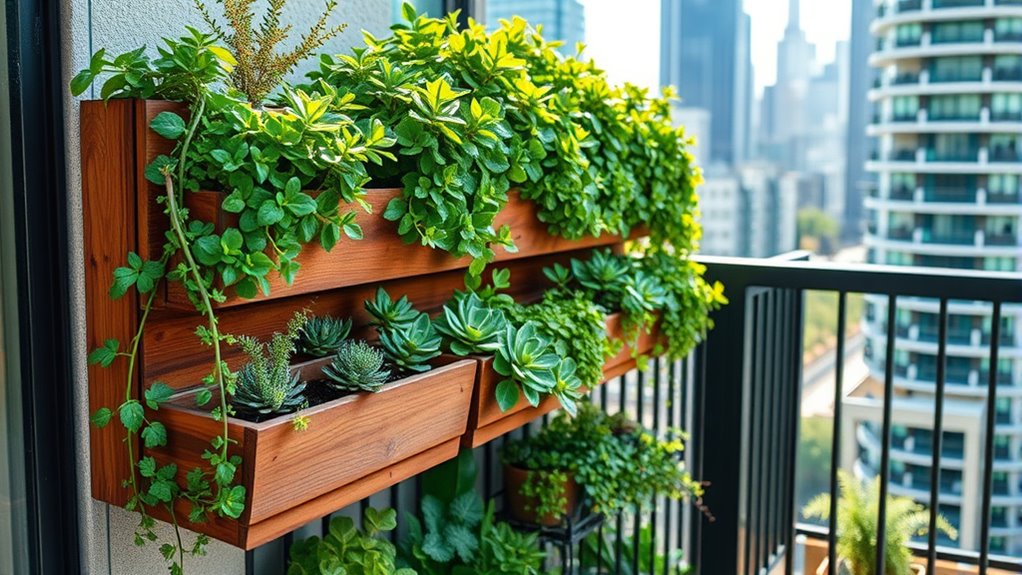
If you have a small balcony, creating a vertical garden is a clever way to maximize your space and add greenery to your outdoor area. When starting your project, the first step is choosing the right plants. Opt for plant selection that suits your climate, sunlight, and the available space. Compact, low-maintenance plants like herbs, succulents, or small flowering plants work well in vertical setups. Consider plants that thrive in containers and don’t require deep roots, as this will make your vertical garden more manageable. Mixing different types of plants can create visual interest, but be mindful of their growth habits and care needs to prevent overcrowding or competition for resources.
Once you’ve selected your plants, focus on proper watering techniques to keep them healthy. Vertical gardens tend to dry out faster than ground-level gardens, so establishing an efficient watering routine is essential. Use drip irrigation systems or self-watering containers if possible, as these help maintain consistent moisture levels and reduce water waste. If you’re watering manually, do so early in the morning or late in the afternoon to minimize evaporation. Be attentive to the water needs of each plant; some species like succulents require infrequent watering, while herbs and flowering plants may need more regular attention. Check the soil moisture regularly by inserting your finger into the soil or using a moisture meter—if the top inch feels dry, it’s time to water.
Another tip for watering techniques is to ensure good drainage. Overwatering can lead to root rot, so your containers should have drainage holes. If they don’t, add some or use a layer of gravel at the bottom to improve water flow. When watering, do so thoroughly, allowing excess water to drain out, rather than just dampening the surface. This encourages deeper root growth and prevents salt buildup. Keep an eye on weather conditions too; during hot, windy days, your plants will need more frequent watering, while cooler or rainy days may require less. Additionally, understanding contrast ratio helps in assessing how well your vertical garden’s lighting conditions will support healthy plant growth and vibrant colors.
Frequently Asked Questions
What Are the Best Plants for Shaded Small Balconies?
When choosing plants for shaded small balconies, you need to focus on plant selection that thrives in low sunlight. Look for species with low sunlight requirements, such as ferns, hostas, or impatiens. These plants will flourish despite limited light. You should also consider their watering needs and growth habits. By selecting the right plants, you’ll create a lush, vibrant space even in the shade.
How Do I Prevent Pests in My Vertical Garden?
Think of your garden as a peaceful sanctuary where pests shouldn’t invade. To keep unwanted visitors at bay, use pest control methods like introducing natural predators or physical barriers. Organic pest deterrents, such as neem oil or garlic spray, act as guardians, repelling pests without harm. Regularly inspect your plants, remove affected leaves, and maintain good airflow to prevent infestations, ensuring your vertical garden remains vibrant and healthy.
What Is the Optimal Watering Schedule for Small Balcony Gardens?
You should focus on maintaining consistent watering frequency based on your plants’ needs. Check soil moisture regularly—stick your finger about an inch deep; if it feels dry, it’s time to water. For most small balcony gardens, watering every 2-3 days works well, but adjust based on weather and plant type. Avoid overwatering, as it can cause root rot, and ensure proper drainage to keep your plants healthy.
Can Vertical Gardens Be Installed Indoors on Balconies?
Did you know that indoor vertical gardens can increase air quality by up to 20%? You can definitely install them on balconies, provided you have enough natural light or supplement with grow lights. Just guarantee your plants get adequate indoor lighting, and regularly practice pest control methods to keep pests at bay. With proper setup, your indoor vertical garden can thrive and add vibrant greenery to your balcony space.
How Do I Ensure Proper Drainage in Compact Vertical Gardens?
To guarantee proper drainage in compact vertical gardens, you need effective drainage systems like trays or perforated containers that prevent water buildup. Select soil that’s lightweight and well-draining to avoid excess moisture. Regularly check your drainage outlets, clear any blockages, and avoid overwatering. By combining good drainage systems with appropriate soil selection, you’ll keep your vertical garden healthy and prevent issues like root rot or water damage.
Conclusion
With a little creativity, you can transform your small balcony into a lush oasis using vertical gardens. Did you know that vertical gardening can increase your outdoor space’s greenery by up to 50% without taking up extra floor area? So, don’t wait—start planning your vertical garden today. Not only will it boost your balcony’s beauty, but it can also improve air quality and your mood. Get planting and enjoy your mini green paradise!