
To upcycle furniture as a beginner, start by choosing a piece and cleaning it thoroughly. Sand the surface smoothly, then prime it to improve paint adhesion. Pick colors and hardware that match your style, and apply paint or stain in thin coats, letting each dry completely. After finishing, attach new hardware carefully to complete your look. Taking your time guarantees a stunning, personalized piece that reduces waste—keep going for more tips to make your project successful.
Key Takeaways
- Start with thorough cleaning, sanding, and priming to prepare furniture for painting or staining.
- Choose a color scheme and hardware that complement your room’s decor for a cohesive look.
- Apply paint or stain in thin, even coats, allowing each layer to dry completely for a smooth finish.
- Seal surfaces with a protective topcoat like polyurethane to enhance durability and longevity.
- Attach new hardware carefully, ensuring proper alignment, and add final touches to showcase your personalized piece.
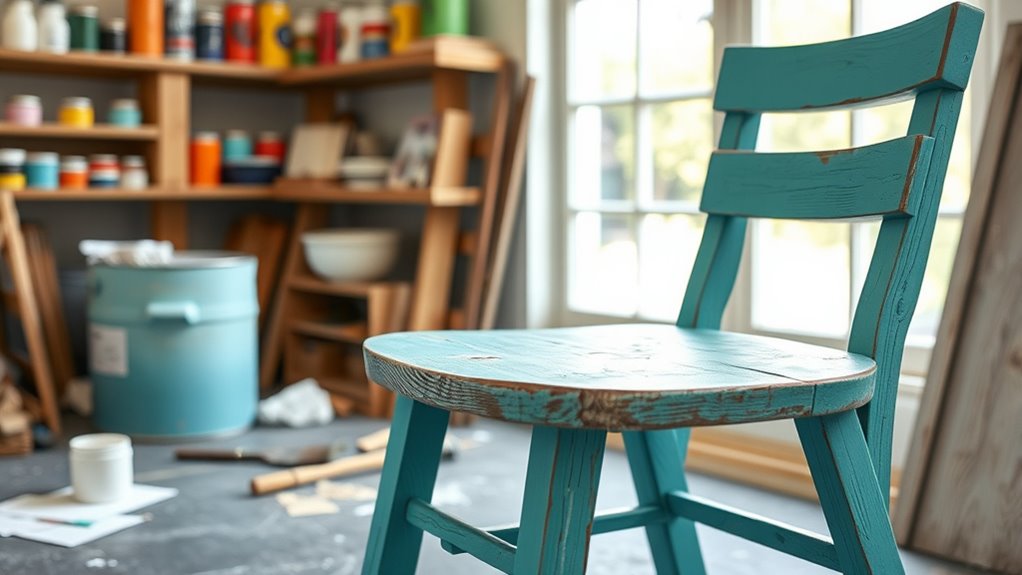
Have you ever considered transforming old furniture into something new and stylish? Upcycling is a fantastic way to breathe new life into worn-out pieces while adding a personal touch to your space. The first step is understanding how to choose the right color schemes and hardware selection. Picking the right colors can completely change the vibe of a piece, so think about the room’s overall palette. If your space features neutral tones, you might opt for bold, vibrant colors to make the furniture stand out. Conversely, if your decor is already colorful, softer or more muted hues can help create a cohesive look. When selecting colors, consider the finish—matte, gloss, or satin—as it impacts the overall aesthetic and durability. Once you’ve decided on your color scheme, focus on hardware selection. Changing knobs, handles, or pulls can make a significant difference, so choose hardware that complements your new color palette and style. Vintage brass, sleek black, or modern chrome can all set different tones, from rustic to contemporary. Keep in mind the size and placement of hardware; larger pulls can add a statement, while smaller knobs provide a subtle upgrade.
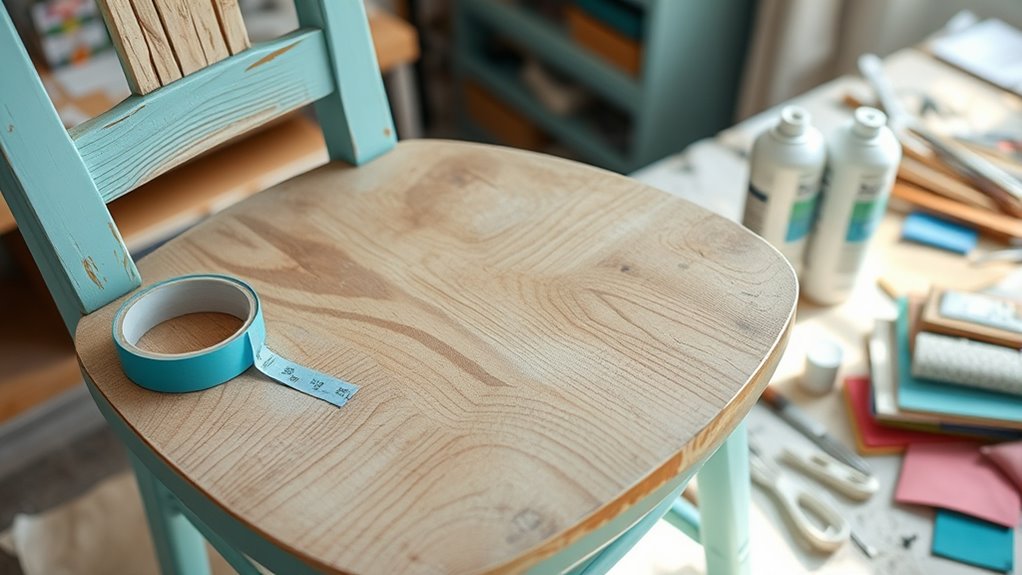
After settling on your color scheme and hardware, it’s time to prep the furniture. Clean the piece thoroughly to remove dirt, grease, and old finishes. Sanding is essential to smooth the surface and help the new paint or stain adhere better. Use a fine-grit sandpaper and work in the direction of the wood grain. If the furniture has an existing finish, stripping it might be necessary for the best results. Once prepped, apply a primer suited for the surface material; this helps with adhesion and prevents stains from bleeding through. When choosing paints or stains, opt for high-quality products designed for furniture, which will ensure a longer-lasting finish. Apply the paint in thin, even coats, allowing each layer to dry completely before adding the next. For stains, use a brush or cloth to achieve the desired depth of color. After the paint or stain dries, consider sealing the surface with a clear protective finish, such as polyurethane, to enhance durability. Additionally, selecting the right type of upcycling furniture can ensure your project is both successful and sustainable.
Finally, reassemble your furniture, attaching your new hardware. Take your time to ensure everything lines up correctly. Your upcycled piece is now ready to showcase your creativity and transform your space. Upcycling furniture isn’t just about saving money; it’s an opportunity to express your style while reducing waste. With thoughtful color schemes and hardware selection, you can turn an ordinary piece into a statement piece that reflects your personality. The process may require patience, but the result will be a unique, personalized piece that’s both functional and full of character.
Frequently Asked Questions
What Are the Best Tools for Upcycling Furniture?
When it comes to furniture restoration and creative design, you’ll want essential tools like a sander for smooth surfaces, paintbrushes and rollers for finishing touches, and a screwdriver for disassembly. A putty knife helps with repairs, while sandpaper refines details. Don’t forget protective gear like gloves and masks. These tools make your upcycling projects easier, allowing you to breathe new life into old furniture with confidence and creativity.
How Do I Choose the Right Paint for My Project?
Choosing the right paint is like finding the perfect puzzle piece—you want it to fit seamlessly. First, consider your color matching needs to match your décor. Then, decide on finish types—matte, satin, or gloss—based on the look and durability you want. For example, a chalk paint might suit a shabby chic style, while a high-gloss finish adds modern elegance. Picking the right paint makes your project truly shine.
Can I Upcycle Furniture Without Prior Experience?
You can definitely upcycle furniture without prior experience. Start with simple projects and follow DIY beginner tips to build confidence. Be mindful of common mistakes like rushing or not prepping surfaces properly. Take your time, gather the right tools, and don’t be afraid to experiment. With patience and practice, you’ll improve each time, transforming old pieces into beautiful new furniture without feeling overwhelmed.
How Do I Fix Damaged or Broken Furniture Pieces?
Imagine it’s the 1920s, and you’re faced with a broken chair. To fix damaged furniture, start with a thorough material assessment—check for cracks, loose joints, or chipped surfaces. Use appropriate repair techniques like wood glue, clamps, or filler for cracks. Sand and paint or stain to blend repairs seamlessly. Take your time and stay patient; even beginners can turn a broken piece into something beautiful with care.
What Are Eco-Friendly Materials for Upcycling?
When choosing eco-friendly materials for upcycling, you should focus on sustainable options. Recycling plastics can be transformed into durable, colorful surfaces or decorative accents. Opt for sustainable wood options like reclaimed or FSC-certified wood to reduce environmental impact. These materials help you create beautiful, eco-conscious furniture pieces while supporting recycling efforts and conserving natural resources. Using sustainable materials guarantees your upcycling projects are environmentally friendly and stylish.
Conclusion
Now that you’ve learned the basics of upcycling furniture, you’re armed with the skills to transform old pieces into something stunning. Think of it as your personal alchemy—turning discarded items into treasure. Just like the legendary craftsmen of old, your creativity and effort can breathe new life into worn-out furniture. So go ahead, pick up that brush and chisel, and start your own masterpiece. The world is waiting to see what you’ll create next.