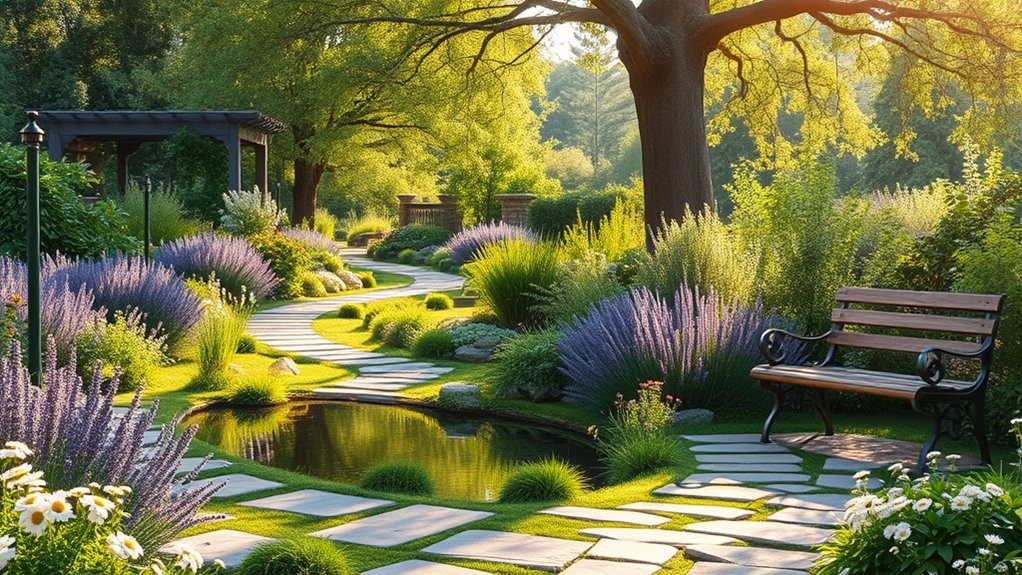

Spending time in gardens can considerably boost your mental well-being by providing a calming space where you can nurture plants, engage your senses, and find peace. Gardening offers a sense of purpose, helping you reconnect with yourself and reduce stress. Natural elements like flowers, water features, and lush greenery promote relaxation and mindfulness, creating a refuge from daily chaos. To discover more about how gardens can support your mental health, keep exploring the many benefits they offer.
Key Takeaways
- Gardens promote relaxation and stress reduction through natural sensory stimulation and calming design elements.
- Engaging in gardening activities fosters mindfulness, purpose, and emotional resilience.
- Visual and auditory features like flowers and water create a soothing environment for mental health.
- Spending time outdoors in gardens boosts mood and reconnects individuals with nature.
- Gardens serve as accessible, therapeutic spaces supporting emotional well-being and mental balance.

Have you ever noticed how spending time in a garden can instantly lift your mood? It’s more than just a fleeting feeling—these outdoor spaces serve as powerful tools for plant therapy and outdoor relaxation, helping you reconnect with yourself and reduce stress. When you step into a garden, you’re immersing yourself in a natural environment that stimulates your senses, calms your mind, and encourages mindfulness. The simple act of tending plants, whether it’s watering, pruning, or just observing, can be incredibly therapeutic. This engagement with nature provides a gentle distraction from everyday worries, allowing your mind to focus on the present moment. Additionally, the visual appeal of a well-designed garden can significantly enhance your emotional well-being.
Plant therapy, in particular, is gaining recognition for its mental health benefits. Caring for plants gives you a sense of purpose and achievement. Watching a seed sprout or a flower bloom offers a tangible reminder that growth and positive change are always possible. As you nurture your garden, you also nurture your emotional well-being. The tactile experience of handling soil and plants helps ground you, reducing anxiety and fostering a sense of calm. It’s a form of active mindfulness that encourages you to be fully present, helping you disconnect from digital distractions and overwhelming thoughts.
Nurturing plants boosts emotional well-being and promotes mindfulness through grounding, purpose, and positive growth.
Outdoor relaxation in a garden isn’t just about physical comfort—it’s about creating a mental sanctuary. When you sit amidst greenery, listening to birds or feeling the breeze, you activate your parasympathetic nervous system, which promotes relaxation and decreases stress hormones. This natural stress relief can improve your mood, boost your immune system, and even enhance your overall mental health. Gardening becomes a deliberate act of self-care, offering a peaceful space where you can breathe deeply and clear your mind. Moreover, incorporating elements such as contrast ratio in your garden’s visual design can enhance the calming effects by creating deeper blacks and brighter whites, making the environment more soothing.
Furthermore, the aesthetic beauty of a garden can uplift your spirits. Bright flowers, lush foliage, and calming water features serve as visual therapy, elevating your mood simply by their presence. Spending time outdoors in such a setting encourages you to slow down, engage your senses, and appreciate the little things. Whether you’re planting new flowers or just sitting quietly, the outdoor environment becomes a refuge from the chaos of daily life.
In essence, gardens provide a natural, accessible way to support your mental well-being. Through plant therapy and outdoor relaxation, you create a personal haven that promotes emotional resilience, reduces stress, and cultivates a sense of peace. As you nurture your garden, you’re also nurturing yourself, finding balance and harmony in the natural world around you.
Frequently Asked Questions
How Do Garden Layouts Influence Mental Health Benefits?
Your garden layout markedly influences mental health benefits by enhancing garden aesthetics and promoting sensory engagement. Thoughtfully designed paths, diverse plant arrangements, and calming water features create a soothing environment that reduces stress. You’ll find that engaging all your senses—sight, smell, touch, and sound—helps ground you and boosts your mood. When your garden layout thoughtfully balances aesthetics with sensory stimulation, it becomes a powerful tool for mental well-being.
What Plants Are Best for Therapeutic Garden Spaces?
You should choose indoor plants like lavender and jasmine, which have proven to reduce stress by 30%. Aromatherapy herbs such as mint and chamomile are perfect for creating calming atmospheres. These plants engage your senses, promote relaxation, and improve mood. Incorporating them into your garden space can make a significant difference in mental well-being, helping you find peace and serenity in your everyday environment.
Can Gardening Activities Help Manage Specific Mental Health Conditions?
Yes, gardening activities can help manage specific mental health conditions by promoting plant therapy and building emotional resilience. When you engage in planting, watering, or pruning, you focus on the present moment, which reduces stress and anxiety. This hands-on approach boosts your mood, encourages mindfulness, and helps develop coping skills. As a result, you strengthen your emotional resilience, making it easier to handle life’s challenges with greater stability and positivity.
How Can Urban Residents Create Therapeutic Gardens in Small Spaces?
You can create a therapeutic garden in your small space by choosing compact plants and vertical garden setups. Incorporate garden art like colorful sculptures or decorative pots to boost your mood. Use composting tips to recycle kitchen scraps, enriching your soil naturally. Arrange your plants thoughtfully, add cozy seating, and bring in personal touches to make your garden a calming retreat that nurtures your mental well-being every day.
What Safety Considerations Are Important in Therapeutic Garden Design?
If you’re designing a therapeutic garden, guarantee garden safety by selecting non-toxic plants and avoiding sharp or unstable structures. For example, a community garden prioritized plant toxicity checks, preventing accidental poisoning. Consider pathways free of tripping hazards and secure fencing to keep children safe. Always assess your space for potential risks, and educate visitors about plant safety, creating an inclusive, secure environment that promotes healing and relaxation.
Conclusion
Spending time in gardens can profoundly boost your mental well-being, helping reduce stress and anxiety. Research shows that just 20 minutes of outdoor activity can lower cortisol levels, the body’s stress hormone. By immersing yourself in nature’s calming environment, you not only enjoy immediate relief but also support long-term mental health. So, next time you’re feeling overwhelmed, remember that a simple walk in the garden might be just what you need to restore your peace of mind.