This checklist is for anyone preparing for a spiritual retreat and choosing a few practical items to support quiet reflection, prayer, or meditation. It is designed to help you think through comfort and personal use without assuming every retreat calls for the same gear.

Turn your quiet moments into listening time
- Thousands of audiobooks, podcasts and originals
- Listen on your phone, tablet or Echo — also offline
- Cancel anytime
The sections move from seated practice to portable devotional items and retreat prompts. Product picks are included where provided; the other sections offer selection advice so you can choose what suits your own practice and the retreat setting.
Use each section as a quick decision guide: check what you already own, consider how and where you will use the item, then review the fit and care details before packing. Retreat rules and shared-space guidelines should shape your final choices.
Meditation cushion
A cushion can make seated practice feel more considered, especially when a retreat includes time on the floor. The listed Renoo Meditation Cushion Set is described as a zafu and zabuton set, so review the product details to understand the included pieces and how they are intended to work together. Think about your usual posture and the surface where you will sit: a cushion setup that feels comfortable at home may feel different on a firm floor or in a shared practice room.A common mistake is choosing by appearance or assuming a set will suit every body and sitting style. Check dimensions, materials, care instructions, and any guidance about intended use before deciding. Consider whether the pieces can be carried and stored easily, and whether the retreat has seating or cushion preferences. If you have mobility or joint concerns, plan around the positions you can comfortably maintain and bring only what you can manage safely. Comfort, dimensions, and portability are the key details to weigh for this slot.
What to look for:
- Confirm the set’s included zafu and zabuton pieces in the listing.
- Compare product dimensions with your seated posture and available floor space.
- Review materials and care instructions before packing.
- Consider how easily the set can be carried and stored.
- Check retreat guidance on personal cushions or floor seating.
Renoo Meditation Cushion Set – Zafu and Zabuton Floor Cushions with Organic Fill
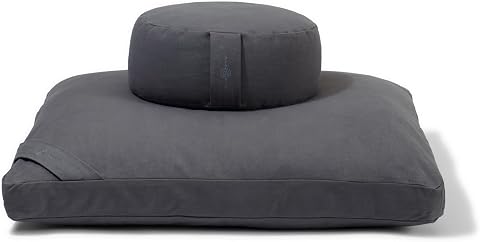
The Renoo Meditation Cushion Set includes a buckwheat-filled zafu and a cotton-filled zabuton, designed to support proper posture and comfort during meditation. Both pieces are GOTS-certified, adjustable, washable, and crafted from organic materials to enhance your practice and create a peaceful meditation space.
Pros:
- Made from GOTS-certified organic materials ensuring eco-friendliness
- Adjustable fill for personalized comfort and support
- Removable and washable covers for easy cleaning
- Designed by meditation experts for optimal posture support
Cons:
- May be heavier than synthetic cushions due to organic materials
- Limited color options (primarily slate gray)
- Requires periodic filling adjustment for optimal firmness
Best for: Retreat-goers who want a zafu and zabuton combination for floor practice
Not ideal for: Anyone who needs a compact single cushion or cannot confirm the set’s dimensions
Bottom line: Review the included pieces, measurements, and retreat guidelines before choosing this cushion set.
Portable altar cloth
A portable altar cloth can mark a small personal space for reflection, prayer, or meaningful objects. Because no specific product is listed, choose one based on how you practice and what the retreat allows. Consider the surface where it will rest, the area you can use, and whether you need a cloth that folds neatly into your bag. A simple, familiar textile may be more useful than a design that requires special handling.One frequent mistake is bringing a cloth that is too large for a shared room or difficult to clean after use. Check its dimensions and fabric care guidance, and think about whether it will be used on a table, floor, or another surface. If you plan to place objects on it, make sure the cloth can lie flat and that the items are permitted in the retreat space. Choose something easy to fold and care for, and confirm any rules about personal devotional displays before setting it out.
What to look for:
- Choose dimensions that suit the surface and space you expect to use.
- Review fabric care instructions for the retreat’s length and setting.
- Look for a cloth that folds or rolls for easy packing.
- Consider whether it lies flat under the objects you plan to place on it.
- Confirm retreat policies on personal altar items and shared spaces.
Tibetan singing bowl
A singing bowl may be part of a personal sound practice, but its size and use matter in a retreat environment. The listed pick is a 21-inch handmade etched Tibetan singing bowl with a stand-in design. Before choosing it, review the product information for its dimensions, included components, and care guidance. Consider where you expect to use it and whether you can transport and store it comfortably.A common buying mistake is assuming a bowl is appropriate for every group setting or that its design alone tells you how it will sound. If sound use is part of your plan, seek clear product details and consider trying the bowl when possible. Check retreat guidelines before bringing an instrument into shared quiet areas; other participants may have different needs. Also think about the stand-in design noted in the product name and confirm exactly what is included. Space, transport, and sound etiquette are central to this choice, particularly for a large item.
What to look for:
- Verify the bowl’s dimensions and what the listing says is included.
- Confirm how the stand-in design is described and used.
- Review care and storage guidance before packing.
- Consider whether you can carry and place a 21-inch bowl safely.
- Ask about retreat rules for sound-making items in shared spaces.
21-Inch Handmade Etched Tibetan Singing Bowl with Stand-In Design

Handmade and etched in Nepal, this extra-large bronze alloy singing bowl is designed for sound baths, meditation, yoga, and foot therapy. It includes a cushion, wooden mallet, and rimming stick for use in sound sessions.
Pros:
- Handmade and etched by artisans in Nepal
- Extra-large design allows standing inside the bowl
- Includes a cushion and tools for playing
Cons:
- Large size and 12 kg weight may make it difficult to move
- Warranty is not applicable
Best for: Those with a planned sound practice and suitable space for a 21-inch bowl
Not ideal for: Retreat-goers who need compact gear or cannot use sound in shared areas
Bottom line: Confirm the included components, transport needs, and retreat sound guidelines before bringing this bowl.
Prayer shawl
A prayer shawl can be a familiar, comforting layer during prayer or quiet reflection. No particular product is specified here, so choose one around your personal practice and the retreat conditions. Consider when you expect to wear it, whether it will be used indoors or outdoors, and how it should be cared for during the trip. A shawl already comfortable to you may be a better fit than a new one chosen without trying it on.Common mistakes include selecting a size that slips or restricts movement, overlooking care instructions, or assuming a particular material is suitable for every setting. Check the dimensions and fabric details, and test how it drapes while seated, standing, and moving. If the retreat has a dress code or shared practice guidelines, use those as a constraint. Pack a shawl that you can fold and carry without hassle, and consider whether it needs a dedicated bag to keep it clean. Comfortable drape and easy care are useful priorities for this personal item.
What to look for:
- Choose a size that stays comfortable through sitting and movement.
- Review fabric details and washing or care guidance.
- Consider the retreat’s indoor and outdoor conditions.
- Check for dress expectations or practice-specific guidance.
- Pick a shawl that folds and packs easily with the rest of your gear.
Incense holder
An incense holder helps contain ash and gives you a designated place for incense, but retreat policies and ventilation should guide whether to bring one. The listed pick is a handmade ceramic incense burner tray set with three styles. Review its product details to learn what each style is meant to hold, what is included, and how the ceramic should be handled. Its tray format may also affect how much space it needs on a surface.A common mistake is focusing only on the holder while overlooking whether incense itself is allowed. Check retreat rules first, then consider ventilation, fire-safety guidance, and the needs of people sharing the space. Verify the item’s dimensions and care instructions, and think about how you will protect ceramic during travel. Confirm that the selected style matches the incense format you use rather than assuming all three styles serve the same purpose. Policy, stability, and compatibility should lead the decision; if incense is not permitted, leave the holder at home.
What to look for:
- Confirm retreat rules on incense, flames, and scented items.
- Check what the three styles are designed to hold.
- Review dimensions and surface requirements for the ceramic tray.
- Look for handling and care guidance, including travel considerations.
- Consider ventilation and the comfort of others sharing the space.
Incense Holder Ceramic Handmade Incense Burner Tray Set with 3 Styles

This set includes a ceramic handmade incense burner tray and three copper incense holders in different styles. Suitable for various types of incense, it adds elegance to homes, offices, or yoga spaces.
Pros:
- Elegant and decorative design
- Versatile for different types of incense
- Stable and not easy to dump
Cons:
- Limited to incense use only
- May require careful handling due to materials
- No specific size details provided
Best for: Retreat-goers whose practice permits incense and who can transport ceramic carefully
Not ideal for: Anyone attending a scent-free retreat or without a suitable place to use it
Bottom line: Check retreat policy and style compatibility before packing this ceramic incense holder set.
Guided spiritual retreat cards
Guided retreat cards can offer prompts for reflection, journaling, or group discussion, depending on their content and how you use them. No product is specified, so start by deciding whether you want structured questions, brief readings, or open-ended prompts. Consider whether the cards are for solo use or a group, and whether their approach fits the retreat’s spiritual tradition and goals.A common mistake is choosing a deck based on a theme alone without checking the actual prompts. Review sample content when available, along with the number and size of cards and any instructions. If you plan to use them in a group, consider whether they support inclusive participation and whether the facilitator welcomes outside materials. For solo use, think about whether prompts leave room for your own pace and interpretation. Pack cards in a protective case or pouch if the format needs it. Content fit and retreat alignment matter more than a striking cover; choose something that supports the experience you want without crowding it.
What to look for:
- Review sample prompts or readings before selecting a deck.
- Match the content and spiritual approach to your retreat setting.
- Check whether the cards are intended for solo or group use.
- Consider card size, quantity, and any accompanying instructions.
- Ask facilitators whether personal prompt materials are welcome.
Start with the items that address your practical needs: a comfortable way to sit, a layer you will use, or a small textile for your practice. Then consider optional objects such as a bowl, incense holder, or reflection cards after checking retreat rules, space, and transport. Prioritize what you already know supports you and verify dimensions, care, and compatibility before packing.
You do not need every item on this list to have a meaningful retreat. Choose a few pieces that feel useful, leave room for the setting and other participants, and let your practice guide the packing. A thoughtful, manageable kit is a good place to begin.