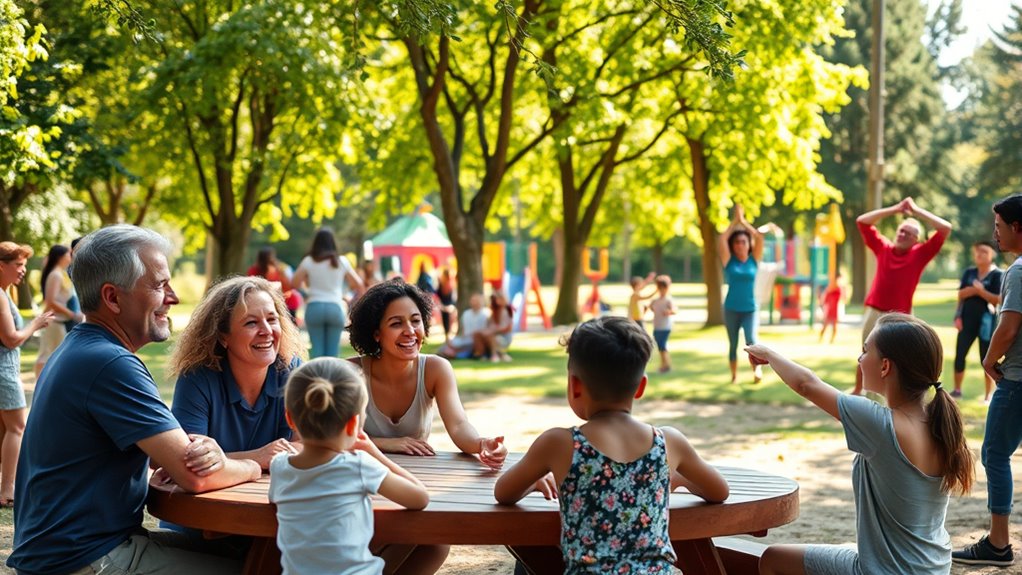

Building social fitness involves developing emotional intelligence, improving communication, and practicing patience and consistency. By recognizing your and others’ feelings, you can foster deeper connections and trust. Sharpen your social skills through active listening and understanding body language. Clear, honest conversations create safe spaces for sharing. Keep investing effort over time, and you’ll notice your relationships become more resilient and meaningful. Stay with us to discover key ways to strengthen your social bonds.
Key Takeaways
- Develop emotional intelligence by recognizing and understanding feelings to foster empathy and stronger connections.
- Enhance social skills through active listening, non-verbal cues, and effective communication to build trust.
- Practice patience and consistency with ongoing efforts, such as asking open-ended questions and showing genuine interest.
- Create safe, open environments that encourage sharing emotions and thoughts, strengthening bonds over time.
- Continuously refine relationship strategies by learning from experiences and practicing social fitness regularly.

Building strong relationships requires more than just good intentions; it demands ongoing effort to develop your social fitness. One of the most essential components of this effort is cultivating your emotional intelligence. Emotional intelligence isn’t just about recognizing your feelings; it’s about understanding how your emotions influence your interactions with others. When you’re aware of your emotional state, you can manage your reactions better, which leads to more genuine and trustworthy connections. This awareness enables you to empathize with others, picking up on their emotional cues and responding appropriately. As you grow your emotional intelligence, you’ll find that your relationships become more resilient and meaningful because they’re rooted in genuine understanding rather than superficial exchanges. Improving your social skills can also help you navigate complex interactions more effectively, leading to stronger bonds. Effective communication plays a key role in building and maintaining strong relationships. It’s not enough to simply speak; you need to listen actively and respond thoughtfully. When you engage in effective communication, you show that you value the other person’s perspective, fostering trust and openness. This involves more than just hearing words; it’s about paying attention to non-verbal cues like body language, tone of voice, and facial expressions. By doing so, you can better interpret what’s really being said and respond in a way that validates the other person’s feelings. Practice being clear and direct in your conversations, avoiding misunderstandings that can create distance. When you communicate effectively, you create a safe space where others feel comfortable sharing their thoughts and emotions, strengthening your bond over time. Building social fitness also involves patience and consistency. Developing emotional intelligence and honing your communication skills doesn’t happen overnight. It requires you to be intentional about your interactions, learning from mistakes and continually refining your approach. Small, consistent efforts—like asking open-ended questions or showing genuine interest—can greatly improve your relationships. Remember, social fitness is a skill that can be strengthened with practice, so stay committed to improving how you connect with others. As you become more adept at reading emotions and expressing yourself clearly, you’ll notice your relationships flourish. They’ll deepen, become more supportive, and withstand challenges more effectively because they’re built on a foundation of mutual understanding and respect. In the end, investing in your social fitness isn’t just about creating better relationships; it’s about becoming a more empathetic, effective communicator who enriches every interaction.
Frequently Asked Questions
How Can Introverts Improve Their Social Skills Effectively?
To improve your social skills, start by practicing small talk to ease into conversations. Focus on active listening; genuinely pay attention and respond thoughtfully. You don’t need to be extroverted—take small steps to engage more with others. Over time, these habits boost your confidence and help build stronger relationships. Remember, consistency is key, and even brief interactions can make a big difference.
What Are Quick Ways to Rebuild Trust After a Disagreement?
To quickly rebuild trust after a disagreement, focus on trust repair by offering sincere apology strategies. Acknowledge your mistake, take responsibility, and express genuine remorse. Show that you understand their feelings and are committed to making things right. Avoid defensiveness, listen actively, and clarify any misunderstandings. Consistently follow through on your promises to demonstrate your reliability, helping to restore trust and strengthen your relationship.
How Do Cultural Differences Influence Relationship Building?
Cultural differences influence relationship building through varied cultural communication styles and expectations. You should develop diversity awareness by learning about others’ cultural backgrounds, which helps you interpret behaviors accurately. By respecting different traditions and communication preferences, you create trust and openness. Being mindful of these differences allows you to navigate interactions more effectively, fostering stronger, more meaningful relationships across diverse cultural contexts.
What Role Does Emotional Intelligence Play in Social Fitness?
Emotional intelligence plays a vital role in social fitness by enhancing your empathy development and emotional awareness. When you understand your own feelings, you become better at recognizing others’ emotions, fostering stronger connections. While intellect can guide decisions, it’s your ability to navigate emotions that truly strengthens relationships. By actively cultivating emotional intelligence, you create a foundation for trust, understanding, and meaningful interactions that elevate your social skills.
How Can Technology Enhance or Hinder Social Relationship Development?
Technology can enhance your social relationship development by enabling virtual engagement and keeping you connected across distances. However, it can also hinder progress if you neglect digital boundaries, leading to overuse or miscommunication. To foster strong relationships, balance your online interactions with meaningful offline moments, set clear digital boundaries, and use technology intentionally. This way, you strengthen your social fitness while avoiding the pitfalls of digital overload.
Conclusion
Just like a muscle, your social fitness grows stronger with regular practice. Each connection you nurture adds a new thread to your web of relationships, making it more resilient and vibrant. Keep showing up, listening, and sharing—these are the weights that build your social strength. Over time, you’ll find yourself weaving a tapestry of meaningful bonds, vibrant and unbreakable. So, keep training, and watch your relationships flourish into a beautiful masterpiece.