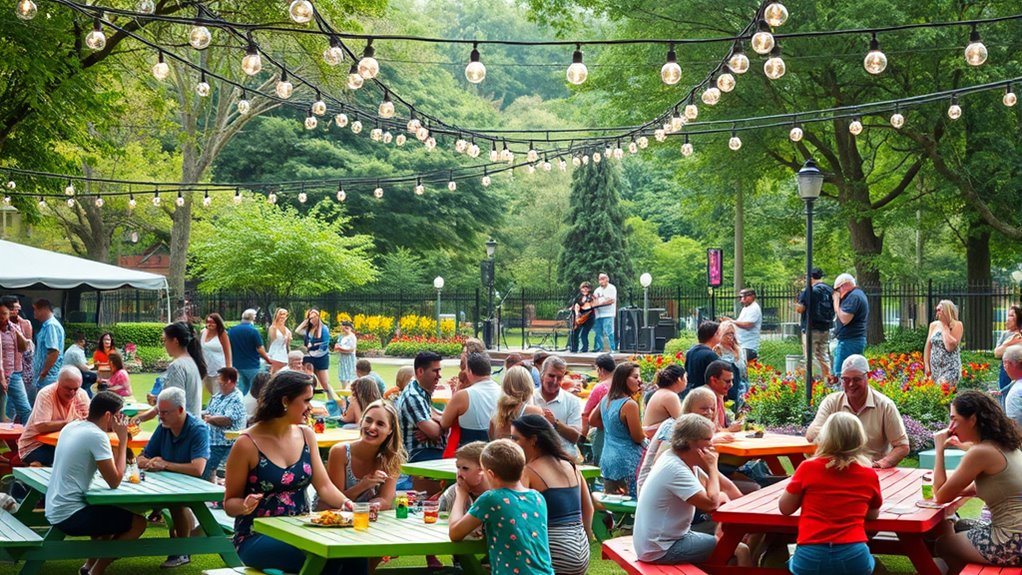

To combat loneliness, focus on organizing community events that bring people together and foster a sense of belonging. Involve community members in planning, choose accessible venues, and promote inclusivity through diverse activities and clear communication. Use social media and other channels to attract attendees and encourage interactions like icebreakers or group projects. Incorporating feedback helps improve future events and build stronger connections—keep exploring for more effective strategies to create meaningful social experiences.
Key Takeaways
- Involve community members in planning to ensure events meet diverse needs and foster a sense of ownership.
- Choose accessible venues and activities that encourage interaction and inclusivity for all attendees.
- Promote events through multiple channels, emphasizing social opportunities and the purpose of building connections.
- Incorporate engaging activities like icebreakers and collaborative projects to facilitate meaningful interactions.
- Collect feedback afterward to improve future events and strengthen community bonds.
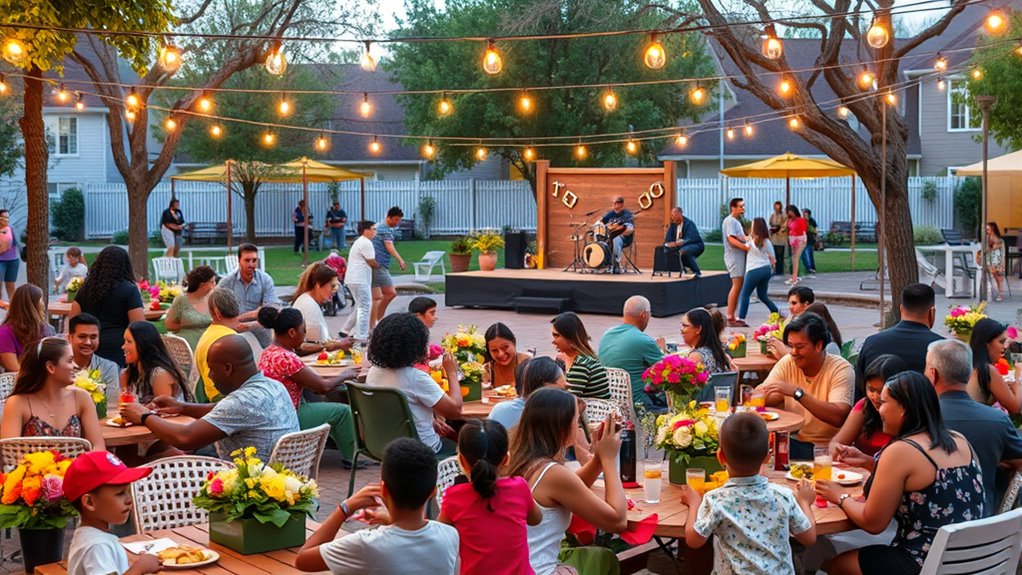
Have you ever wondered how to plan a social event that everyone will enjoy? It all starts with understanding the significance of community engagement. When you focus on creating events that bring people together, you foster a sense of belonging and reduce feelings of loneliness. Successful event planning involves more than just choosing a date and venue; it requires thoughtful consideration of your audience’s interests and needs. By actively involving community members in the planning process, you guarantee the event resonates with them and encourages genuine interaction. Reach out to local groups, listen to their ideas, and incorporate feedback to make your event inclusive and appealing. This collaborative approach not only enhances community engagement but also builds stronger bonds among participants.
Creating inclusive events by involving community members fosters stronger bonds and genuine engagement.
Effective event planning begins with setting clear objectives. Ask yourself what you want attendees to experience—whether it’s fun, learning, networking, or simply connecting with others. Once you have a goal in mind, you can select appropriate activities, entertainment, and venues that align with your vision. Remember, the location should be accessible and comfortable, making it easy for everyone to participate. Consider factors like transportation options, seating arrangements, and accommodations for those with special needs. This attention to detail guarantees that your event is welcoming and inclusive, encouraging more community members to join in. Incorporating body awareness techniques can also help attendees feel more present and engaged during the event.
Promotion is another essential aspect. Use diverse channels—social media, flyers, local newsletters—to spread the word and generate excitement. When promoting your event, highlight what makes it special and emphasize the opportunity for social connection. Clear communication about the purpose of the event can motivate people to attend and invite friends or family. During the event itself, facilitate activities that promote interaction, such as icebreakers, group discussions, or collaborative projects. These activities help break down barriers and create a lively, engaging atmosphere where attendees feel comfortable and valued.
Lastly, don’t forget to gather feedback afterward. Listening to attendees’ experiences can give you insights into what worked well and what might need improvement. This feedback loop is essential for refining your event planning skills and ensuring future gatherings are even more successful in fostering community engagement. By consistently focusing on thoughtful planning, inclusiveness, and active participation, you’re taking meaningful steps to combat loneliness and build stronger, more connected communities through social events.
Frequently Asked Questions
How Do I Encourage Shy Individuals to Participate?
To encourage shy individuals to participate, start with gentle icebreaker activities that ease them into socializing without pressure. Pair them with buddy systems, where they feel more comfortable and supported. You can also encourage small group interactions instead of large crowds, making it less intimidating. By creating a welcoming environment and offering these supportive options, shy individuals will feel more confident and willing to join in the fun.
What Are Low-Cost Ideas for Social Events?
You can try budget-friendly activities like potlucks, game nights, or outdoor picnics to keep costs low. Creative gathering ideas such as themed movie nights, craft sessions, or book swaps also work well. These options encourage participation without breaking the bank. Keep things simple, focus on community spirit, and invite everyone to contribute, making the event more engaging and accessible for all.
How Can I Ensure Inclusivity in Diverse Groups?
You can guarantee inclusivity by promoting cultural awareness and being mindful of language barriers. Use clear, simple language and provide translation options if needed. Encourage participants to share their cultural backgrounds and incorporate diverse traditions into activities. Create a welcoming environment where everyone feels comfortable expressing themselves. Actively listen, show respect, and adapt the event to accommodate different needs, ensuring all group members feel valued and included.
What Are Effective Ways to Promote the Event?
You can promote your event effectively through digital marketing by leveraging social media platforms, creating engaging posts, and using targeted ads to reach your community. Additionally, conduct community outreach by partnering with local organizations, distributing flyers, and encouraging word-of-mouth promotion. These strategies help generate buzz, attract diverse attendees, and guarantee your event gains visibility, ultimately fostering more connections and reducing loneliness in your community.
How Do I Handle Conflicts During Events?
When conflicts arise, view them as opportunities to demonstrate your emotional intelligence and foster understanding. Stay calm, listen actively, and acknowledge each person’s feelings—this is key to smooth conflict resolution. Gently steer conversations back on track, emphasizing shared goals and respect. By handling disputes with patience and empathy, you create a positive atmosphere, turning potential tension into a chance for deeper connection and mutual appreciation.
Conclusion
By organizing social events, you hold the power to turn loneliness into connection. Every gathering becomes a beacon of hope, shining brightly in someone’s darkened world. Remember, when you reach out, you’re not just creating memories—you’re weaving a safety net of belonging. Don’t underestimate the ripple effect of your actions; they can transform lives. So, take that step today, and be the spark that ignites genuine human connection in someone’s heart.