
Eating with the seasons and supporting local foods can boost your wellness by offering fresher, more nutrient-rich produce that tastes better and supports sustainable farming. This approach encourages a diverse diet, strengthens your immune system, and reduces your environmental footprint. Preservation techniques like freezing and canning allow you to enjoy seasonal flavors year-round. By aligning your eating habits with natural cycles, you’ll deepen your connection to your food and its origins, revealing even more ways to nourish yourself.
Key Takeaways
- Eating seasonal and local foods ensures higher nutrient density and fresher flavors, boosting overall wellness.
- Supporting local farms reduces environmental impact and promotes sustainable, eco-friendly food choices.
- A diverse, seasonal diet strengthens the immune system and helps prevent chronic illnesses.
- Preserving seasonal foods through canning or freezing maintains nutritional value and provides year-round access.
- Mindful consumption of local, seasonal foods fosters a deeper connection to food sources and reduces waste.
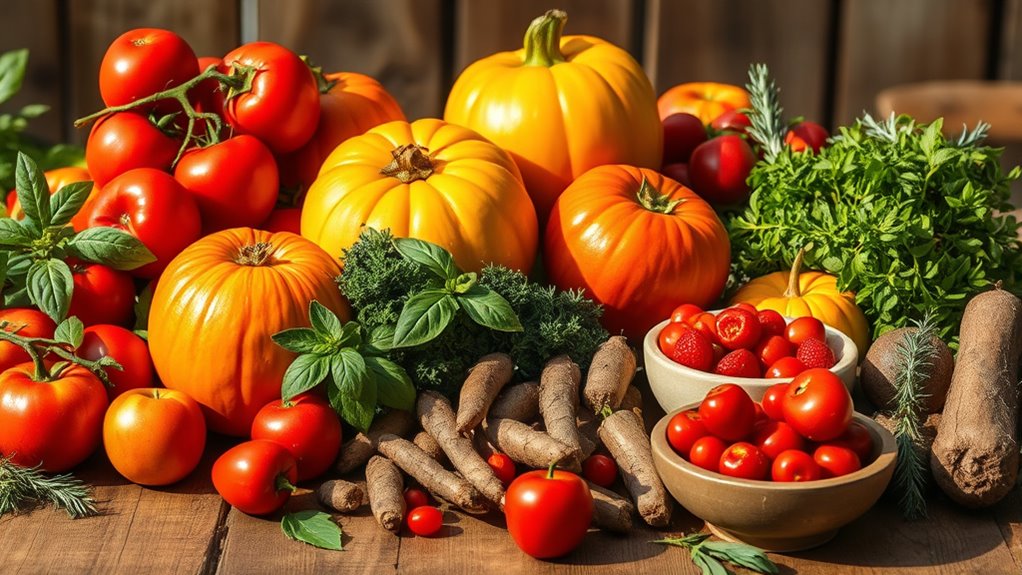
Eating with the seasons and choosing local foods can substantially boost your overall wellness. When you prioritize seasonal produce from nearby farms, you not only enjoy fresher, more nutrient-dense foods but also support sustainable farming practices. Sustainable farming minimizes environmental impact, preserves soil health, and promotes biodiversity, which ultimately benefits your health by reducing exposure to pesticides and contaminants often found in conventionally grown produce. By aligning your diet with what’s naturally in season, you’re more likely to consume foods at their peak ripeness, ensuring maximum flavor and nutritional content.
One of the key benefits of eating seasonally is that it encourages food diversity throughout the year. Instead of relying on out-of-season fruits and vegetables that are shipped from distant locations, you naturally incorporate a wider variety of nutrients into your meals. This diversity strengthens your immune system and helps prevent chronic illnesses. Additionally, choosing local foods reduces the carbon footprint associated with long-distance transportation, making your eating habits more environmentally friendly.
Food preservation plays a crucial role in making seasonal eating sustainable and practical. When you learn techniques like canning, freezing, or drying, you can extend the life of fresh produce and enjoy seasonal flavors all year round. Food preservation not only reduces waste but also allows you to have access to nutrient-rich foods during the off-season, maintaining a balanced diet regardless of the time of year. This practice supports local farmers by creating a steady demand for their harvests and helps you cut down on processed or convenience foods, which often contain preservatives or additives.
By incorporating food preservation into your routine, you’re actively participating in a sustainable food system. It enables you to consume locally sourced produce beyond its natural harvest period, reducing reliance on imported or out-of-season options. additionally, preserving food at home fosters a deeper connection to what you eat, encouraging mindful consumption and reducing food waste. The process of preserving also allows you to experiment with different recipes, explore traditional methods, and develop a greater appreciation for seasonal variations and local flavors.
In essence, eating with the seasons and choosing local foods, combined with smart food preservation techniques, nurtures your health and the environment simultaneously. It’s a simple yet impactful way to enjoy fresher, more nutritious meals while supporting sustainable agriculture. Over time, these practices can transform your relationship with food, making it more intentional, eco-conscious, and aligned with natural cycles. Incorporating food preservation techniques can also help you better manage your food budget and reduce waste. This approach not only benefits your wellness but also helps build resilient, environmentally sustainable food systems for the future.
Frequently Asked Questions
How Can Seasonal Eating Improve Mental Health?
Eating seasonally can boost your mental health by encouraging mindfulness practices, helping you stay present and connected with nature’s rhythms. You’ll notice improved emotional resilience as fresh, nutrient-rich foods support your brain function and mood stability. Plus, choosing local produce fosters a sense of community and purpose, reducing stress. By aligning your diet with the seasons, you create a nurturing routine that promotes mental clarity, calmness, and overall well-being.
Are There Specific Local Foods Beneficial for Immunity?
Think of local foods as nature’s medicine cabinet—herbal remedies and traditional dishes packed with immunity-boosting power. You’ll benefit from seasonal fruits like citrus in winter, rich in vitamin C, and leafy greens in spring for antioxidants. Incorporate local honey, garlic, and turmeric to fight off colds. These foods aren’t just nourishment; they’re your allies, strengthening your immune system naturally and deliciously, right from your local markets.
How Does Seasonal Eating Affect Food Waste Reduction?
You can considerably reduce food waste by practicing seasonal eating, as it encourages you to buy what’s in peak harvest, minimizing excess and spoilage. Seasonal eating benefits include fresher, more flavorful foods that last longer, lowering the chances of waste. By aligning your food choices with the seasons, you support sustainable practices and enjoy a more efficient way to consume, helping you contribute to food waste reduction effortlessly.
Can Seasonal Foods Help Manage Food Sensitivities?
An ounce of prevention is worth a pound of cure. Seasonal foods can help you manage food sensitivities by offering fresher, less processed options that are less likely to trigger allergies. Eating in tune with the seasons supports food allergy management and a seasonal detox, reducing exposure to preservatives and additives. By choosing local, seasonal produce, you may find relief and better control over sensitive reactions.
What Are the Best Storage Tips for Seasonal Produce?
To keep your seasonal produce fresh, focus on proper food preservation and storage techniques. Store fruits and vegetables in breathable containers or perforated bags to prevent moisture buildup. Keep most produce in the fridge’s crisper drawer, but some like tomatoes and onions fare better at room temperature. Use airtight containers for cut produce, and consider freezing or canning surplus items. Proper storage helps retain nutrients and extends shelf life.
Conclusion
By embracing seasonal and local foods, you nourish your body and support your community. While waiting for summer’s juicy berries or winter’s hearty root vegetables, you connect deeply to nature’s rhythm. It’s a simple act—yet it’s powerful enough to transform your wellness and remind you of life’s fleeting beauty. In choosing local, you’re not just feeding yourself; you’re nurturing a cycle of growth and change that sustains both body and soul.