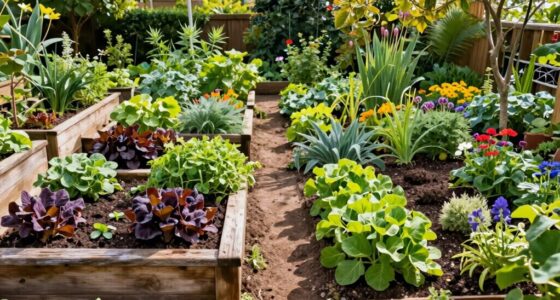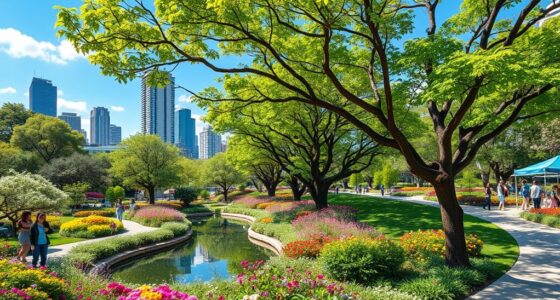

To guarantee your garden stays interesting year-round, select a variety of flowering shrubs that bloom in different seasons, like azaleas, hydrangeas, and witch hazel. Incorporate evergreen plants such as holly or juniper for consistent greenery. Strategically place these plants to create layers and focal points, and maintain them with proper pruning and mulching. By planning carefully, your garden can be vibrant at every season—discover more tips to perfect your landscape.

Turn your quiet moments into listening time
- Thousands of audiobooks, podcasts and originals
- Listen on your phone, tablet or Echo — also offline
- Cancel anytime
Key Takeaways
- Select a mix of flowering shrubs that bloom at different times to ensure continuous color throughout the year.
- Incorporate evergreen trees and shrubs to provide winter greenery and structural stability during dormant seasons.
- Strategically place plants for maximum visibility and create layered compositions for visual interest year-round.
- Regularly prune and maintain plants to promote healthy growth and preserve their seasonal display.
- Plan a diverse selection to combine textures, colors, and forms, ensuring a vibrant, engaging garden in all seasons.

Creating a garden that offers visual interest throughout the year requires careful planning. You want your space to be vibrant and engaging, no matter the season, which means selecting plants that provide color, texture, and structure year-round. One effective approach is to incorporate flowering shrubs and evergreen accents strategically. These elements serve as the backbone of a dynamic garden, ensuring that even when other plants go dormant, your landscape remains lively and appealing.
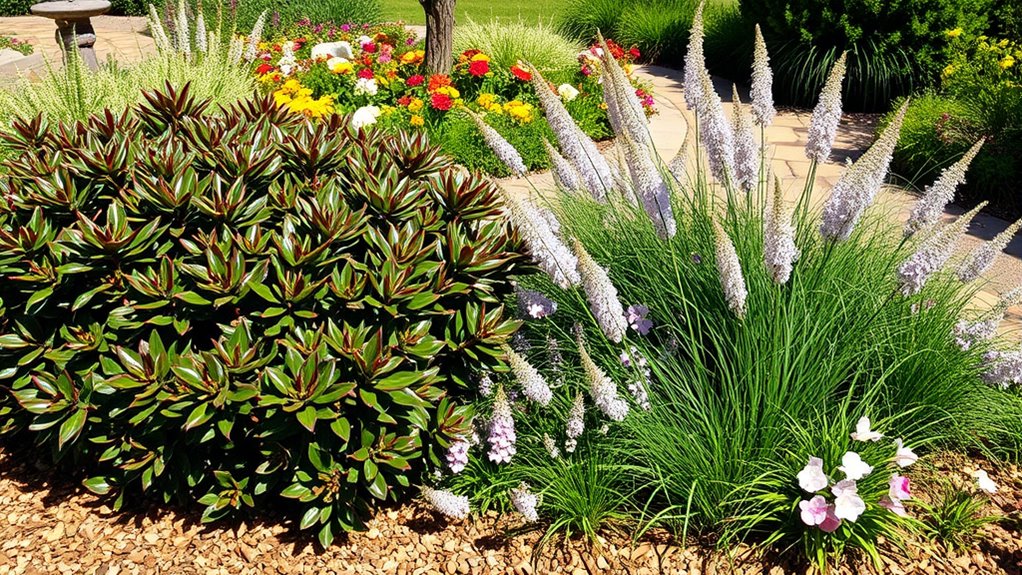
Start by choosing flowering shrubs that bloom at different times of the year. For example, early-blooming azaleas or rhododendrons can deliver bursts of color in spring. As summer arrives, consider hydrangeas or spirea, which flower later, extending your garden’s colorful display. In fall, plants like witch hazel or certain varieties of viburnum can provide striking blooms or colorful foliage. By selecting a diverse array of flowering shrubs that bloom at various times, you create a sequence of visual interest that keeps your garden lively from spring through fall.
Choose flowering shrubs that bloom at different times for year-round garden color.
Equally important are evergreen accents, which provide consistent greenery and structure during winter months when many other plants have shed their leaves. Choose a mix of evergreen trees and shrubs, such as holly, juniper, or boxwood, to anchor your garden. These plants not only add visual stability but also serve as a perfect backdrop for flowering shrubs, highlighting their seasonal blooms. Evergreen accents can be shaped into hedges, topiaries, or naturalistic forms, adding both texture and form to your landscape design.
When planning, consider the placement of flowering shrubs and evergreen accents carefully. Place evergreen plants where they can act as focal points or borders, providing structure and contrast. Position flowering shrubs in spots where they can be appreciated during their blooming periods, and ensure they are visible from common viewing points in your garden. Combining the evergreens with flowering shrubs creates a layered effect, offering visual interest from multiple angles and throughout the seasons.
Maintenance is straightforward when you balance these plant types correctly. Regular pruning of flowering shrubs encourages healthy blooms and maintains shape, while evergreen plants benefit from occasional trimming to keep their form. Mulching around these plants helps retain moisture and protect roots during winter, ensuring they stay healthy year-round. Additionally, selecting drought-tolerant plants can reduce maintenance needs and promote sustainability. With thoughtful planning and proper care, your garden will remain beautiful and engaging well beyond the peak blooming seasons.
Frequently Asked Questions
How Do I Choose Plants for Extreme Climate Conditions?
To choose plants for extreme climates, focus on microclimate adaptation and plant resilience strategies. You should select species that naturally thrive in harsh conditions, like drought-tolerant or cold-hardy plants. Observe your garden’s microclimates—shady, windy, or sheltered spots—and pick plants suited to those areas. By prioritizing resilience and microclimate adaptation, you’ll guarantee your garden stays healthy and vibrant despite challenging weather conditions.
What Soil Amendments Improve Year-Round Plant Growth?
Think soil amendments are magic? Well, you’re partly right. To boost year-round plant growth, you need to balance soil nutrients with organic composting. Add compost to enrich your soil, improve nutrient availability, and enhance moisture retention. This keeps plants thriving through all seasons. Forget the fancy fertilizers—organic composting is your secret weapon for a healthy, resilient garden that looks great year-round.
How Can I Attract Pollinators Throughout the Seasons?
To attract pollinators year-round, you should plant a variety of native plants and flowering shrubs that bloom at different seasons. This provides a continuous food source for bees, butterflies, and other pollinators. Keep your garden diverse with nectar-rich flowers and avoid pesticides. By offering a consistent and natural habitat, you’ll encourage pollinator activity throughout the year, supporting local ecosystems and enhancing your garden’s vibrancy.
Are There Low-Maintenance Options for Continuous Interest?
Yes, you can achieve continuous interest with low-maintenance options by carefully selecting your plants. In your garden design, choose hardy perennials and shrubs that bloom at different times, ensuring year-round beauty. Opt for native plants that require less care and are naturally resilient. Mix evergreen varieties for consistent greenery. With strategic plant selection, your garden will stay vibrant and inviting, all while keeping maintenance minimal. The secret lies in smart choices—ready to transform your space?
How Do I Prevent Pests and Diseases Year-Round?
To prevent pests and diseases year-round, choose pest-resistant varieties suited to your climate. Regularly inspect your plants for early signs of trouble and remove any affected parts promptly. Use seasonal pruning techniques to improve airflow and reduce disease risk. Keep your garden clean by clearing fallen leaves and debris, and consider natural repellents or organic treatments to deter pests without harming beneficial insects. Consistent care minimizes issues and keeps your garden thriving.
Conclusion
By carefully selecting plants that bloom and flourish across all seasons, you can create a landscape that keeps your garden alive with color and interest year-round. But don’t stop here—imagine the surprises that await as each season unfolds, revealing new blooms and textures you never expected. Keep experimenting with your plant choices, and soon, your garden will become a mesmerizing masterpiece that constantly evolves, inviting you to discover its next stunning transformation.
Products Worth Considering

Levoit Core 400S-P Smart Air Purifier for Large Rooms

BowFlex Results Series SelectTech Dumbbells

OMRON Complete 2-in-1 Upper Arm Blood Pressure Monitor with EKG
As an affiliate, we earn on qualifying purchases.