
Eating with the seasons boosts your nutrition, flavor, and freshness by consuming foods harvested at their peak. It reduces your environmental footprint by supporting local farmers and cutting down on transportation emissions. Seasonal foods are often more affordable and offer rich regional flavors. Plus, they promote dietary variety and healthier choices. By choosing seasonal produce, you align your diet with natural cycles, which benefits both your health and the planet—discover how to make this a tasty routine.
Key Takeaways
- Consuming seasonal produce maximizes nutritional value by harvesting foods at their peak ripeness.
- Eating with the seasons encourages dietary diversity with a wider range of fruits and vegetables.
- Local, seasonal foods are fresher and more flavorful, enhancing meal enjoyment and nutrient retention.
- Seasonal eating supports sustainable farming practices and reduces environmental impact.
- Aligning diet with natural cycles promotes overall health and a mindful, nourishing eating routine.
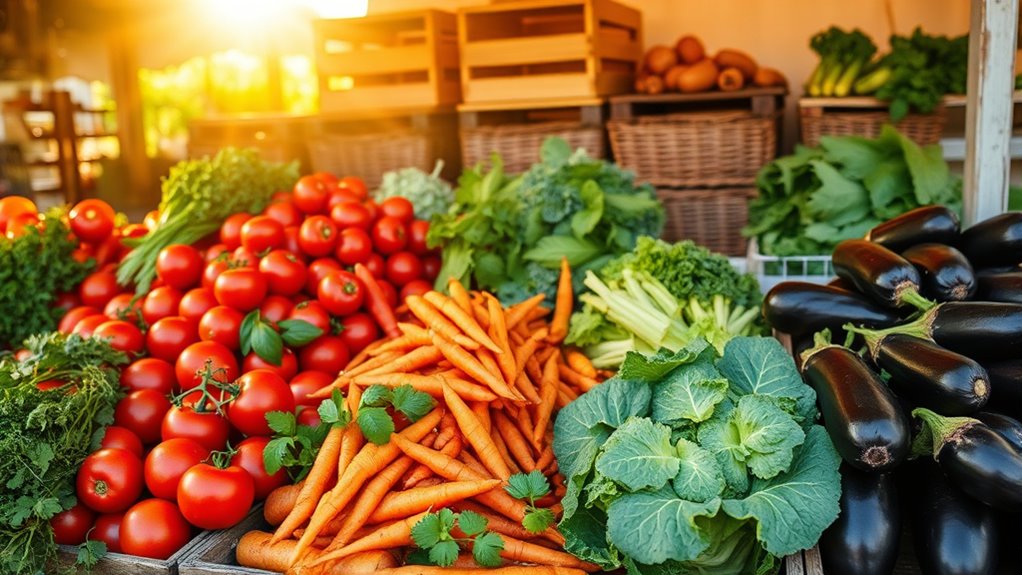
Have you ever wondered why eating with the seasons makes a difference? When you align your diet with the natural cycles of the year, you not only enjoy fresher, tastier food but also support a healthier environment. Seasonal eating encourages you to choose fruits and vegetables that are harvested at their peak, which means they’re more nutritious and flavorful. This practice often involves shopping at local markets, where farmers bring fresh produce directly from sustainable farming operations. By buying from these markets, you’re reducing the carbon footprint associated with long-distance food transportation and supporting local economies. This approach fosters a closer connection between you and your food sources, making it easier to understand what’s in season and why it matters.
Sustainable farming plays a *crucial* role in seasonal eating. Farmers practicing sustainable methods cultivate crops in harmony with nature, avoiding harmful chemicals and excessive water use. They tend to plant crops that thrive during specific times of the year, naturally aligning with the seasons. When you purchase from these farmers at local markets, you’re encouraging environmentally friendly practices that preserve soil health and biodiversity. This not only benefits the planet but also *ensures* that the produce you consume maintains its maximum nutritional value. Eating seasonally encourages diversity in your diet because it pushes you to incorporate a broader range of produce throughout the year. Instead of relying on the same foods year-round, you’re motivated to explore seasonal options, which can boost your intake of *vital* nutrients.
Additionally, understanding the importance of seasonal produce can help you make more informed choices that benefit your health and the environment. The benefits of seasonal eating extend beyond nutrition and environmental impact. It often results in cost savings since seasonal produce is more abundant and less expensive. Plus, it introduces you to the rich flavors and traditions associated with your region’s culinary calendar. When you shop at local markets, you’re more likely to find fresh, minimally processed foods that retain their natural goodness. This can lead to healthier meal choices and a more enjoyable eating experience. Over time, becoming attuned to the seasons can help establish a sustainable routine that supports your health, local farmers, and the environment. It’s a simple shift that can make a big difference, aligning your eating habits with the natural rhythms of the land and fostering a more mindful, nourishing approach to food.
Frequently Asked Questions
How Can I Incorporate Seasonal Foods Into My Busy Schedule?
You can incorporate seasonal foods into your busy schedule by planning meal prep with quick recipes that highlight fresh, local produce. Spend a little time on weekends chopping and portioning seasonal vegetables and fruits, making weeknight dinners easier. Look for simple, nutritious recipes that showcase what’s in season, so you enjoy peak flavor and nutrition without extra effort. This way, staying aligned with seasonal eating becomes effortless and delicious.
Are Frozen Seasonal Foods as Nutritious as Fresh Ones?
Frozen seasonal foods are like time capsules, capturing peak nutrition through preservation methods. They often retain more nutrients than fresh ones that sit on shelves, making their nutritional comparison favorable. Freezing locks in vitamins and minerals, so you get the same health benefits. While fresh foods might seem better, frozen options are a reliable, convenient alternative, ensuring you enjoy seasonal flavors and nutrients anytime, even when fresh produce isn’t in season.
What Are the Best Storage Tips for Seasonal Produce?
To store seasonal produce effectively, focus on food preservation techniques. Use airtight storage containers to keep fruits and vegetables fresh longer, preventing spoilage and moisture loss. Keep produce in a cool, dark place or the refrigerator’s crisper drawer to maintain ideal freshness. For longer-term storage, consider freezing, but make sure you blanch vegetables beforehand. Proper storage containers and techniques help you enjoy seasonal bounty at its best and reduce waste.
How Can Seasonal Eating Help With Weight Management?
Think of seasonal eating as a gentle tide guiding your choices. By embracing fresh, local produce, you naturally curb seasonal cravings, reducing the urge for processed snacks. This helps you maintain portion control effortlessly, supporting weight management. You become more mindful of what you consume, aligning your habits with nature’s rhythm. As a result, you enjoy a balanced, satisfying diet that promotes a healthy weight all year round.
Are There Any Seasonal Foods to Avoid Due to Pesticides?
You should be cautious about seasonal foods with high pesticide residues, especially non-organic options. To minimize your exposure, opt for organic versions when possible, as they’re grown without synthetic pesticides. Washing and peeling fruits and vegetables can also help reduce pesticide residues. By choosing organic seasonal foods, you protect yourself from potential toxins and support sustainable farming practices, ensuring your diet remains both nutritious and safe.
Conclusion
By embracing seasonal eating, you open yourself to a vibrant tapestry of flavors that change with the seasons, nourishing your body like a well-tended garden. Picture your plate as a canvas, bursting with color and freshness, reflecting nature’s rhythm. When you eat what’s in season, you’re tuning into a symphony of health and sustainability. So, let each bite be a step toward harmony with the earth, making your wellness bloom naturally all year round.