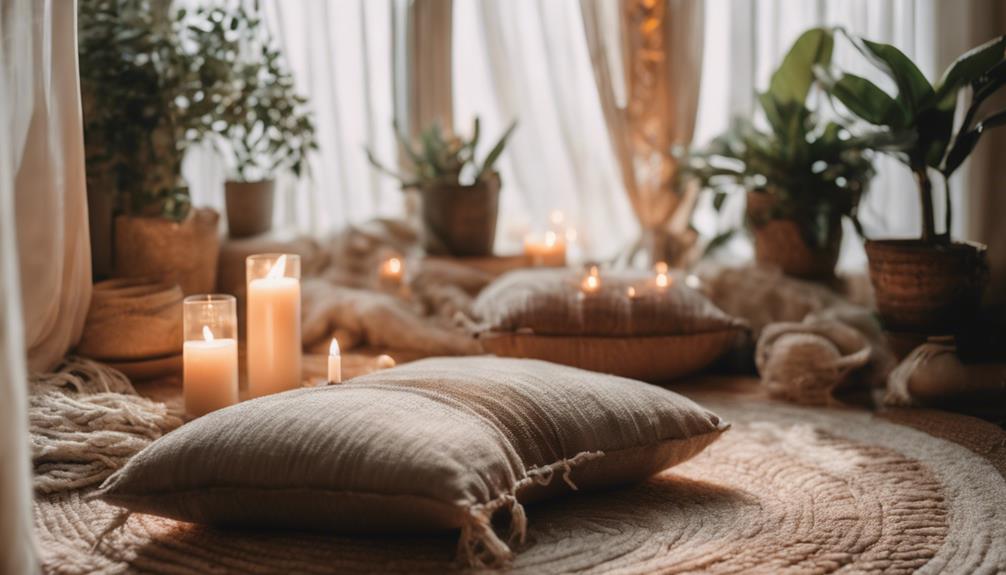
Using seasonal color palettes is a smart way to refresh your space by syncing your decor with the changing atmosphere outside. You can choose soft spring pastels, warm summer hues, earthy fall tones, or cool winter shades to evoke seasonal moods. Mix and layer colors thoughtfully to create harmony and interest. By aligning your home decor with natural shifts, you’ll enjoy a more vibrant and inviting environment. Keep exploring how these palettes can transform your space throughout the year.
Key Takeaways
- Incorporate seasonal hues like pastels in spring or warm earth tones in fall to evoke the current atmosphere.
- Use layering and glazing techniques to craft custom seasonal palettes that enhance your space’s mood.
- Update your decor with accessories and textiles in seasonal colors for a fresh look without complete overhauls.
- Draw inspiration from historical color trends, modernizing vintage palettes with current mixing techniques.
- Align interior accents with natural seasonal shifts for a cohesive, dynamic environment throughout the year.
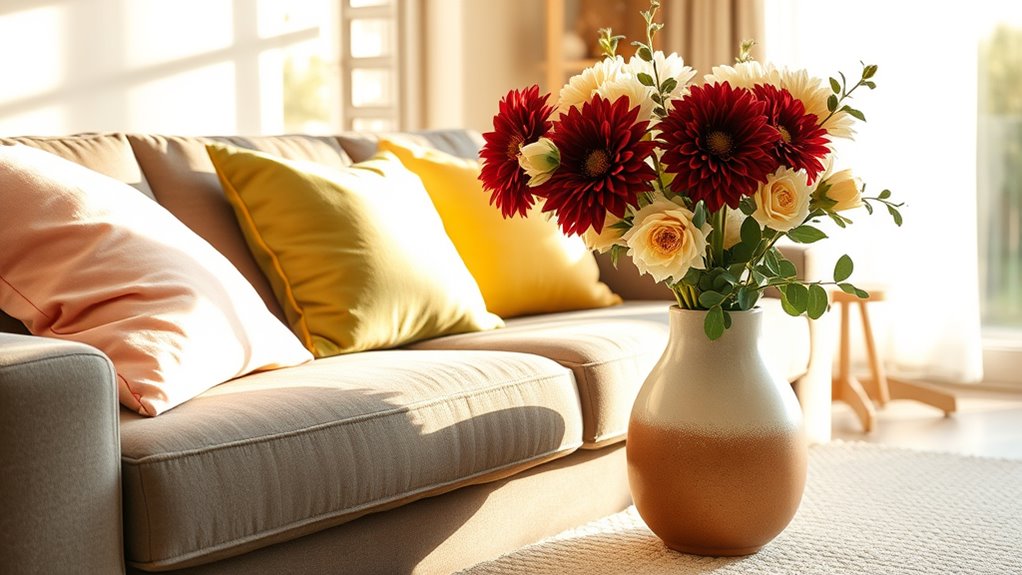
If you’re looking to breathe new life into your home, choosing the right color palette can make all the difference. One of the most effective ways to do this is by exploring seasonal color palettes that reflect the changing atmosphere outside. When you start experimenting with color mixing techniques, you’ll find it easier to create harmonious combinations that evoke the spirit of each season. For example, in spring, soft pastels and fresh greens can brighten your space, while warm, earthy tones work beautifully in fall. Understanding how to blend colors—whether through layering, glazing, or mixing paints—empowers you to craft palettes that feel both intentional and dynamic. It’s also helpful to think about historical color trends, which reveal how certain hues have shaped interior design over the decades. For instance, the muted tones of the mid-20th century or the bold, saturated shades of the 1980s can inspire modern interpretations, giving your space a timeless yet contemporary feel.
By studying these trends, you can tap into a broader palette of ideas that align with seasonal shifts. For example, in winter, deep blues and rich reds can create a cozy atmosphere reminiscent of classic holiday decor, while in summer, bright yellows and vivid turquoise evoke sunshine and ocean breezes. Incorporating historical color trends doesn’t mean copying past designs exactly but rather using them as a foundation to build your own seasonal updates. You might select a vintage-inspired palette and modernize it with current color mixing techniques, such as adding subtle gradients or accent walls. The goal is to create a sense of harmony and fluidity that matches the mood of each season, making your home feel fresh and aligned with the natural world outside.
Additionally, understanding the principles of sound design techniques can inspire you to think creatively about how to layer and combine different elements, much like blending colors in a palette. To truly refresh your space, you should think about how these seasonal palettes can be integrated into your existing decor. Using accessories, textiles, and accent walls in seasonal colors allows you to update your environment without a complete overhaul. Remember, mastering color mixing techniques—like creating custom shades or understanding complementary and analogous colors—gives you the flexibility to adapt these palettes effortlessly. Whether you’re aiming for a serene spring vibe or a bold autumn look, understanding both color mixing and historical trends helps you make confident choices. Ultimately, seasonal color palettes aren’t just about aesthetics—they’re about connecting your home to the rhythm of the year, making every season a new opportunity to breathe life into your space.
Frequently Asked Questions
How Can I Choose a Palette That Matches My Existing Decor?
To choose a palette that matches your existing decor, start by identifying your current color schemes. Use matching accessories like cushions, throws, or artwork to see which hues complement your space. Opt for colors that harmonize with your existing furniture and decor. This way, you create a cohesive look effortlessly, making your space feel refreshed yet familiar. Trust your instincts and experiment with small accents before committing to a full palette.
What Colors Are Best for Creating a Calming Environment?
Think of your space as a peaceful lake; soothing shades and tranquil tones help create that calm. Soft blues, gentle greens, and warm neutrals are best for a relaxing environment. These colors reduce stress and promote relaxation. When you incorporate these hues into your decor, you’ll feel more at ease, like sitting beside still water. Choose these calming colors to turn your space into your personal sanctuary.
How Often Should I Update My Seasonal Color Palette?
You should update your seasonal color palette every three to six months to stay current with seasonal color trends. This way, you can easily incorporate fresh, trendy shades into your space. DIY palette updates are simple and fun, allowing you to refresh your environment without a full overhaul. Regular updates keep your decor lively and aligned with the seasons, giving your space a vibrant, modern feel throughout the year.
Can Color Palettes Influence Mood and Productivity?
Color palettes can definitely influence your mood and productivity through psychological effects and color therapy. Bright, warm tones might energize you, boosting focus and creativity, while cool, calming shades help reduce stress and improve concentration. By intentionally choosing colors based on these psychological effects, you create an environment that supports your emotional well-being and enhances your efficiency, making your space more inspiring and conducive to achieving your goals.
Are There Any Color Combinations to Avoid in Seasonal Decorating?
You should definitely avoid clashing hues and overly bright combinations in seasonal decorating. These can create visual chaos and make your space feel overwhelming rather than inviting. Steer clear of mixing bold reds with intense greens or neon shades that jar the eye. Instead, opt for harmonious, muted tones that complement each other. This way, your space remains balanced, calming, and perfectly aligned with the season’s mood.
Conclusion
Think of seasonal color palettes as a breeze of fresh air for your space, transforming it like a painter’s brush bringing new life to a blank canvas. By swapping out your colors with each season, you create a dynamic, inviting atmosphere that evolves with the year. So don’t be afraid to experiment and let your space reflect the vibrant, changing world outside. Your home will feel as rejuvenated and lively as the seasons themselves.