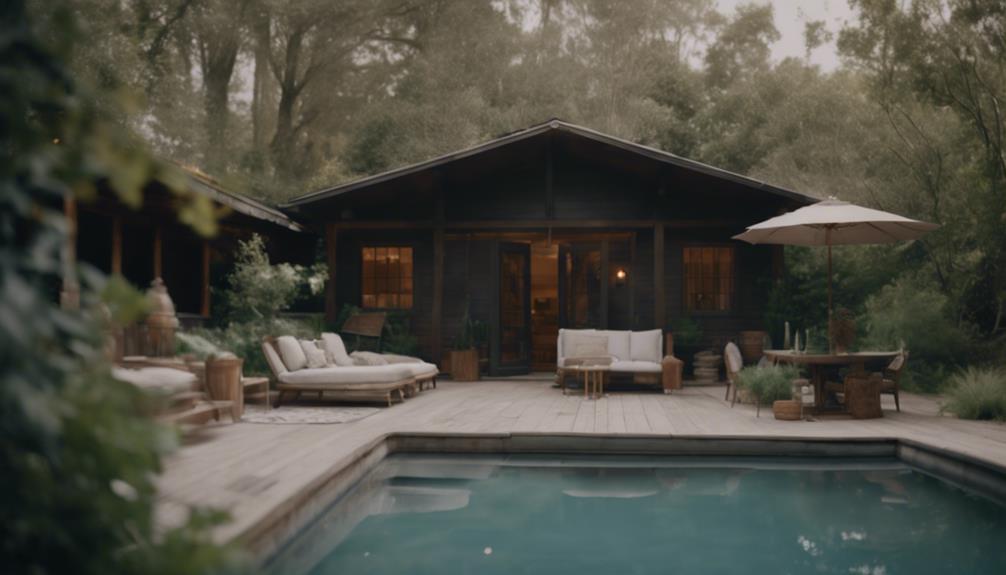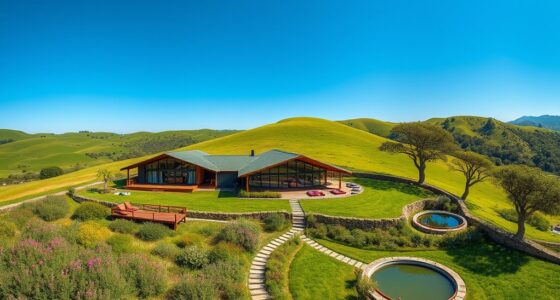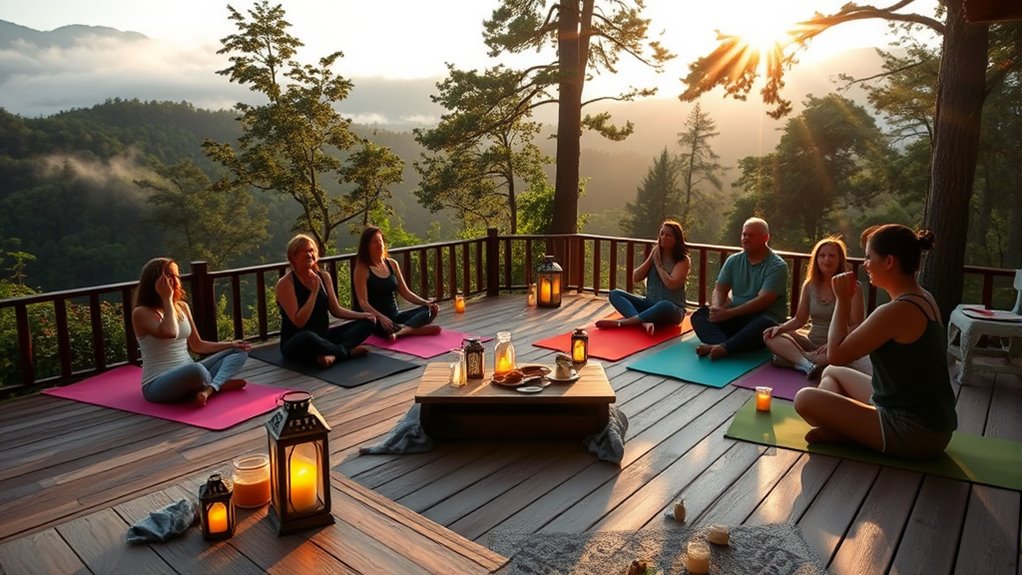

To plan a successful wellness retreat, you should create a balanced schedule featuring various meditation styles and engaging activities, ensuring tranquil environments and clear instructions. Incorporate nourishing meals and hydration options tailored to dietary needs, and coordinate logistics for smooth flow and supplies. Effective promotion highlights the retreat’s holistic health benefits, while your use of experienced instructors and thoughtful spaces enhances relaxation. Keep in mind, paying attention to these details will help you craft an unforgettable experience that leaves participants rejuvenated—you’ll discover more tips to perfect your retreat as you continue.
Key Takeaways
- Develop a balanced schedule that combines meditation, nutritious meals, relaxation, and reflective downtime.
- Offer diverse meditation styles and environments to cater to different preferences and enhance tranquility.
- Collaborate with nutrition experts to create wholesome menus supporting detox and energy, accommodating dietary restrictions.
- Ensure smooth logistics, including supply management, activity flow, and comfortable spaces for a cohesive experience.
- Use clear, engaging marketing to highlight retreat benefits, activities, and recommended items to attract and inform participants.
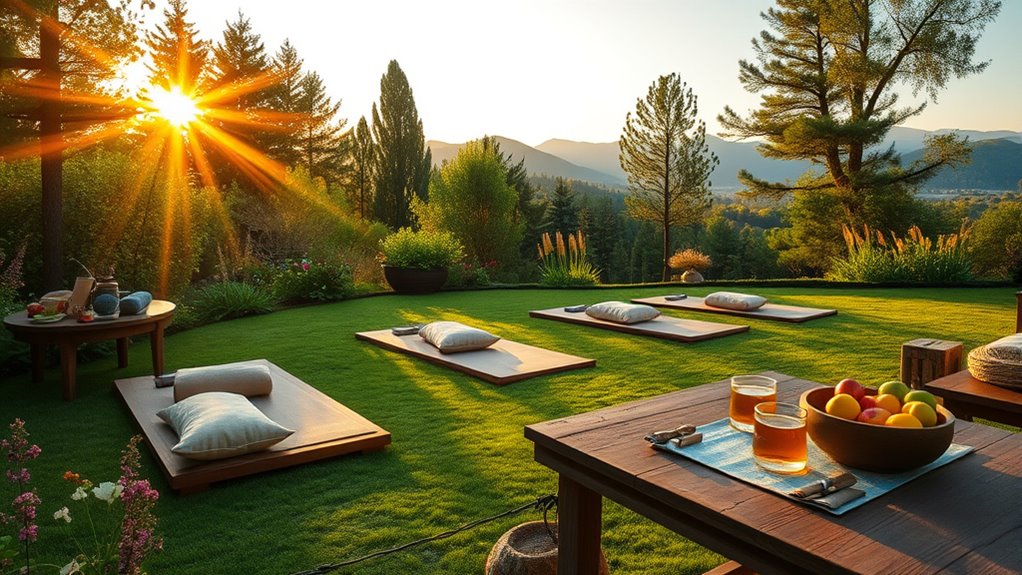
Planning a successful wellness retreat requires careful organization and a clear vision of your goals. You want your attendees to leave feeling rejuvenated, balanced, and inspired, so every detail counts. To start, focus on creating a well-structured schedule that balances relaxation with engaging activities. Incorporate meditation techniques that suit your audience’s experience levels, whether they’re beginners or seasoned practitioners. Offering a variety of meditation styles—such as guided imagery, mindful breathing, or body scans—can help participants find what resonates best with them. Make sure to allocate ample time for these practices, and consider hiring experienced instructors who can guide sessions effectively. Clear instructions and a calm environment will deepen their experience, making your retreat memorable.
Create a balanced retreat schedule with varied meditation styles and experienced instructors to ensure a memorable, relaxing experience.
Nutrition planning is equally crucial. Thoughtfully curated meals and snacks can substantially enhance your guests’ well-being. Collaborate with nutritionists or chefs familiar with wholesome, nourishing ingredients to craft menus that support detoxification and energy. Focus on fresh, seasonal produce, lean proteins, and whole grains to fuel the body and mind. Incorporate options for various dietary restrictions like vegetarian, vegan, or gluten-free preferences to ensure everyone feels cared for. Hydration stations with infused water or herbal teas can keep attendees refreshed throughout the day. Providing educational tidbits about healthy eating can also empower guests to make mindful choices beyond the retreat. Additionally, reviewing the retail – hours today list can help you plan for supplies and catering logistics more efficiently.
As you coordinate your activities, consider the flow from one experience to the next. For example, schedule meditation sessions at times when participants are most receptive, such as early morning or late afternoon. Follow these with nutritious meals or light physical activities like yoga or tai chi to reinforce the calming effects. Creating spaces that promote tranquility—such as quiet gardens or dedicated meditation rooms—can enhance the overall atmosphere. Remember to include downtime for reflection or journaling, allowing attendees to absorb what they’ve experienced.
Promotion is another key piece. Clearly communicate the focus on meditation techniques and nutrition planning in your marketing materials. Highlight the benefits of these practices to attract individuals seeking holistic health improvements. Provide detailed information about the activities and what participants should bring, like comfortable clothing or journal supplies. The more transparent and inviting your messaging, the more likely you’ll draw a dedicated group ready to embrace your wellness vision.
Frequently Asked Questions
How Do I Choose the Best Location for My Wellness Retreat?
You should choose a location with scenic venues that inspire relaxation and connection. Make certain accessibility considerations are met, so all attendees can comfortably reach and enjoy the space. Look for venues with natural beauty, nearby amenities, and good transportation links. Prioritize safety, privacy, and a peaceful environment. By balancing stunning scenery with practical access, you’ll create an ideal setting that fosters wellness and rejuvenation for your retreat.
What Budget Should I Allocate for a Successful Wellness Retreat?
Your budget should be as expansive as the universe itself, ensuring no detail is overlooked. Focus on cost considerations like venue, instructors, and activities, while also exploring funding strategies such as sponsorships or early deposits. Allocate funds wisely to balance quality with affordability, and leave a buffer for unexpected expenses. This careful planning guarantees your wellness retreat will be memorable, impactful, and financially sustainable.
How Can I Attract the Right Participants to My Retreat?
You can attract the right participants by clearly defining your target audience and tailoring your marketing strategies accordingly. Use social media platforms, email campaigns, and community partnerships to reach those interested in wellness and self-care. Share authentic testimonials and highlight unique retreat features to resonate with your ideal attendees. Engaging content and targeted messaging will draw in the right participants, ensuring your retreat is filled with motivated, like-minded individuals.
What Safety Protocols Are Essential for Wellness Retreats?
Think of safety protocols like a sturdy shield protecting you. You should implement medication management plans, ensuring participants’ prescriptions are handled safely. Emergency preparedness is essential; have clear procedures, accessible first aid kits, and trained staff ready to act swiftly. Regular safety drills and communication plans help everyone stay calm and informed during unexpected events. Prioritizing these measures keeps your retreat safe, allowing everyone to relax and focus on their wellness journey.
How Do I Measure the Success of My Wellness Retreat?
You measure your wellness retreat’s success by collecting participant feedback and evaluating goal achievement. Encourage honest reviews to understand what resonated and where improvements are needed. Track how well participants meet their personal goals and observe changes in their well-being. If feedback is positive and goals are met, your retreat is successful. Use this data to refine future retreats, ensuring continuous growth and better experiences.
Conclusion
Think of your wellness retreat as a garden you’ve carefully cultivated. With each thoughtful planning step—like planting seeds, watering, and nurturing—you create a vibrant sanctuary where guests can flourish. When every detail aligns, your retreat blossoms into a haven of renewal and peace. Remember, your dedication turns this garden into a sanctuary, inviting others to grow, heal, and blossom alongside you. With love and care, your retreat becomes a beautiful, lasting oasis of well-being.