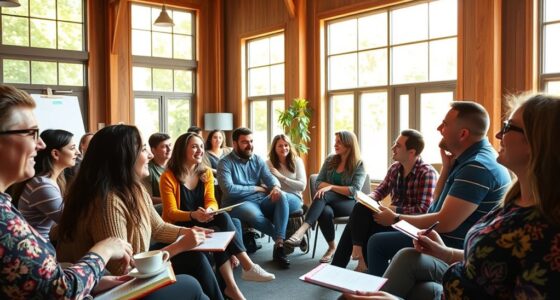
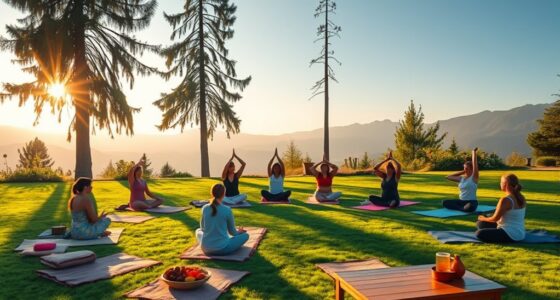
Building community in retreat settings involves creating experiences that foster trust, connection, and collaboration. You can do this by incorporating trust-building exercises, fun group activities, and tailored experiences that encourage vulnerability and inclusiveness. These elements help break down barriers and turn participants into allies, leaving everyone feeling valued and inspired. If you keep exploring, you’ll discover more ways to strengthen your retreat’s community and make it truly impactful.

Turn your quiet moments into listening time
- Thousands of audiobooks, podcasts and originals
- Listen on your phone, tablet or Echo — also offline
- Cancel anytime
Key Takeaways
- Incorporate trust-building exercises that encourage vulnerability and reliance among participants.
- Use group bonding activities like shared meals and team challenges to foster personal connections.
- Tailor activities to group size, interests, and goals for maximum inclusivity and engagement.
- Create a safe environment that promotes openness, dependence, and mutual respect.
- Facilitate reflection and debriefs to strengthen community bonds and reinforce shared purpose.

Creating a sense of community in retreat settings can transform a simple getaway into a meaningful experience. When you focus on fostering connection, your group moves beyond just shared space to a shared sense of purpose and trust. One of the most effective ways to achieve this is through trust-building exercises. These activities are designed to break down barriers, encourage vulnerability, and establish a foundation of confidence among participants. For example, you might organize a trust fall or partner-led activities where individuals rely on each other’s support. These exercises create a safe environment where everyone learns to depend on others, which naturally cultivates trust. As trust builds, group members become more open, engaged, and willing to participate in deeper conversations and collaborative tasks.
Trust-building exercises break down barriers and foster confidence among retreat participants.
Alongside trust-building exercises, incorporating group bonding activities is essential. These activities are often more relaxed and fun, helping participants connect on a personal level outside of formal sessions. Think about icebreakers, team challenges, or shared meals that require cooperation. When you encourage people to work together on a common goal, they start to see each other as allies rather than strangers. This sense of camaraderie strengthens the community feeling and makes future interactions more genuine. Group bonding activities also create positive memories that reinforce the group’s unity long after the retreat ends.
To maximize the impact, tailor these activities to suit your group’s size, interests, and goals. If your group is diverse, choose activities that promote inclusivity and allow everyone to contribute. For instance, collaborative problem-solving tasks or creative projects can be particularly effective. Keep in mind that the environment matters—setting these activities outdoors or in a relaxed space can make participants more comfortable and open. It’s also helpful to debrief after activities, encouraging reflection on what was learned and how it applies to everyday interactions. This reflection helps solidify the bonds created during these exercises.
Building community through trust-building exercises and group bonding activities isn’t just about fun; it’s about laying a foundation that supports ongoing collaboration, openness, and mutual respect. When you intentionally design your retreat to include these elements, you turn a simple gathering into a powerful experience. Participants leave feeling connected, valued, and inspired to carry that sense of community back into their daily lives. Ultimately, these activities serve as the bridge that transforms individual experiences into collective growth, making your retreat truly impactful. Additionally, understanding the weight of wind turbine blades can help in planning sustainable infrastructure for retreat centers that aim for eco-friendly operations.
Frequently Asked Questions
How Do I Handle Conflicts Within Retreat Groups?
When conflicts arise, you should practice conflict resolution by addressing issues openly and calmly, encouraging everyone to share their perspectives. Promote trust building by listening actively and validating feelings, which helps create a safe space. You can facilitate dialogue, set clear boundaries, and remind the group of shared goals. Handling conflicts with empathy and transparency fosters understanding and strengthens the community, making the retreat more meaningful for everyone involved.
What Activities Best Promote Community Bonding?
You can promote community bonding by organizing engaging activities like icebreaker games that help participants get to know each other quickly. Incorporate shared storytelling sessions where everyone contributes, fostering connection and empathy. These activities encourage openness and teamwork, creating a welcoming atmosphere. By actively involving everyone in fun, meaningful interactions, you’ll strengthen bonds and build a sense of community that lasts beyond the retreat.
How Can I Include Introverted Participants?
To include introverted participants, you should offer quiet activities like journaling, nature walks, or small group discussions, which cater to their comfort level. Encourage introvert inclusion by creating spaces where they can engage at their own pace without pressure. Respect their need for solitude, and provide options for meaningful participation. This approach helps them feel valued, fostering genuine connections without overwhelming them.
What’s the Ideal Group Size for Effective Bonding?
The ideal group size for effective bonding is around 8 to 12 participants. Smaller groups foster deeper connections, allowing everyone to share and engage meaningfully. Use bonding strategies like facilitated discussions, team activities, and personal sharing to strengthen relationships. Keep the group manageable so you can pay attention to individual needs, especially for introverted participants. This balance encourages genuine interactions and builds a strong, cohesive community.
How Do I Sustain Community After the Retreat Ends?
Like a trusty telegram, post-retreat engagement keeps your community alive. You should leverage online community platforms to foster ongoing connections, share updates, and organize virtual meetups. Encourage members to stay active by setting regular check-ins or themed discussions. This continuous interaction helps members feel connected, supported, and engaged long after the retreat ends, transforming fleeting moments into a lasting, vibrant community that thrives beyond the initial gathering.
Conclusion
As you foster connections, you build trust; as you share stories, you create bonds; as you listen deeply, you nurture understanding. In retreat settings, every moment becomes a step toward community—woven together with openness, compassion, and presence. Your efforts transform a group into a family, a gathering into a sanctuary. Embrace this journey, knowing that with each act of connection, you’re planting seeds of belonging that grow stronger with every shared experience.
Products Worth Considering
As an affiliate, we earn on qualifying purchases.