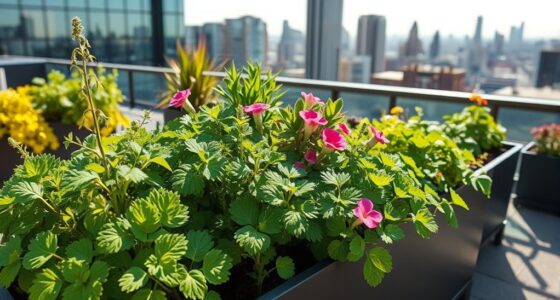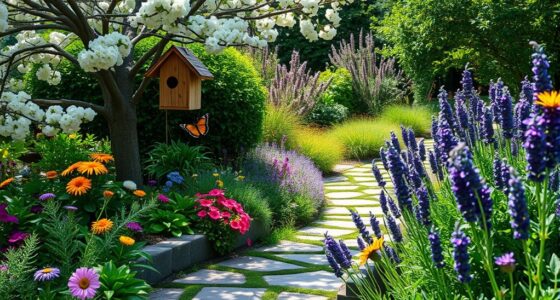
To select resilient plants for a changing climate, focus on native species with drought-tolerant traits like deep roots, waxy leaves, or water storage capabilities. Choose plants adapted to your local soil and climate conditions to reduce maintenance and water needs. Consider growth habits and soil preparation to ensure success. By understanding these factors, you’ll build a sustainable garden that endures weather shifts—exploring deeper can help you make the best choices.
Key Takeaways
- Prioritize native and region-specific drought-tolerant species adapted to local climate conditions.
- Choose plants with deep roots, waxy leaves, or water storage adaptations for resilience.
- Assess your garden’s soil type and improve it to enhance water retention and plant survival.
- Match plant selection to your specific climate zone for higher success and sustainability.
- Incorporate low-maintenance, drought-resistant plants like succulents, grasses, and hardy shrubs.
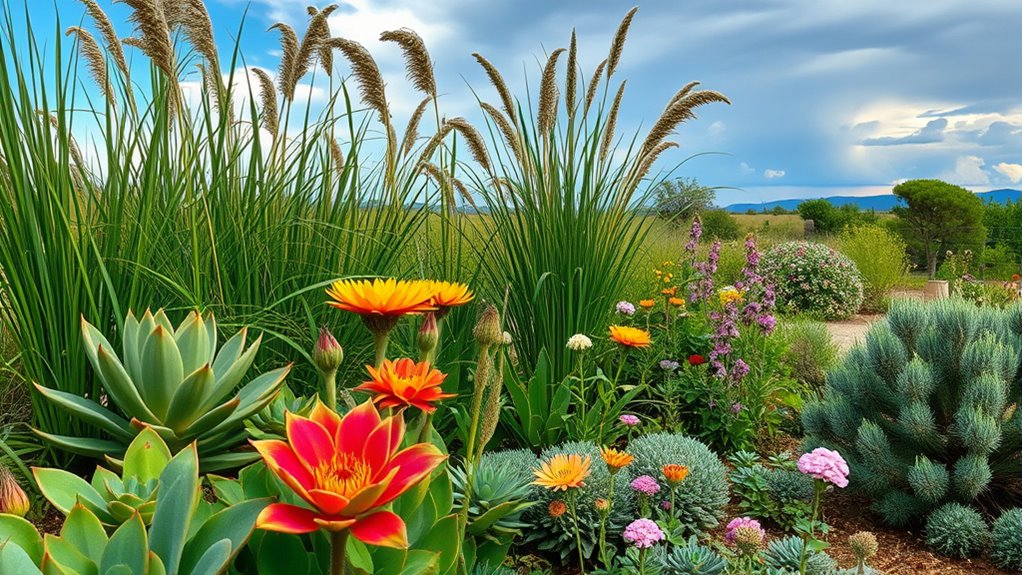
As our climate continues to shift unpredictably, choosing resilient plants becomes essential for maintaining healthy and sustainable gardens. You need plants that can withstand extreme weather conditions, especially droughts, which are becoming more common in many regions. Drought tolerant species are your best bet, as they have evolved mechanisms to survive prolonged dry periods with minimal water. These plants often possess deep root systems, waxy leaves, or other adaptations that reduce water loss and enable them to thrive in low-moisture environments. When selecting plants, it’s also smart to prioritize native plant adaptation. Native species are naturally suited to your local climate and soil conditions, making them more resilient than non-native alternatives. They’ve developed over generations to handle regional temperature swings, seasonal droughts, and even local pests, so they tend to require less supplemental watering and care once established.
In addition, practicing self-understanding of your gardening environment can help you choose the most suitable resilient plants for your specific site conditions. You can start by researching native plants that are known for their drought tolerance. Many regions boast specific species that have adapted over time to endure periods of drought without suffering. These plants often have a natural advantage because they’re already acclimated to your environment, reducing the need for frequent watering and chemical inputs. Incorporating native, drought tolerant species into your garden not only conserves water but also supports local biodiversity by providing habitat for native insects, birds, and pollinators.
When choosing resilient plants, consider their growth habits and maintenance needs. For example, succulents and certain grasses are excellent options because they store water in their leaves or stems, allowing them to survive dry spells. Shrubs with small, tough leaves or leathery textures are also good choices, as they minimize water loss. It’s important to plant species that suit your specific climate zone, as this increases their chances of thriving with minimal intervention. Additionally, proper soil preparation can enhance drought tolerance by improving water retention, even in sandy or rocky soils.
Frequently Asked Questions
How Can I Identify Resilient Plants Suited to My Local Climate?
To identify resilient plants suited to your local climate, start with soil testing to understand your soil’s composition and moisture levels. Then, perform a microclimate analysis of your yard to spot variations in sun, wind, and shade. Choose plants that thrive in those specific conditions, focusing on native species or drought-tolerant varieties. This approach helps guarantee your plants will adapt and flourish despite changing climate conditions.
What Are the Most Drought-Tolerant Plants for Urban Gardens?
Imagine your urban garden thriving with vibrant, drought-resistant groundcovers like sedum and lavender, which survive dry spells with ease. Using xeriscaping techniques, you create a landscape that’s both beautiful and water-wise. Plants like agave and yucca are perfect for hot, arid conditions, while succulents store water in their thick leaves. These drought-tolerant options keep your garden lush and resilient, even during extended dry periods.
How Do Invasive Species Impact Resilient Plant Selection?
Invasive species can seriously impact your resilient plant choices by disrupting ecosystem balance. They often outcompete native, drought-tolerant plants, making invasive species management essential. When you control invasives, you help preserve the natural habitat, giving resilient plants a better chance to thrive. By maintaining ecosystem balance, you guarantee your garden remains sustainable and resilient against climate changes, supporting biodiversity and reducing the risk of invasive species taking over.
Can Native Plants Also Be Resilient to Climate Change?
Yes, native plants can be resilient to climate change. Their benefits include better adaptation to local conditions, requiring less water and maintenance. By choosing native plants, you support ecosystem stability and enhance biodiversity. Incorporate climate adaptation strategies by selecting species that tolerate drought, heat, or heavy rains. Native plants often have natural resilience, helping your landscape endure changing weather patterns and reducing the need for chemical inputs.
What Maintenance Practices Support Resilient Plant Health?
Imagine nurturing a thriving garden where plants flourish despite challenges. To support resilient plant health, you should regularly enrich your soil with organic matter, ensuring roots stay strong and adaptable. Practice vigilant pest management to prevent damage without harming beneficial insects. Consistent watering, mulching, and pruning also help plants withstand stress, creating a resilient landscape that can gracefully endure changing conditions and thrive year after year.
Conclusion
By choosing hardy, drought-tolerant plants, you create a resilient, radiant landscape that withstands weather whims. Embrace eco-friendly efforts, ensuring your garden’s growth against global changes. Your mindful mix of native and adaptable plants promises persistent beauty and perseverance. Let your landscape be a lush, lively legacy—lively, low-maintenance, and long-lasting. With wise, water-wise choices, you’ll weather the wicked weather and witness a vibrant, victorious vista flourishing through the future’s fluctuations.