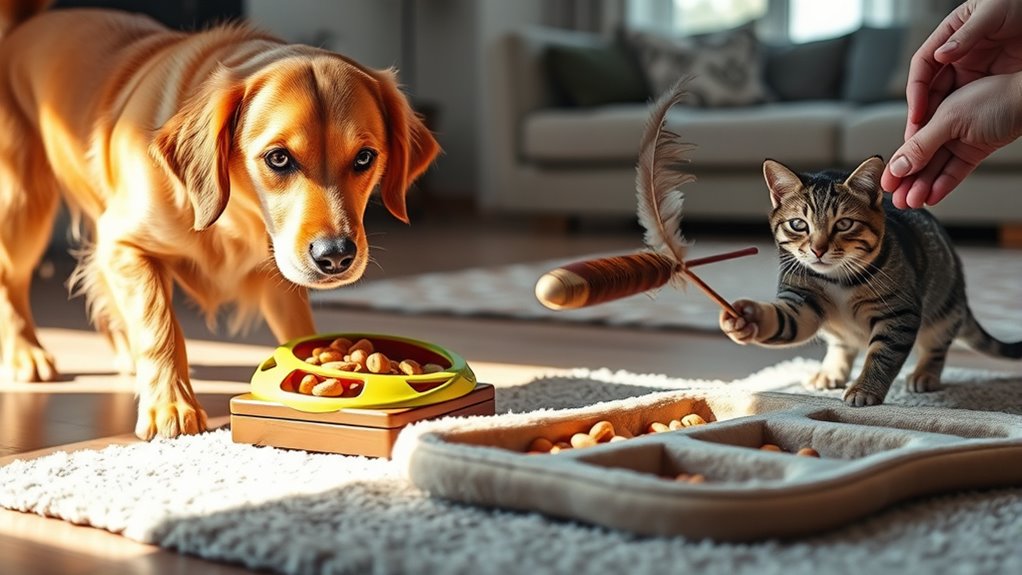

To keep your pet mentally stimulated, try interactive puzzles and scent games like hiding treats or using puzzle feeders. These activities challenge their problem-solving skills and tap into their natural instincts. Regular mental exercises help reduce boredom, destructive behavior, and promote overall well-being. Incorporating simple, engaging tasks into your daily routine can strengthen your bond and keep your pet happy. Keep exploring to discover even more ways to enrich your pet’s mind effectively.
Key Takeaways
- Use interactive puzzles and treat-based toys to challenge your pet’s problem-solving skills.
- Incorporate scent games by hiding treats or toys to engage your pet’s natural scenting instincts.
- Regularly introduce new activities to prevent boredom and promote mental agility.
- Keep activities simple to set up and adapt them to your pet’s preferences and skill level.
- Engage in daily mental exercises to strengthen bonds and support overall pet well-being.
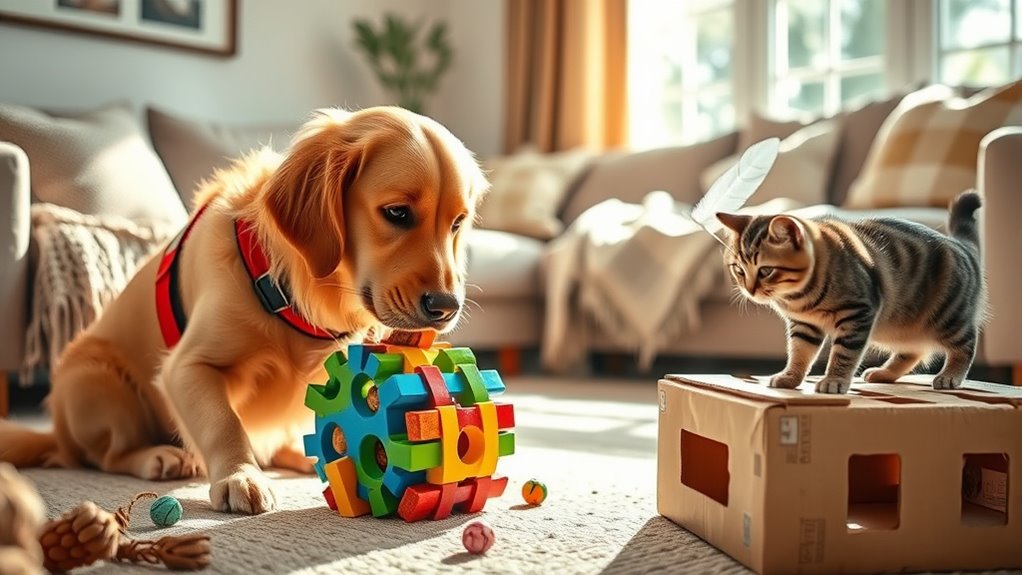
Just like humans, pets need mental stimulation to stay happy and healthy. Without enough mental activity, they can become bored, anxious, or even develop behavioral issues. One effective way to keep their minds sharp is through engaging activities like interactive puzzles and scent games. These activities challenge your pet’s problem-solving skills and sense of smell, providing both entertainment and mental exercise.
Interactive puzzles are fantastic tools for stimulating your pet’s brain. They come in various shapes and difficulty levels, so you can find one that matches your pet’s intelligence and experience. For dogs, puzzle toys that hide treats encourage them to figure out how to access the reward. Cats, on the other hand, might enjoy puzzle feeders that require paw dexterity or mental effort to get a snack. As your pet interacts with these puzzles, they learn to think critically and develop patience. Plus, they stay busy, which reduces destructive behaviors caused by boredom.
Interactive puzzles stimulate your pet’s brain and reduce destructive boredom behaviors.
Scent games are another excellent way to engage your pet’s mind. Dogs and cats rely heavily on their noses, and scent-based activities tap into this natural instinct. You can start simple by hiding treats or favorite toys around the house or yard and encouraging your pet to find them. As they become more skilled, you can increase the difficulty by using scent trails or hiding treats in more challenging spots. This not only provides mental stimulation but also strengthens your pet’s sense of smell and their confidence in using it. Scent games also help tire out energetic pets, making them calmer and more content afterward.
Both interactive puzzles and scent games are versatile activities that you can adapt to your pet’s preferences and skill level. They’re easy to set up and require minimal equipment, making them practical options for daily enrichment. Incorporating these activities into your routine helps prevent boredom and promotes mental agility. Furthermore, engaging your pet’s mind can deepen your bond, as they look to you for new challenges and fun experiences. Mental stimulation is essential for preventing behavioral issues and keeping your pet’s mind active and healthy.
Remember, the goal isn’t just to keep them busy but to stimulate their natural instincts and curiosity. Incorporating these mental enrichment activities into your pet’s daily life is simple and rewarding. Spend a few minutes each day introducing new puzzles or scent challenges, and watch your pet thrive mentally. Not only will they be happier and more fulfilled, but you’ll also enjoy the satisfaction of providing a stimulating environment that keeps their mind sharp and their spirit lively.
Frequently Asked Questions
How Often Should I Rotate My Pet’s Enrichment Activities?
You should rotate your pet’s enrichment activities every week or two to keep their interest high. Using a rotating schedule prevents boredom and introduces activity variety, which is essential for mental stimulation. Pay attention to your pet’s reactions—if they seem uninterested or distracted, it’s time to switch things up. Regularly changing activities keeps your pet engaged, challenged, and happy, enhancing their overall well-being.
Can Mental Enrichment Replace Physical Exercise for My Pet?
You can’t rely solely on mental stimulation to replace physical exercise because they serve different purposes. While cognitive enrichment keeps your pet’s mind sharp and engaged, it doesn’t burn off the energy physical activity does. To keep your pet happy and healthy, you need a balanced approach—mental stimulation enhances overall well-being, but regular physical exercise is essential for their physical health and energy. Always aim for both.
Are There Activities Suitable for Elderly or Disabled Pets?
Yes, there are gentle activities suitable for elderly or disabled pets. You can use adaptive toys that are easy to handle and require minimal movement, like puzzle feeders or soft, textured toys. Gentle massage and light grooming also provide mental and physical comfort. Focus on activities that stimulate their minds without causing strain, ensuring they enjoy mental enrichment comfortably and safely. Always tailor activities to your pet’s specific needs and limitations.
How Do I Introduce New Enrichment Activities Safely?
To guarantee a safe introduction, start with a gradual integration of new enrichment activities. Observe your pet’s reactions closely, and introduce one activity at a time in a calm environment. Use positive reinforcement like treats or praise to encourage participation. Always monitor their comfort levels and adjust as needed. Patience is key, allowing your pet to explore and adapt at their own pace, making the experience enjoyable and safe.
What Signs Indicate My Pet Is Bored or Unstimulated?
Imagine your pet pacing around, pawing at the door, or losing interest in favorite toys—that’s a sign of boredom behaviors. You might notice signs of unstimulation like excessive barking, chewing on furniture, or lethargy. These cues tell you your pet needs mental stimulation. If you see these signs, it’s time to introduce new activities or enrichment to keep your furry friend engaged and happy, preventing boredom from taking hold.
Conclusion
Incorporating mental enrichment activities keeps your pet happy and healthy, strengthening your bond and preventing boredom. Remember, a stimulated mind leads to a contented pet. As the saying goes, “A tired dog is a happy dog,” so make time for fun puzzles, training, and new experiences. Your efforts not only enrich their life but also foster trust and love between you. Keep their mind active, and you’ll both enjoy a more fulfilling companionship.