

To reduce your pet’s separation anxiety, start by implementing consistent routines for departures and arrivals that stay low-key. Use targeted training, like gradually increasing alone time and rewarding calm behavior, to build confidence. Enrich their environment with toys and soothing sounds to keep them occupied and relaxed. Confirm they get plenty of physical and mental exercise before you leave, and maintain patience and consistency throughout the process. Keep going, and you’ll find more strategies that can help your pet feel secure.
Key Takeaways
- Implement gradual desensitization and consistent routines to help pets feel secure when alone.
- Use environmental enrichment like puzzle toys and calming background noise to reduce anxiety.
- Keep departures and arrivals low-key to prevent reinforcing anxious behaviors.
- Ensure pets receive sufficient physical and mental exercise before leaving to promote relaxation.
- Practice patience and tailor strategies to each pet’s needs for long-term anxiety reduction.
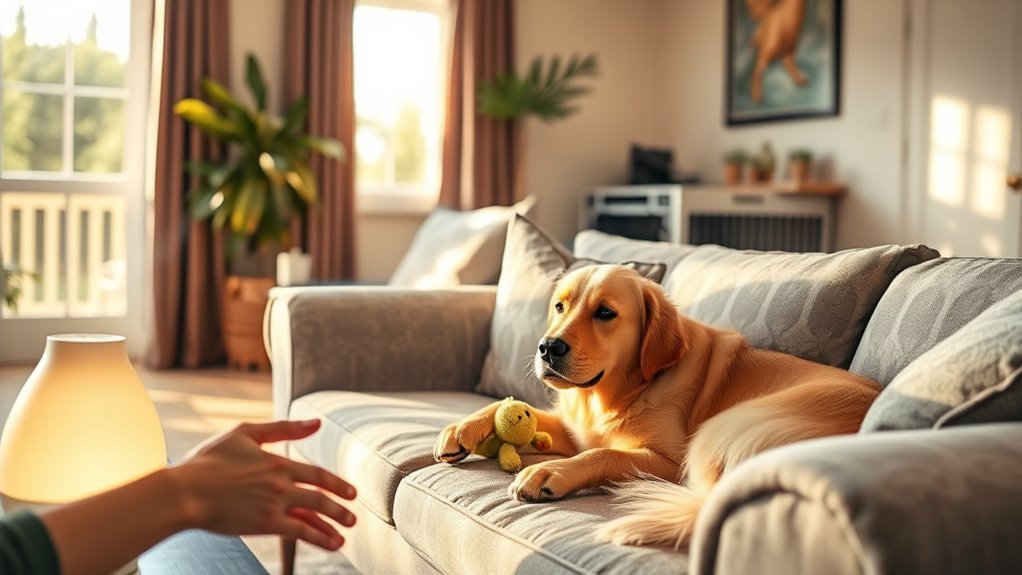
Separation anxiety is a common challenge for many pet owners, causing pets to feel stressed and behave destructively when left alone. If you notice your pet pacing, whining, or chewing furniture whenever you’re gone, it’s essential to address these behaviors effectively. One of the most effective ways to do this is through targeted training techniques that help your pet build confidence and feel more secure when you’re not around. Consistent routines, gradual desensitization, and positive reinforcement can make a significant difference. For instance, start by leaving your pet alone for short periods, rewarding calm behavior, and gradually increasing your departure time. Over time, your pet learns that being alone isn’t something to fear, which diminishes anxiety.
In addition to training techniques, environmental enrichment plays a crucial role in reducing separation anxiety. When your pet’s environment is stimulating and engaging, they’re less likely to focus on your absence as a source of stress. Consider providing puzzle toys, interactive feeders, or safe chew items that can keep your pet occupied. Creating a comfortable space with familiar blankets, beds, and soothing background noise, like calming music or white noise, can also promote relaxation. Ensuring your pet has plenty of physical and mental exercise before you leave helps tire them out, making it easier for them to rest during your absence. Incorporating high-quality pet toys can also help maintain their interest and reduce anxiety levels.
You should also pay attention to your departure routines, as they can influence your pet’s anxiety levels. Keep your arrivals and departures low-key, avoiding emotional goodbyes or overly enthusiastic greetings. This helps your pet associate your leaving and returning with normalcy rather than heightened excitement or distress. Over time, these small adjustments can help your pet feel more in control and less anxious when you’re away.
Consistency is key. Stick to a predictable schedule for feeding, walks, and playtime, which reassures your pet that their needs are being met. Incorporate training techniques that gradually increase your pet’s independence, and supplement this with enriching activities that keep their mind engaged. Remember, patience is essential—reducing separation anxiety takes time, and every pet responds differently. But with persistence and a thoughtful approach, you can help your furry friend feel safer and more relaxed, even when you’re not around.
Frequently Asked Questions
Can Separation Anxiety Develop Suddenly in Pets?
Yes, separation anxiety can develop suddenly in pets, often due to changes in their environment or routine. When this happens, you should focus on behavior modification techniques and environmental enrichment to help them adjust. Providing interactive toys, maintaining a consistent schedule, and gradually increasing time apart can ease their anxiety. Patience and understanding are key as your pet learns to feel secure even when you’re not nearby.
Are There Specific Breeds More Prone to Separation Anxiety?
Certain breeds have breed tendencies that make them more prone to separation anxiety, such as Border Collies, Labrador Retrievers, and German Shepherds. These breeds often seek constant companionship and are sensitive to anxiety triggers like sudden changes in routine or being left alone for long periods. If you have these breeds, stay attentive to their behavior and gradually desensitize them to separation to help ease their anxiety.
How Long Does It Typically Take to See Progress?
Think of your pet’s progress timeline like watching a seed sprout; it can take weeks to months. Usually, you’ll notice small improvements within 2-4 weeks, but full calmness may take 3-6 months. Patience strategies are your watering can, nurturing consistent routines and gentle training. Stay committed, and with time, your pet will bloom into a confident, less anxious companion, showing progress gradually like a sunrise easing into daylight.
Is Medication Necessary for Severe Cases?
For severe cases, medication isn’t always necessary, but it can be helpful. You should discuss medication safety with your vet to guarantee your pet’s well-being. Often, combining medication with alternative therapies like behavioral training or environmental changes yields the best results. If your pet’s anxiety is intense, your vet can recommend the safest options and guide you on whether medication might be advantageous alongside other approaches.
Can Separation Anxiety Be Prevented in Puppies?
Sure, you can prevent puppy separation anxiety—just ignore those training techniques and environmental enrichment! In reality, consistent socialization, gradual departures, and engaging activities build confidence and reduce stress. You’ll want to introduce your pup to alone time early, using positive reinforcement and stimulating toys. It’s not foolproof, but these proactive steps give your puppy a strong start, making separation less stressful for both of you.
Conclusion
Remember, easing your pet’s separation anxiety is like tending a garden—you nurture patience, consistency, and love. With small, steady steps, you’ll help your furry friend feel safe and secure, turning their worries into wagging tails and contented purrs. Keep in mind that progress may be slow, but your dedication is the sunshine that helps them bloom. Together, you’re creating a bond stronger than any storm, filled with trust and reassurance.