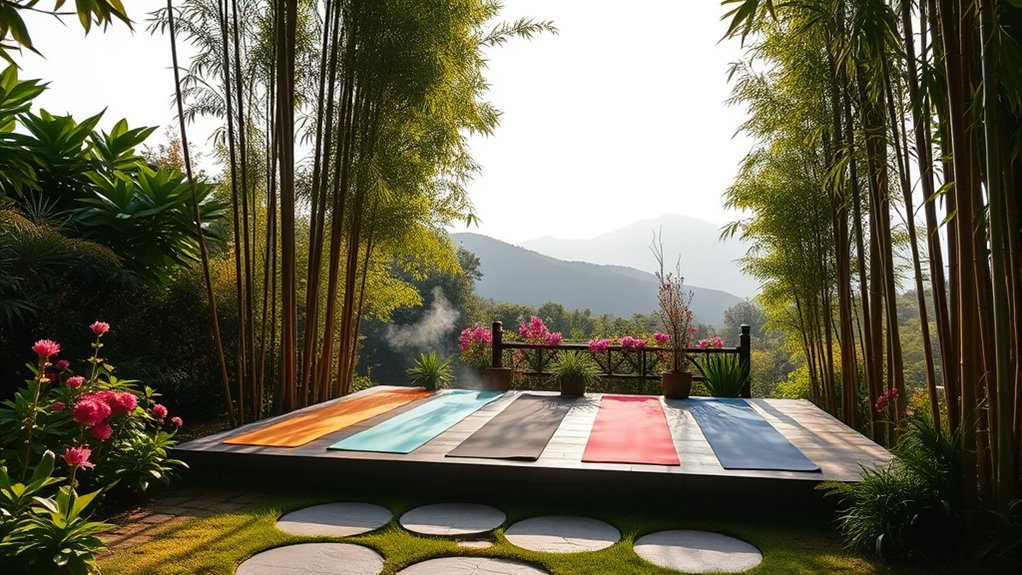

Finding the perfect outdoor space for yoga and meditation is simple—any quiet corner with natural elements works perfectly. Use soft grass, lush shrubs, or a peaceful garden spot to deepen your practice. Natural sounds like birds and wind enhance your focus and relaxation. No fancy equipment needed; just a willingness to connect with nature. Keep exploring to discover how outdoor environments can transform your mindfulness routine and bring lasting calm.
Key Takeaways
- Any outdoor corner with natural elements like grass or shrubs can serve as a peaceful yoga and meditation spot.
- Natural sounds such as birdsong and rustling leaves enhance mindfulness and deepen practice.
- Creating a personal outdoor sanctuary encourages relaxation, focus, and a stronger connection to nature.
- Incorporating natural design elements and surroundings supports well-being and aesthetic appeal.
- Regular outdoor practice fosters long-term inner calm, harmony, and a revitalized mind-body connection.
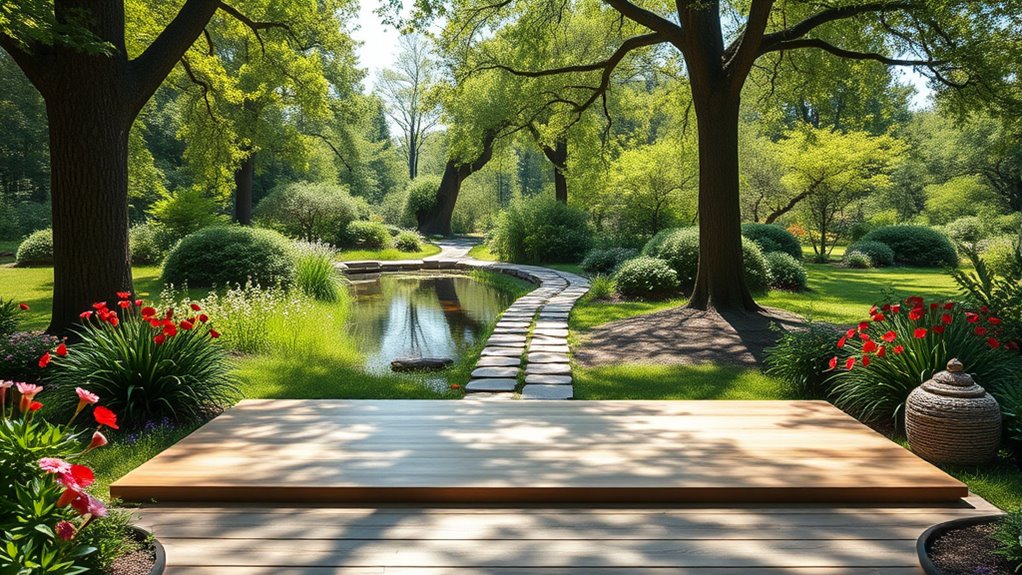
Have you ever noticed how practicing yoga or meditation outdoors can deepen your connection to both nature and yourself? When you set aside your indoor space and step into a garden or natural setting, you tap into a sense of garden serenity that’s hard to find elsewhere. The gentle rustling of leaves, the warm sunlight filtering through branches, and the subtle scents of blooming flowers create a natural ambiance that effortlessly enhances your practice. This environment encourages you to slow down, breathe more deeply, and truly feel present in the moment. It’s not just about the physical act; it’s about immersing yourself in the calming energy that nature offers.
Choosing an outdoor space for your practice transforms it into a sanctuary that fosters peace and mindfulness. You don’t need a large yard or a specialized garden—any corner of your outdoor space can be turned into a personal retreat. When you position your mat or meditation cushion on soft grass or nestled between lush shrubs, you’re creating a haven that invites relaxation and focus. The natural ambiance—free from the distractions of screens and walls—allows your mind to settle and your senses to sharpen. You become more aware of subtle sounds, like birdsong or the whispering wind, which anchor your attention and deepen your meditation. Over time, this connection to the environment enhances your sense of calm and helps you develop a more profound mindfulness practice.
Transform any outdoor corner into a peaceful sanctuary for mindful practice and deep connection with nature.
The beauty of outdoor yoga and meditation lies in its simplicity and accessibility. You don’t need fancy equipment or a dedicated studio—just a quiet spot and your willingness to embrace the outdoors. As you move through your poses or sit in stillness, notice how your body responds to the natural elements. The coolness of the breeze, the warmth of the sun, and the grounding sensation of earth beneath you all contribute to a holistic experience. This integration of environment and practice nurtures your well-being and reinforces your bond with nature. It’s an opportunity to disconnect from digital distractions and reconnect with the natural world, which, in turn, revitalizes your mind and body. Additionally, incorporating nature-inspired design elements like gears or mechanical accents can add a touch of steampunk charm to your outdoor sanctuary, blending Victorian elegance with industrial innovation.
Incorporating outdoor spaces into your routine isn’t just about convenience; it’s about enriching your practice with the healing power of nature. Each session becomes more than a physical exercise—it’s a chance to find garden serenity amid the natural ambiance. As you cultivate this connection regularly, you’ll notice a lasting sense of peace and clarity blossoming within you. The outdoors isn’t just a backdrop; it’s an active partner in your journey toward mindfulness, health, and harmony.
Frequently Asked Questions
How Do I Choose the Best Outdoor Space for My Practice?
When choosing a location for your practice, look for natural surroundings that promote relaxation and focus. Consider a space with minimal noise, good airflow, and a safe, flat surface. Trust your intuition—pick a spot where you feel comfortable and connected to nature. Test it out at different times of day to find when the energy and environment align best with your practice, helping you cultivate mindfulness and tranquility.
What Safety Precautions Should I Consider Outdoors?
You should prioritize your safety by staying alert for wildlife encounters that could surprise you, and protect yourself from sun exposure with sunscreen, hats, and shade. Check the area for uneven ground or obstacles that might cause falls. Bring water to stay hydrated, especially under the sun’s blazing rays. Trust your instincts—if something feels unsafe, it’s better to pause and find a safer spot.
Can Weather Changes Affect Outdoor Yoga and Meditation?
Weather changes can definitely affect your outdoor yoga and meditation sessions. You should make seasonal adjustments and stay weather-prepared by checking forecasts regularly. Dress appropriately for the temperature, bring essentials like umbrellas or blankets, and be ready for unexpected rain or wind. These precautions help you stay comfortable and safe, ensuring you can enjoy your practice regardless of weather fluctuations. Always plan ahead to adapt smoothly to changing conditions.
How Do I Create Privacy in Public Outdoor Areas?
You can create privacy in public outdoor areas by using garden screening and sound barriers. Imagine setting up tall plants, bamboo screens, or fabric curtains that block views and absorb noise. These elements help you feel secluded and focused, even amid bustling surroundings. By strategically placing these barriers, you craft a peaceful oasis where you can practice yoga or meditate undisturbed, turning any open space into your serene retreat.
What Are the Environmental Benefits of Practicing Outdoors?
Practicing outdoors boosts air quality by reducing indoor pollution exposure and increasing oxygen intake, which benefits your respiratory health. It also enhances biodiversity, supporting local ecosystems and providing natural beauty that enriches your experience. By engaging with nature, you help promote environmental sustainability and create a calming atmosphere, making your practice more impactful for both your well-being and the planet.
Conclusion
Creating outdoor spaces for yoga and meditation can considerably boost your well-being. With over 70% of people noticing reduced stress after practicing outdoors, it’s clear nature enhances your experience. By choosing peaceful spots like parks or gardens, you invite tranquility into your routine. So, why not embrace the outdoors and transform your practice? Connecting with nature not only deepens your meditation but also revitalizes your mind and body. Start today and feel the difference for yourself!