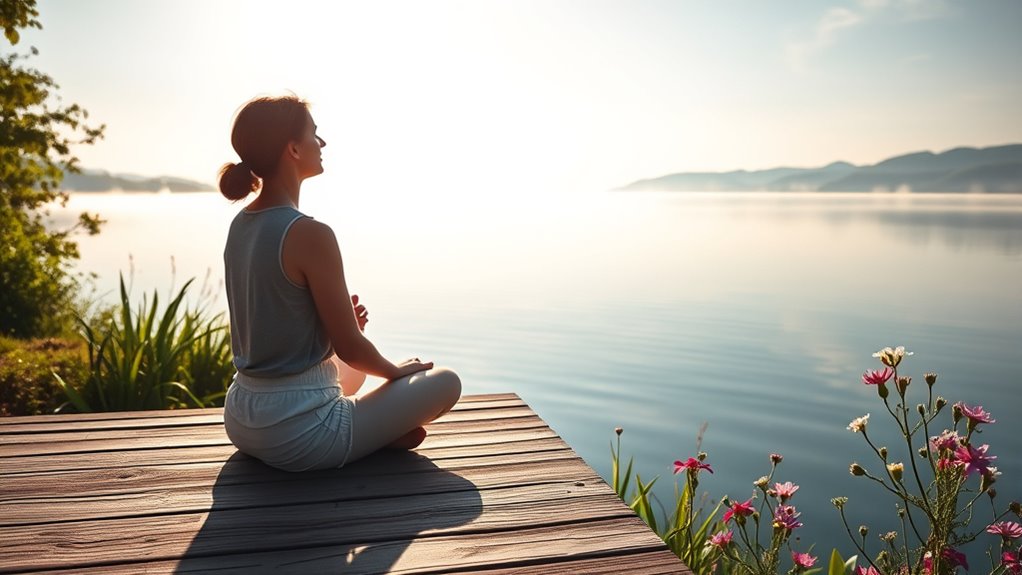

To find daily inspiration through mindfulness, set aside a few minutes each day for simple practices like deep breathing, body scans, or focused attention. Create a quiet space where you can focus on your breath and bodily sensations, gently redirecting your mind when it wanders. Consistency is key—over time, these routines boost your emotional resilience, clarity, and inner calm. Keep exploring different techniques, and you’ll discover even more ways to stay inspired and centered during hectic days.
Key Takeaways
- Incorporate daily breathing exercises to calm the mind and foster clarity for inspired thinking.
- Establish a consistent mindfulness routine during mornings or breaks to cultivate ongoing inspiration.
- Use guided meditations focused on gratitude and positivity to boost motivation and creative energy.
- Create a dedicated, peaceful space for mindfulness practices to enhance focus and inner inspiration.
- Practice mindful awareness of thoughts and feelings to recognize opportunities and ignite inspiration throughout the day.
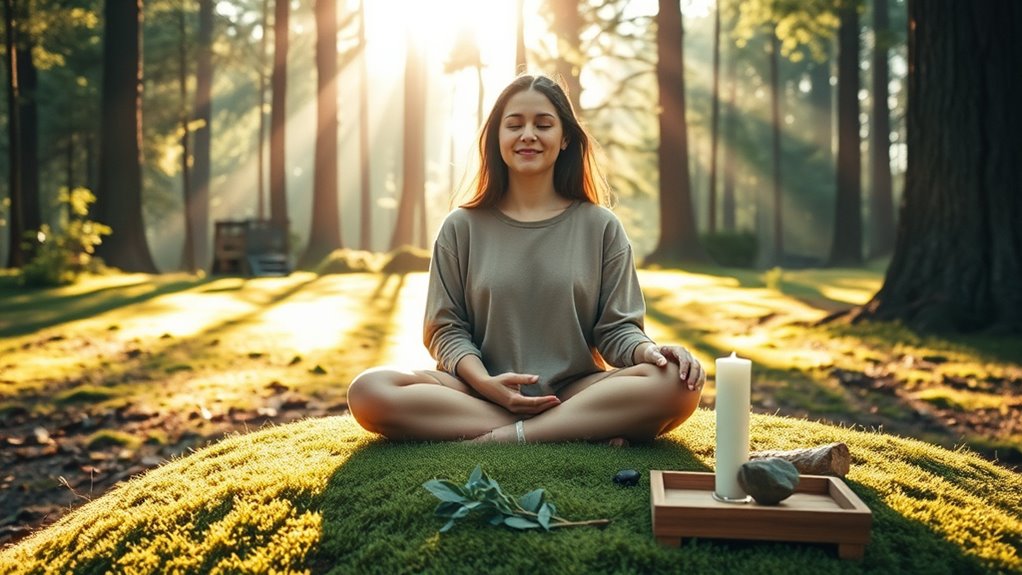
Have you ever wondered how to reduce stress and improve your overall well-being? Incorporating mindfulness practices into your daily routine can make a significant difference. One effective way is through breathing exercises, which help calm your nervous system and bring your focus back to the present moment. When you take a few deep breaths, inhaling slowly through your nose and exhaling through your mouth, you activate your body’s relaxation response. This simple act can lower your heart rate, reduce anxiety, and clear your mind, creating space for clarity and calmness. Pairing breathing exercises with meditation techniques amplifies their benefits. Meditation techniques such as guided meditation, body scans, or focused attention help you develop a more mindful awareness of your thoughts and feelings, allowing you to observe them without judgment. This practice encourages a gentle detachment from stressors and negative thought patterns, fostering a sense of inner peace. When you set aside even just five minutes a day for mindful breathing and meditation, you start to notice a shift in your mental landscape. You become more attuned to your body’s signals and emotional responses, which empowers you to respond rather than react to challenging situations. Creating a dedicated space for these practices makes it easier to stick with them. Find a quiet corner, sit comfortably, and close your eyes if you like. Begin with deep, intentional breaths, focusing on the sensation of air filling your lungs and then leaving your body. As your mind wanders, gently bring your attention back to your breath. Over time, you’ll become more skilled at anchoring yourself in the present moment, even amidst daily chaos. This simple yet powerful routine can serve as a foundation for greater mindfulness throughout your day, helping you approach tasks with more patience and clarity. It’s important to remember that consistent practice is key—small daily efforts add up. Incorporate breathing exercises and meditation techniques into your morning ritual or during breaks at work. These moments of mindfulness are not about perfection but about cultivating awareness and compassion for yourself. As you continue practicing, you’ll likely notice improvements in your focus, emotional resilience, and overall mood. Mindfulness isn’t reserved for special moments; it’s a way of living that can inspire you daily, helping you navigate life’s ups and downs with a more centered and tranquil mindset. With regular practice, you’ll find that mindfulness becomes an integral part of your life, guiding you toward greater peace and inspiration every day.
Frequently Asked Questions
Can I Practice Mindfulness Without Meditation?
Yes, you can practice mindfulness without meditation. You can try mindful eating, where you focus on each bite, savoring flavors and textures. Walking meditation is another great option; pay attention to each step, your surroundings, and your breath. These activities help you stay present and grounded throughout the day, making mindfulness accessible anytime. Incorporate them into your routine to enjoy the benefits without formal meditation sessions.
How Long Should Daily Mindfulness Sessions Be?
You should aim for daily mindfulness sessions lasting about 10 to 20 minutes, following general duration guidelines. Consistency matters more than length, so practicing regularly—ideally once or twice a day—helps build momentum. If you’re pressed for time, even five minutes can be effective. Focus on maintaining a steady session frequency, and gradually increase duration as you become more comfortable with mindfulness, ensuring it becomes a sustainable, beneficial habit.
Is Mindfulness Effective for Stress Management?
Yes, mindfulness is effective for stress reduction and building emotional resilience. When you practice mindfulness regularly, you become better at managing stress by staying present and accepting your emotions without judgment. This helps you respond calmly during challenging situations and recover faster from setbacks. Incorporating even a few minutes daily can improve your overall mental health, enabling you to handle stress more effectively and develop stronger emotional resilience over time.
Can Children Benefit From Mindfulness Practices?
Yes, children can definitely benefit from mindfulness practices. These techniques support child development by enhancing emotional regulation, helping them manage feelings more effectively. When you introduce mindfulness to your child, you give them tools to stay present and calm during challenging moments. Regular practice can boost their focus, resilience, and overall well-being, setting a strong foundation for healthy emotional growth and better coping skills throughout their lives.
What Apps or Tools Support Mindfulness Daily?
Imagine starting your day with calm and clarity—apps like Calm and Headspace offer guided meditations that do just that. You can also explore mindfulness journaling through apps like Daylio or Penzu, helping you reflect on your feelings and stay centered. These tools make it easy to incorporate mindfulness into your daily routine, boosting your mood and focus. Give them a try and experience the benefits firsthand.
Conclusion
Now that you’ve explored these mindfulness practices, you might wonder how daily life could transform with just a moment of presence. Imagine starting each day with clarity and calm, feeling more connected to yourself and others. Isn’t it worth taking a few minutes to breathe, observe, and be fully in the moment? Embrace these simple habits, and watch how your perspective shifts—bringing more inspiration and peace into every day.