
Meditative visualization for relaxation involves using your imagination to create calming mental images, supported by mindful breathing. You focus inward, noticing sensations and gently guiding your thoughts back when they wander. Imagine peaceful scenes like a beach or forest, engaging all your senses to deepen relaxation. With regular practice, you’ll notice improved focus and reduced stress. Keep exploring, and you’ll discover more ways to cultivate tranquility through this powerful technique.

Turn your quiet moments into listening time
- Thousands of audiobooks, podcasts and originals
- Listen on your phone, tablet or Echo — also offline
- Cancel anytime
Key Takeaways
- Use slow, deep breathing to center yourself and prepare the mind for vivid visualization.
- Focus inward on present sensations, such as breath and body contact, to cultivate mindful awareness.
- Create detailed mental images of peaceful scenes, engaging all senses to deepen relaxation.
- Observe thoughts and emotions without judgment, gently returning focus to calming imagery when distracted.
- Practice regularly to strengthen focus, reduce anxiety, and develop a lasting sense of inner calm.
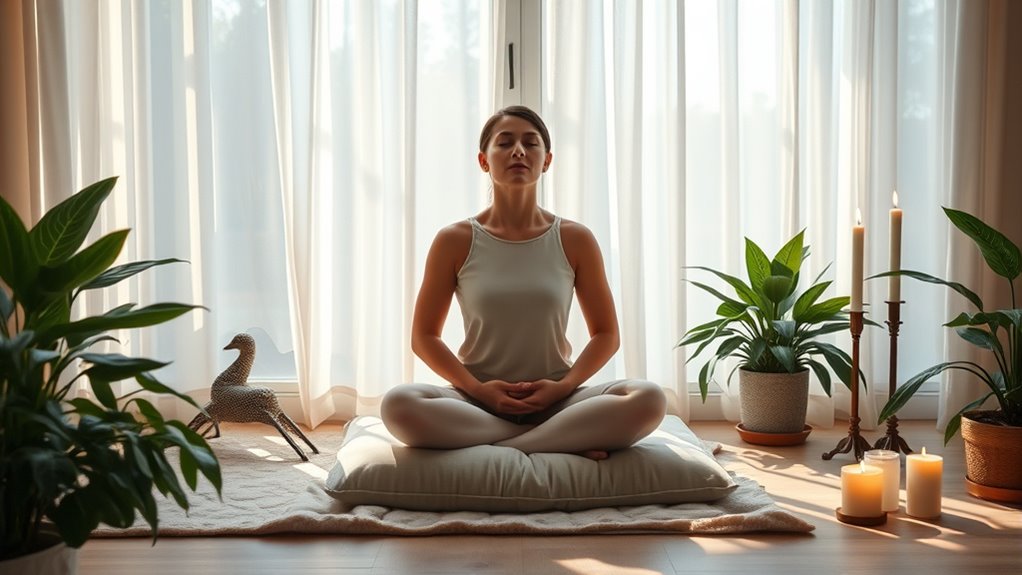
Have you ever wondered how your mind can harness the power of imagination to promote relaxation and focus? It’s a remarkable ability, and meditative visualization taps into it by guiding you to create calming mental images. To start, you need to center yourself through breathing techniques. Take slow, deep breaths—inhale through your nose, filling your lungs completely, then exhale gently through your mouth. This controlled breathing helps calm your nervous system and sets the foundation for mindful awareness. As your body relaxes with each breath, you become more receptive to the vivid pictures you’re about to conjure.
Once you’re grounded, shift your focus inward, cultivating mindful awareness. This means paying close attention to your present experience without judgment. Notice the sensation of your breath, the sounds around you, the feeling of your body against the chair or floor. These observations anchor you to the here and now, making it easier to enter a relaxed state. When your mind starts to wander, gently bring it back to your breathing or the mental image you’re about to create. This practice of returning with kindness helps deepen your focus and enhances the calming effects of visualization.
Focus on your breath and sensations to stay present and deepen your relaxation.
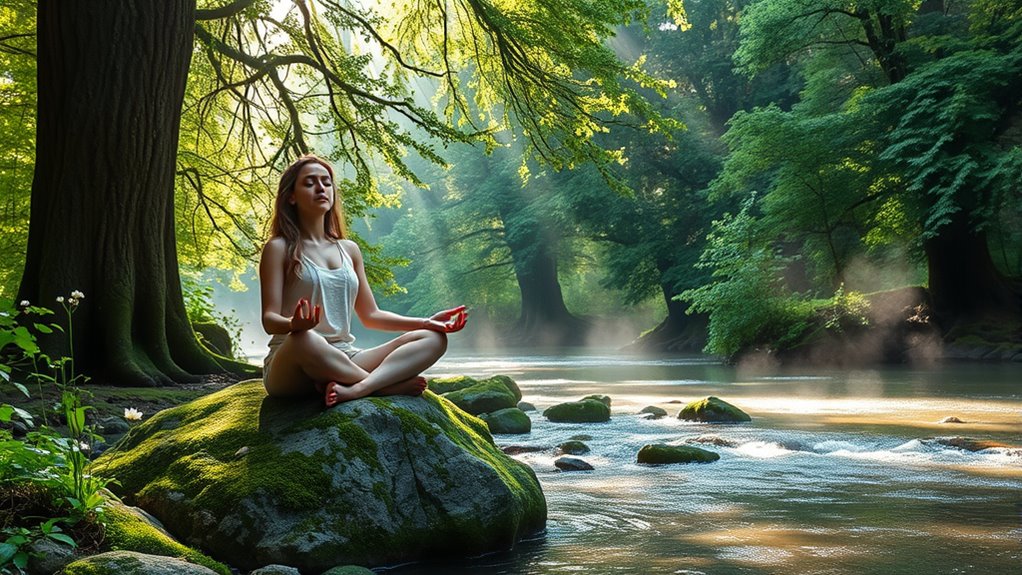
Now, imagine a peaceful scene that resonates with you—perhaps a quiet forest, a serene beach, or a lush garden. Use your senses to make this mental image as detailed and vivid as possible. Visualize the green leaves swaying, hear the gentle lapping of waves, feel the warmth of the sun on your skin, and smell the fresh air. The more senses you involve, the more immersive your visualization becomes, making it easier to experience genuine relaxation. Incorporate mindfulness techniques to stay present and aware throughout your practice. Throughout this process, maintain your mindful awareness, observing any thoughts or emotions that surface without clinging to them. Let them pass like clouds in the sky, returning your focus to your soothing scene.
Practicing this regularly enhances your ability to use visualization as a quick mental retreat during stressful moments. It also trains your mind to associate certain images with calmness, creating a powerful tool for relaxation. By combining breathing techniques, mindful awareness, and vivid imagery, you turn your mind into an oasis of peace. Over time, this practice strengthens your capacity to focus, reduces anxiety, and cultivates a deeper sense of inner calm. Remember, the key is consistency—each session builds your skill, making relaxation more accessible whenever you need it.
Frequently Asked Questions
Can Meditative Visualization Replace Medication for Anxiety?
Meditative visualization can’t fully replace medication for anxiety, but it offers valuable mindfulness benefits that can help manage symptoms. By practicing visualization techniques, you can reduce stress and improve your emotional regulation. While it’s a helpful complementary tool, it’s important to consult a healthcare professional for personalized treatment. Combining medication with visualization techniques may give you a balanced approach to anxiety management, enhancing overall well-being.
How Long Should Each Visualization Session Last?
Think of your meditation journey like a well-tended garden—short, intentional sessions often yield the best blooms. For meditative visualization, aim for an ideal length of 10 to 20 minutes per session. This duration allows you to relax deeply without feeling overwhelmed. If you’re new, start with shorter periods and gradually extend them as your comfort grows. Consistency and patience are your best tools for cultivating tranquility.
Are There Specific Times of Day Best for Visualization?
The best times for visualization are during your daily routines, such as morning or evening, when you can relax without interruptions. These moments help you establish consistency and deepen your practice. You might also find it effective during breaks or before bed. By integrating visualization into your daily routine, you create a peaceful habit that enhances relaxation and mental clarity. Choose times that suit your schedule and feel most calming.
Can Beginners Effectively Practice Meditative Visualization Alone?
Yes, beginners can effectively practice meditative visualization alone. Start with simple techniques and adapt them to your comfort level, building confidence gradually. As a beginner, you’ll find that technique adaptation helps you stay focused and relaxed. Practice consistently, even for a few minutes daily, to strengthen your skills. Over time, your confidence will grow, making solo visualization sessions more effective and enjoyable.
Is It Necessary to Have a Quiet Space for Visualization?
A quiet space isn’t always necessary for visualization, but “a noisy environment can drown out your mental focus.” While environmental noise can be distracting, you can still practice effectively by tuning out distractions and focusing on your imagery. Creating a calm setting helps deepen relaxation, but with practice, you can visualize anywhere, building mental resilience and concentration despite external sounds.
Conclusion
Practicing meditative visualization can considerably reduce stress—studies show over 60% of participants experience improved relaxation and mental clarity. By regularly engaging in this calming technique, you create a mental sanctuary that helps you navigate daily challenges with ease. Remember, just a few minutes a day can make a profound difference in your well-being. So, take a deep breath, visualize peace, and embrace the tranquility that’s always within your reach.
Products Worth Considering
Top picks for "meditative visualization relaxation"
As an affiliate, we earn on qualifying purchases.