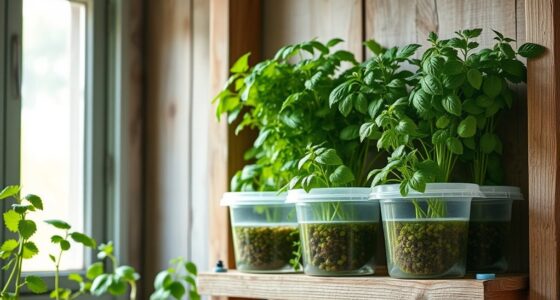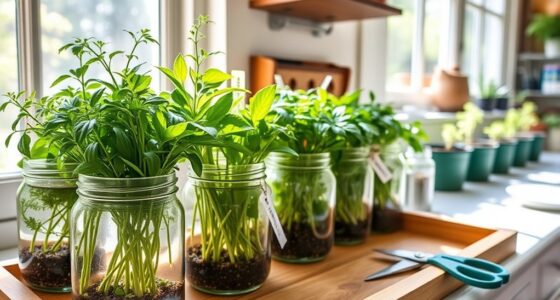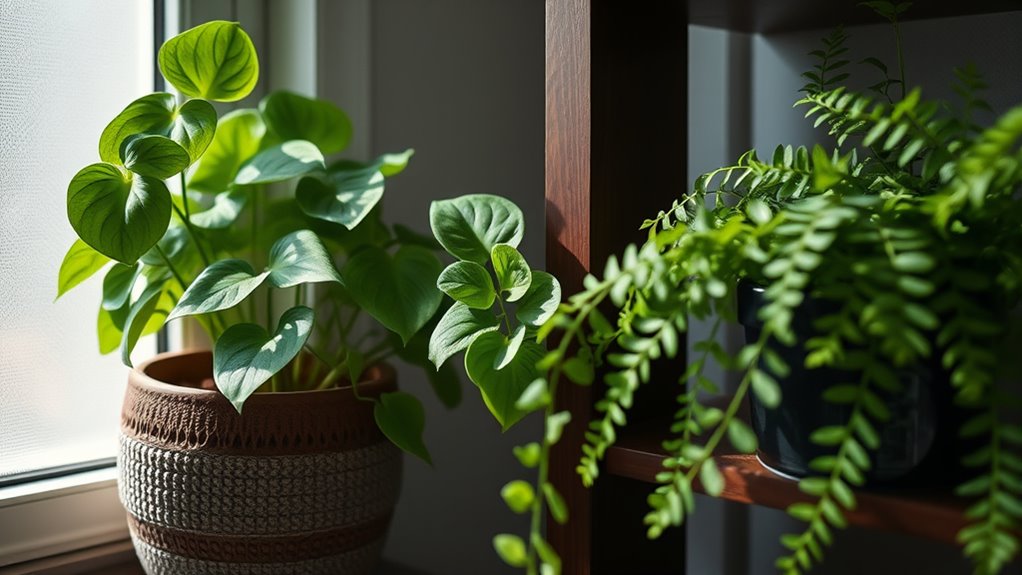
To care for low-light houseplants, provide minimal natural sunlight and guarantee proper watering—only when the soil feels dry. Use well-draining soil and pots with drainage holes to prevent root rot, and consider porous materials like terracotta to wick moisture away. Keep a consistent watering schedule, adjusting for season and humidity. Watch for signs like yellowing leaves, and with the right practices, your plants will stay healthy and vibrant. Keep exploring to learn more tips for thriving low-light greenery.
Key Takeaways
- Place plants in spaces with limited or indirect sunlight, suitable for low-light environments.
- Water only when the soil feels dry to prevent overwatering and root rot.
- Use well-draining soil with materials like perlite or coarse peat moss to avoid waterlogging.
- Select porous pots such as clay or terracotta to help wick moisture and promote healthy roots.
- Monitor plant health regularly and adjust watering and care based on season, humidity, and plant response.
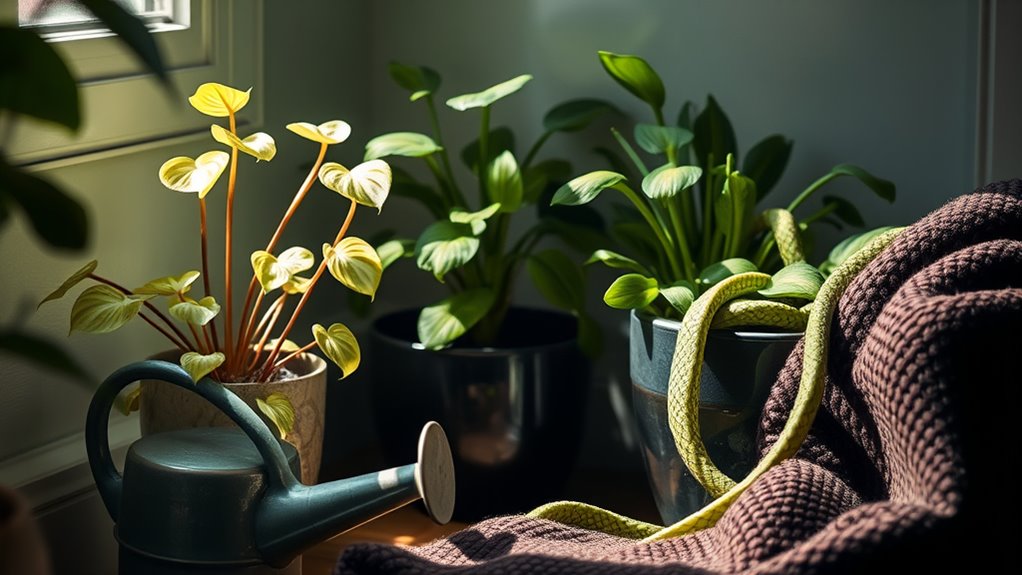
Many houseplants can thrive even in low-light conditions, making them ideal for spaces with limited natural sunlight. When caring for these plants, one of the most critical aspects is establishing a proper watering schedule. Unlike plants that bask in direct sunlight, low-light varieties generally require less frequent watering because they tend to grow more slowly and use water at a different rate. Overwatering is a common mistake that can lead to root rot and other health issues. To prevent this, check the soil moisture regularly by sticking your finger about an inch into the soil. If it feels dry, it’s time to water; if it’s still moist, hold off. Consistency is key—watering too often can drown the roots, while infrequent watering can cause dehydration. Adjust your schedule based on the specific plant’s needs, season, and indoor humidity levels.
Soil drainage plays an equally crucial role in caring for low-light houseplants. Well-draining soil prevents excess water from pooling around the roots, which is especially important in low-light environments where evaporation slows down. You should choose a potting mix designed for good drainage—look for options that include components like perlite, sand, or coarse peat moss. When planting or repotting, ensure your container has drainage holes at the bottom. These allow excess water to escape, reducing the risk of waterlogging. If you notice your plant’s leaves turning yellow or the soil stays soggy long after watering, it’s a sign that the soil drainage isn’t adequate, and you should consider repotting with a better-draining mix. Proper drainage not only helps maintain healthy roots but also encourages your plant to absorb nutrients efficiently.
In addition to a proper watering schedule and soil drainage, pay attention to the type of pot you use. Clay or terracotta pots are porous and help wick moisture away from the soil, which can be beneficial in low-light conditions where overwatering is a risk. Conversely, plastic pots retain moisture longer and require more careful watering. Regularly assess your plant’s overall health—wilting, yellowing, or browning leaves often indicate watering or drainage issues. Adjust your approach accordingly, ensuring that your low-light houseplants receive just enough water without sitting in soggy soil. With consistent care—balancing watering and soil drainage—you’ll help your plants stay healthy, vibrant, and thriving even in spaces with minimal sunlight.
Frequently Asked Questions
Can Low-Light Plants Survive in Complete Darkness?
No, low-light plants can’t survive in complete darkness because their photosynthesis efficiency drops markedly without light. They rely on some indirect or minimal light to produce energy, and in total darkness, they can’t perform photosynthesis at all. These plants have adaptation mechanisms that help them thrive in low-light conditions, but complete darkness overwhelms their ability to sustain themselves. To keep them alive, make sure they get at least some light.
How Often Should I Rotate Low-Light Houseplants?
While it’s tempting to think your low-light houseplants are content where they are, a gentle plant rotation can do wonders. You should rotate them about once a month to guarantee even light exposure. This light exposure schedule helps prevent uneven growth and keeps your plants thriving. Keep an eye on their response, and adjust as needed; consistency and care will reward you with healthy, happy plants.
Are Low-Light Plants Safe for Pets?
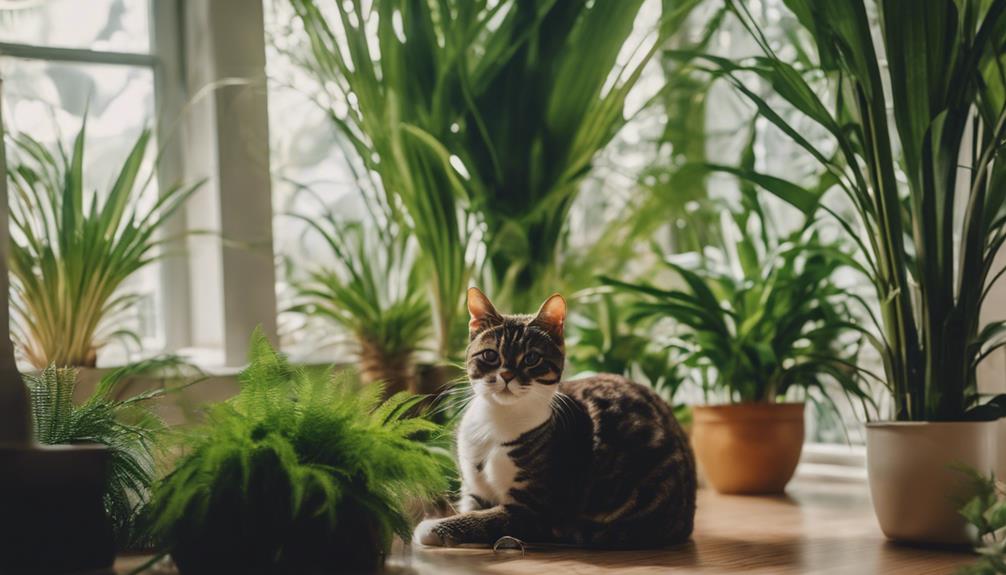
Many low-light houseplants are pet safe plants, but you should always check because some can pose toxic plant risks. Always research specific species before bringing them home, especially if you have curious pets. Keep toxic plants out of reach and opt for pet safe plants like spider plants or Boston ferns. This approach helps protect your pets from toxic plant risks while enjoying greenery indoors.
What Are Common Pests for Low-Light Houseplants?
Imagine tiny invaders crawling like stealthy ninjas—common pests for low-light houseplants include spider mites, mealybugs, and aphids. These pests can quickly multiply and threaten your plant’s health. To combat them, you need pest identification skills and organic pest control methods like neem oil or insecticidal soap. Regular inspection keeps pests at bay, ensuring your low-light plants stay vibrant and pest-free, thriving quietly in your home.
How Do I Improve Humidity for Indoor Low-Light Plants?
To improve humidity levels for your low-light houseplants, start by misting them regularly with a spray bottle to increase moisture around the leaves. You can also place a humidifier nearby or set the pots on a tray filled with water and pebbles, ensuring the pots don’t sit directly in water. These misting techniques help maintain ideal humidity, keeping your plants healthy and thriving in low-light conditions.
Conclusion
So, now that you’ve mastered the art of neglecting your low-light houseplants, don’t be surprised if they thrive on your minimal effort. After all, who needs bright sunlight or regular watering when you have a shady corner and a busy schedule? Just sit back, relax, and watch your plants silently thank you by staying alive—barely. Remember, with your skill level, they’re practically indestructible. Cheers to your impressive talent for low-maintenance plant parenting!