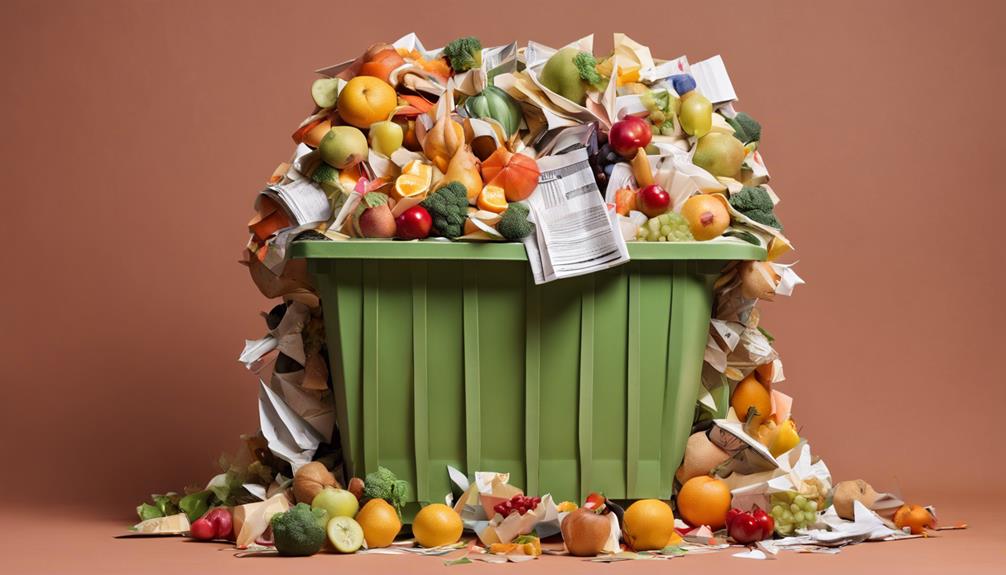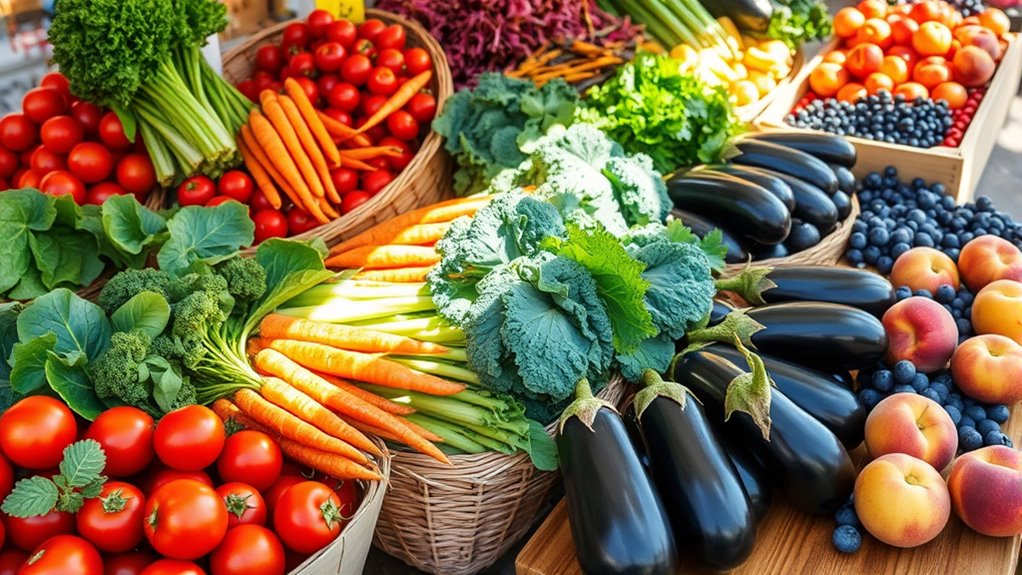

Eating locally and seasonally boosts your health by providing fresher, more nutritious foods when they’re at their peak ripeness. It reduces your environmental impact by cutting down on the fuel used for transportation and storage, supporting sustainable farming practices that protect ecosystems. Additionally, it fosters stronger community connections and food sovereignty. By choosing seasonal, local produce, you can enjoy better flavor and better care for the planet — explore how further for more benefits.
Key Takeaways
- Consuming seasonal, local foods ensures produce is harvested at peak ripeness, maximizing nutrient content and flavor.
- Reducing food transportation lowers greenhouse gas emissions, supporting overall environmental health.
- Supporting local farms encourages sustainable practices like crop rotation and organic fertilizers, promoting ecosystem health.
- Eating locally strengthens community resilience and food sovereignty, reducing dependence on industrial agriculture.
- Fresh, seasonal foods enhance diet quality, providing more nutrients and contributing to better overall health.
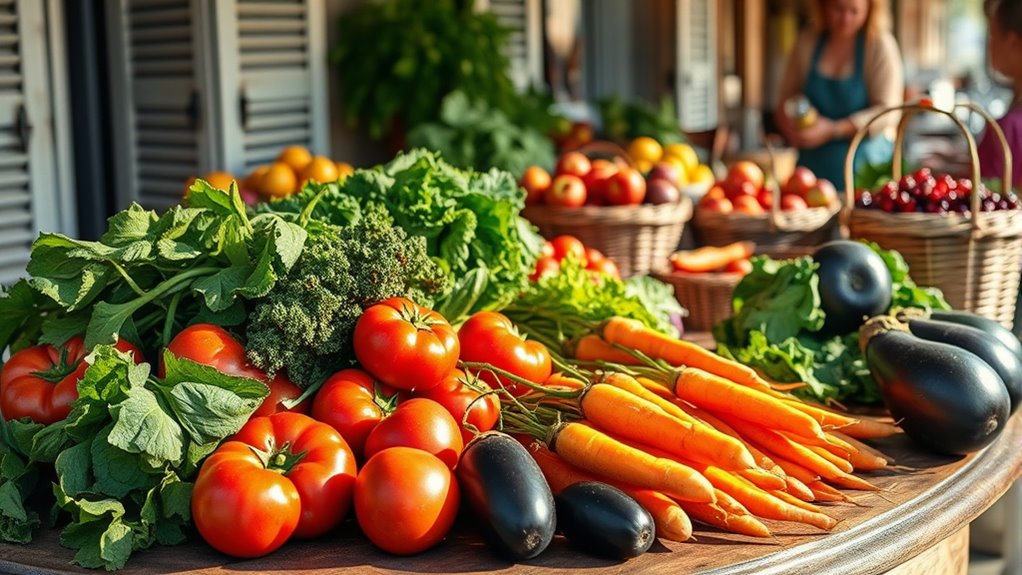
Eating locally and seasonally isn’t just a trend—it’s a way to enjoy fresher, tastier food while supporting your community and reducing your environmental impact. When you choose to buy from local farmers and eat in sync with the seasons, you’re directly encouraging sustainable farming practices that prioritize long-term health of the land and ecosystems. These practices often involve crop rotation, organic fertilizers, and reduced reliance on harmful chemicals, which help maintain soil fertility and biodiversity. By doing so, you’re not only getting more nutritious produce but also helping to promote food sovereignty—the right of communities to define their own food systems and control their food sources. Supporting local farmers who embrace sustainable farming techniques empowers communities to be less dependent on large-scale industrial agriculture, which can often prioritize profit over ecological health and social equity. When you eat seasonally, you naturally align your diet with what’s locally available at different times of the year. This means consuming fruits, vegetables, and grains that are harvested at their peak, ensuring maximum flavor and nutrient density. Eating seasonally also reduces the need for extensive transportation and cold storage, cutting down on fossil fuel consumption and greenhouse gas emissions. As a result, you’re making a tangible contribution to lowering your carbon footprint. Plus, when you support local markets and farmstands, you’re fostering a resilient local food system that can better withstand economic shocks and climate disruptions. This strengthens food sovereignty by giving communities more control over their food sources, reducing reliance on imported produce or processed foods that often have a higher environmental cost. Additionally, shopping locally encourages transparency and trust, so you can often learn directly from growers about how your food is produced. This connection allows you to make more informed choices that align with your values. It also supports small-scale farmers who are more likely to implement sustainable farming methods that respect the land, animals, and workers. Over time, as you consistently choose local and seasonal foods, you help create a cycle of sustainability, community resilience, and food independence. This not only benefits your health by providing fresher, nutrient-rich foods but also promotes a more equitable and environmentally responsible food system. Incorporating home security considerations can also protect your local and farmstead investments, ensuring peace of mind as you contribute to a sustainable future. So, by making conscious choices to eat locally and seasonally, you’re actively participating in a movement that champions sustainable farming and food sovereignty—something that benefits everyone, including future generations.
Frequently Asked Questions
How Can I Find Local Seasonal Produce in Urban Areas?
You can find local seasonal produce in urban areas by visiting farmers markets regularly, where vendors sell fresh, in-season fruits and vegetables. Joining a Community Supported Agriculture (CSA) program is another great option, as it provides you with seasonal produce directly from local farms. Keep an eye out for community events or farm stands, and follow local food groups online to stay updated on where and when to buy fresh, seasonal produce.
What Are the Environmental Benefits of Eating Locally?
You might think eating locally isn’t impactful, but it actually reduces your carbon footprint markedly. By supporting sustainable farming practices nearby, you help lower emissions from transportation and energy use. Plus, local foods are fresher and often grown with fewer chemicals. This benefits the environment, preserves farmland, and promotes biodiversity. So, choosing local produce isn’t just good for your health — it actively helps protect the planet for future generations.
How Does Seasonality Affect Food Nutrient Content?
Seasonality influences food nutrient content through nutrient fluctuations caused by harvest timing. When you eat foods at their peak season, you get higher nutrient levels because they’re harvested at ideal ripeness, which preserves vitamins and minerals. Off-season produce often has lower nutrient content due to longer storage or earlier harvesting. So, by choosing seasonal foods, you guarantee you’re consuming fresher, more nutrient-dense options that support your health.
Can Eating Seasonally Save Me Money Long-Term?
Ever wondered if eating seasonally can save you money long-term? It definitely can, as it boosts cost savings by reducing the need for expensive, out-of-season produce. By choosing local, seasonal foods, you enjoy year-round affordability and fresher options, which often last longer and retain more nutrients. Over time, these habits cut grocery bills and promote healthier eating, making your budget stretch further while supporting local farmers.
What Are Common Challenges When Transitioning to Local, Seasonal Eating?
You might face challenges like limited market availability, making it hard to find all your favorite ingredients. Additionally, you’ll need to adapt your recipes to fit seasonal produce, which can be tricky at first. You may also experience occasional supply shortages or higher prices for certain items. However, staying flexible and exploring new recipes helps you enjoy fresh, local foods while overcoming these obstacles.
Conclusion
By choosing fresh, local, and seasonal foods, you support sustainability, savor flavor, and strengthen health. Your mindful movement toward local markets makes a meaningful difference, demonstrating dedication to a diverse, delicious diet. Embrace the benefits of balancing balance, boosting brightness, and building a better body. When you prioritize produce that’s practically perfect in season, you promote personal prosperity and planetary peace. So, step confidently into this cycle, and savor the satisfying, sustainable, and sensational benefits of eating locally and seasonally.