

Lab-grown meat, made through cell culture technology, offers a sustainable alternative to traditional meat by reducing land, water, and energy use while cutting greenhouse emissions. Plant-based options mimic meat’s taste and texture using ingredients like soy or peas, providing an ethical and eco-friendly choice. Both options address animal welfare concerns and help build a more sustainable food system. If you want to understand how these innovations are shaping the future of food, you’ll find more insights ahead.
Key Takeaways
- Lab-grown meat is produced through cell culture, creating muscle tissue from animal cells with less environmental impact.
- It reduces land, water, and energy use, and emits fewer greenhouse gases compared to traditional livestock farming.
- Plant-based alternatives mimic meat using ingredients like soy or peas, offering eco-friendly, cruelty-free options.
- Both lab-grown and plant-based meats address animal welfare and aim for sustainable, ethical food production.
- These innovations are transforming the future of food by providing healthier, more sustainable, and ethical protein sources.
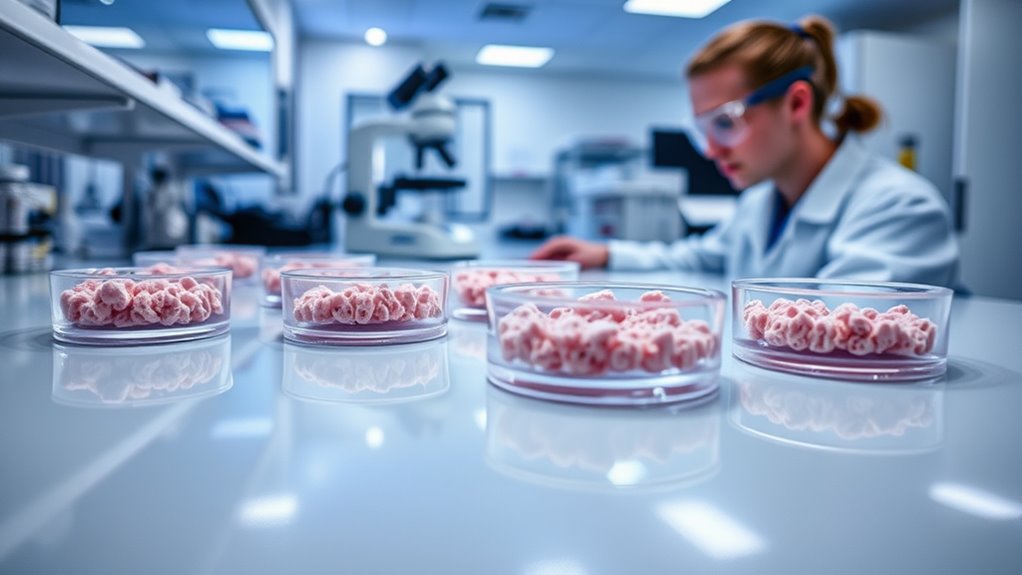
As concerns about the environmental impact and ethical issues of traditional meat production grow, lab-grown meat and plant-based alternatives are gaining popularity. You might wonder how these options work and what makes them different. Lab-grown meat, also called cultured meat, is created through a process called cell culture. In this process, scientists take a small sample of animal cells and grow them in a controlled environment, providing the right nutrients and conditions for the cells to multiply. Over time, these cells develop into muscle tissue that mimics conventional meat. This approach markedly reduces the environmental impact since it requires less land, water, and energy compared to conventional livestock farming. It also produces fewer greenhouse gases, making it a more sustainable option for feeding a growing global population. Additionally, ongoing advances in cell culture technology are helping to improve the scale and affordability of lab-grown meat production.
Lab-grown meat reduces environmental impact by using fewer land, water, and energy compared to traditional livestock farming.
Plant-based alternatives, on the other hand, use ingredients like soy, peas, or wheat to imitate the taste, texture, and appearance of real meat. These products are designed to appeal to consumers seeking protein sources that align with their ethical values and environmental concerns. Unlike lab-grown meat, which involves cell culture technology, plant-based options rely on food science and ingredient engineering to replicate the sensory qualities of meat. They usually have a lower environmental footprint because they don’t require animal agriculture, which is a major contributor to deforestation, water use, and pollution. By choosing these alternatives, you’re making a conscious effort to reduce your personal environmental impact while still enjoying familiar flavors and textures.
Both lab-grown meat and plant-based options address ethical concerns related to animal welfare by eliminating the need to raise and slaughter animals for food. These innovations offer a way to enjoy meat-like products without contributing to the issues associated with traditional meat production, such as factory farming and animal cruelty. As you explore these options, you may notice that lab-grown meat is still in the early stages of commercial availability, but its potential to deliver real meat with a smaller environmental footprint continues to grow. Meanwhile, plant-based products are already widely accessible in supermarkets and restaurants, providing an immediate alternative for those looking to reduce their ecological impact and support more sustainable food systems.
In essence, understanding these innovations helps you see how science and technology are transforming the way we produce and consume meat. Whether through cell culture or plant-based ingredients, these alternatives are reshaping the future of food—offering solutions that are kinder to the planet, better for animals, and potentially healthier for you. As more people embrace these options, they could play a notable role in creating a more sustainable and ethical food landscape for generations to come.
Frequently Asked Questions
What Are the Environmental Impacts of Lab-Grown Meat Production?
Lab-grown meat impacts the environment by reducing land use and greenhouse gas emissions compared to traditional farming. You’ll find it supports sustainable farming practices and lowers water consumption. However, it still requires significant energy input for production, which can be a concern if sourced from non-renewable sources. Overall, lab-grown meat has the potential to lessen environmental strain, but optimizing energy use remains essential for maximizing its sustainability benefits.
How Does Lab-Grown Meat Compare Nutritionally to Traditional Meat?
You might be surprised to learn lab-grown meat generally matches traditional meat in nutritional content, with comparable protein levels. Studies show it can even be tailored to enhance specific nutrients, like omega-3s. This means you get similar muscle-building benefits without the extra fats or contaminants often found in conventional meat. So, if you’re looking for a healthier, sustainable option, lab-grown meat offers a promising alternative without sacrificing nutrition.
Are There Any Known Health Risks Associated With Lab-Grown Meat?
You might wonder if lab-grown meat poses health concerns, and current research suggests minimal risks, but allergen risks still exist. Some people worry about potential contamination or unknown long-term effects from the cultivation process. While most scientists agree it’s generally safe, you should stay informed about new studies. Always check labels for allergens and consult healthcare providers if you have specific sensitivities or health conditions related to novel foods.
What Is the Current Regulatory Status of Lab-Grown Meat Worldwide?
Think of lab-grown meat as a budding pioneer, facing diverse regulatory landscapes worldwide. Currently, many countries are still crafting regulatory frameworks and seeking legal approvals for this innovation. In the US, the FDA and USDA are collaborating to establish clear guidelines, while Europe debates safety standards. Some nations have granted approvals, but overall, the regulatory status remains evolving, with global authorities balancing innovation, safety, and public acceptance.
How Affordable Will Lab-Grown Meat Become for Consumers?
Lab-grown meat’s affordability will improve as production costs decrease through technological advances and scaled-up processes. You can expect it to become more accessible in the market, making it a realistic alternative for many consumers. Cost reduction efforts will drive down prices, increasing market accessibility and encouraging widespread adoption. Over time, lab-grown meat will likely rival traditional meat prices, allowing you to enjoy sustainable, affordable options without sacrificing taste or quality.
Conclusion
As you explore lab-grown meat and alternatives, think of them as seeds of change in a garden of sustainability. By choosing these options, you’re planting hope for a greener future, reducing environmental impact, and transforming the way we eat. Just like a single drop can create ripples, your choices can spark a wave of positive change. Embrace these innovations, and watch as they blossom into a more compassionate and sustainable world around you.