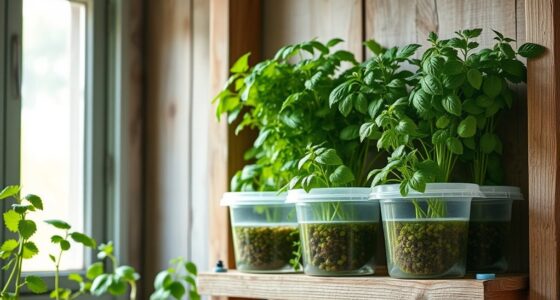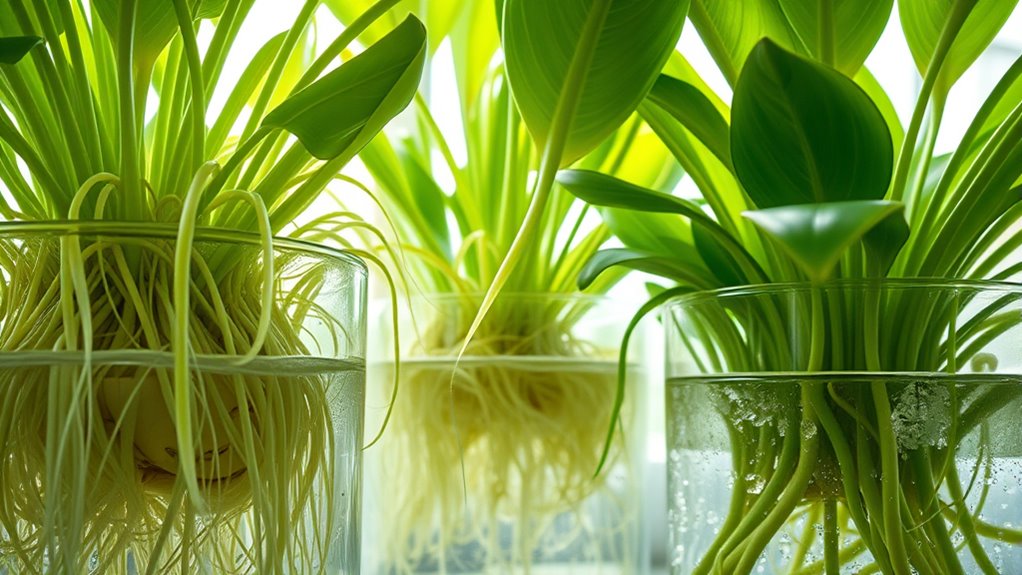
Growing hydroponic houseplants in water allows you to enjoy lush greenery without soil mess. You simply place your plants in nutrient-rich solutions, which keeps them healthy and vibrant. Regular water changes and monitoring pH levels are key to success. This system reduces pests and maintenance while adding a modern look to your indoors. If you’re interested in how to set up and care for these systems, you’ll find more useful tips below.

Turn your quiet moments into listening time
- Thousands of audiobooks, podcasts and originals
- Listen on your phone, tablet or Echo — also offline
- Cancel anytime
Key Takeaways
- Hydroponic houseplants grow in nutrient-rich water solutions without soil, simplifying maintenance and enhancing aesthetics.
- Selecting water-adapted plants like pothos and spider plants ensures healthy growth in hydroponic systems.
- Regularly monitor and adjust water pH (5.5–6.5) and replenish nutrients to prevent deficiencies and salt buildup.
- Use aeration tools like air stones to maintain oxygen levels, preventing root rot and promoting healthy roots.
- Integrating aquaponics can create a sustainable system, where fish waste supplies nutrients to water-grown houseplants.
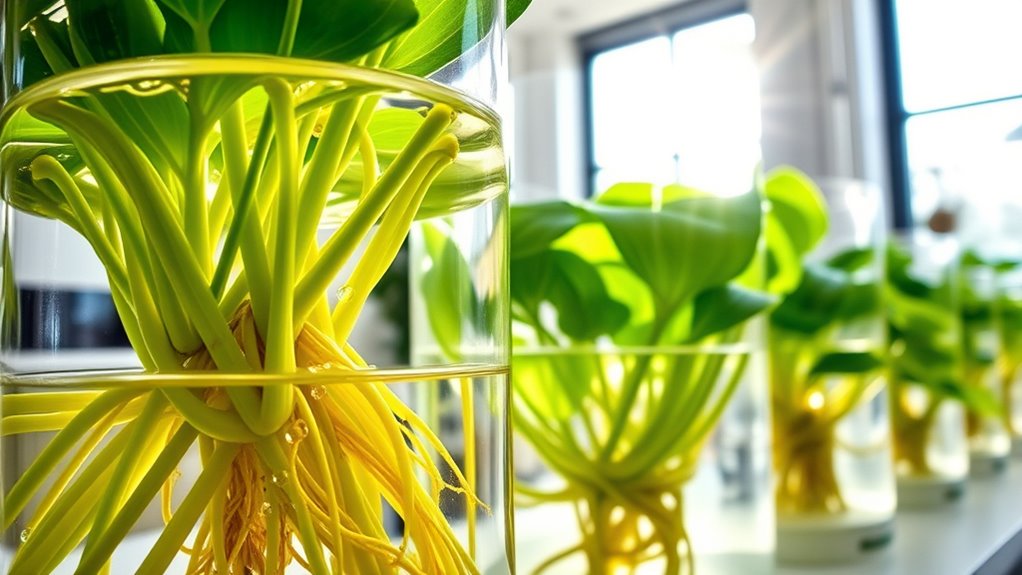
Hydroponic houseplants offer a modern twist on traditional gardening by allowing you to grow greenery without soil. Instead of digging in the dirt, you provide your plants with a carefully balanced nutrient solution directly to their roots. This method simplifies maintenance, reduces pests, and creates an attractive way to display your favorite plants indoors. To succeed, you need to understand how to manage water and nutrients effectively, guaranteeing your plants stay healthy and vibrant.
Hydroponic houseplants grow without soil, using nutrient solutions for healthier, pest-free indoor greenery.
One way to enhance your hydroponic setup is by exploring aquaponic gardening. This approach combines fish and plants in a symbiotic environment. Fish produce nutrient-rich waste that naturally feeds your plants, eliminating the need for manually mixing nutrient solutions. The water from the fish tank circulates through the plant roots, delivering essential nutrients while filtering and oxygenating the water. When done correctly, aquaponics creates a sustainable, low-maintenance system that benefits both your aquatic life and houseplants. It’s particularly useful if you’re interested in an eco-friendly setup that reduces chemical inputs and recycles resources.
Regardless of whether you choose a simple hydroponic system or incorporate aquaponics, providing the right nutrient solution is key. Your plants rely on a precise mix of minerals, trace elements, and vitamins dissolved in water to grow strong and lush. Commercial nutrient solutions are widely available, designed specifically for hydroponic systems, and easy to measure and adjust. You’ll want to monitor the pH of your water regularly, aiming for a slightly acidic range—around 5.5 to 6.5—so your plants can absorb nutrients efficiently. Regularly replacing or replenishing the nutrient solution prevents the buildup of salts and imbalances that could harm your plants.
Setting up your hydroponic system involves choosing the right container, ensuring proper aeration, and maintaining cleanliness. The roots of your houseplants will be submerged in the nutrient-rich water, so good oxygenation is essential. Use air stones or small pumps to keep oxygen levels high and prevent root rot. When selecting plants, opt for species that thrive in water-based environments, like pothos, philodendrons, or spider plants, which adapt well to hydroponic conditions. Consistent monitoring of water levels, nutrient concentrations, and plant health will help you troubleshoot issues quickly and ensure your greenery flourishes.
Frequently Asked Questions
How Often Should I Change the Water in Hydroponic Plant Setups?
You should change the water in your hydroponic setup every 1 to 2 weeks to maintain ideal water quality. Regular system maintenance helps prevent nutrient imbalances and algae growth. Keep an eye on the water’s clarity and smell—if it looks cloudy or foul, change it sooner. Consistent water changes ensure your plants get the best nutrients and stay healthy, promoting vigorous growth and minimizing potential problems.
Can All Houseplants Be Grown Hydroponically Indoors?
Think of your indoor garden as a symphony; not every instrument plays well together. Not all houseplants thrive hydroponically; some need soil for stability. When selecting plants, focus on those with sturdy roots and adaptable growth habits. Proper plant selection guarantees healthy root development and reduces risks of rot. Experiment with easy-to-grow varieties like pothos or philodendrons to start, and watch your hydroponic setup flourish and sing in harmony.
What Are the Signs of Nutrient Deficiency in Hydroponic Houseplants?
You’ll notice nutrient deficiency indicators in your hydroponic houseplants through symptoms like yellowing leaves, stunted growth, or pale coloration. Nutrient symptoms such as brown tips or leaf curl also signal deficiencies. Keep an eye out for these signs, as they’re clear deficiency indicators. Address them promptly by adjusting your nutrient solution, ensuring your plants receive the essential nutrients they need to thrive in water-based systems.
Is Artificial Light Necessary for Hydroponic Houseplants?
Yes, artificial lighting is necessary for hydroponic houseplants if natural light isn’t sufficient. It provides the light spectrum needed for ideal plant growth, especially in low-light conditions or during winter. Without adequate artificial lighting, your plants may become weak, leggy, or fail to thrive. Proper grow lights ensure your hydroponic houseplants get the energy they need to grow healthy, vibrant, and strong.
How Do I Prevent Algae Growth in My Hydroponic System?
To prevent algae growth in your hydroponic system, focus on algae control by keeping water clear and reducing light exposure. Use opaque containers or cover your system to block sunlight, which fuels algae. Maintain good water circulation and change the water regularly to keep it fresh. Also, avoid overfeeding your plants, as excess nutrients can promote algae. These steps will help preserve water clarity and keep your system healthy.
Conclusion
Now that you know how easy and rewarding it is to grow houseplants hydroponically, aren’t you excited to try it yourself? Imagine lush, healthy plants thriving in simple water setups, adding beauty and freshness to your space. With just a little effort, you can transform your home into a vibrant green oasis. So, why not take the leap and experience the joy of nurturing your plants in a whole new way? Your home deserves it.
Products Worth Considering
As an affiliate, we earn on qualifying purchases.