To upgrade your alfresco space with scent plants, choose a mix of fragrant herbs and flowering shrubs that bloom at different times for a layered aroma. Place them strategically near seating areas and along pathways to maximize scent diffusion. Manage airflow to help fragrances waft gently around you and prune regularly to keep scents vibrant. By thoughtfully combining plant choices and placement, you’ll create an inviting, sensory-rich environment that elevates your outdoor experience—there’s more to explore for perfect harmony.
Key Takeaways
- Select a variety of fragrant plants that emit aromas at different times and intensities for a dynamic scent experience.
- Strategically position scent-producing plants near seating and pathways to enhance aroma dispersion and enjoyment.
- Layer flowering herbs and bold scent plants to create complex, evolving fragrances throughout the day.
- Manage airflow and plant placement to optimize scent diffusion and prolong aroma longevity.
- Regularly prune and maintain plants to ensure continuous, vibrant fragrance release and a fresh alfresco environment.
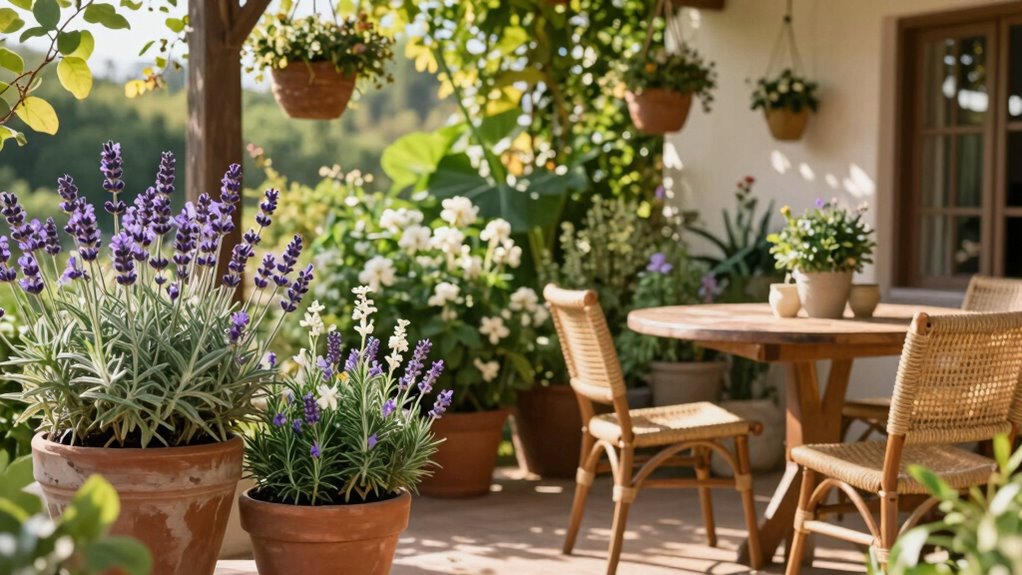
Enhancing your outdoor space with scent plants can transform it into a sensory paradise, making every moment spent alfresco more memorable. To achieve this, you need to focus on smart plant selection. Choose plants that emit fragrances at different times of the day and in varying intensities. For instance, select flowering herbs like lavender and thyme for a gentle, calming aroma, and combine them with more robust scent producers like jasmine or gardenia for bolder notes. Think about the overall atmosphere you want to create—softer scents for relaxing afternoons and more invigorating fragrances to energize your mornings. Incorporating a mix of plants ensures a dynamic and layered scent experience that evolves throughout the day.
Scent layering is the key technique here. It involves strategically placing different plants in your outdoor space so that their fragrances complement and enhance each other. You might plant fragrant herbs along pathways to ensure their scents waft up as you walk, or cluster flowering shrubs near seating areas to create a cocoon of aroma. The idea is to combine plants with varying scent profiles—spicy, floral, citrusy—so that the overall smell is rich and complex. When you walk through your space, you should notice a harmonious blend of fragrances that refresh your senses and deepen your connection to the environment. Additionally, understanding plant growth habits helps you select species that will thrive and contribute consistently to your scent layering strategy. Recognizing how different plants grow and spread also supports sustained fragrance release, ensuring your outdoor oasis remains aromatic and inviting over time. Incorporating knowledge about plant placement can further optimize how fragrances disperse and linger. Proper planning of airflow management can enhance the diffusion of scents, making your outdoor space even more aromatic. Paying attention to seasonal bloom cycles can also help you maintain a continuous scent profile year-round.
Your plant selection should also consider the growth habits and maintenance needs of each species. Opt for plants that thrive in your climate and soil conditions to ensure they flourish without excessive effort. Incorporate a variety of textures and heights—such as low-growing fragrant ground covers, medium-sized shrubs, and taller flowering vines—to create visual interest and support scent layering. Positioning these plants thoughtfully around your patio or garden will maximize their aromatic impact and make it more inviting.
Don’t forget about the importance of wind and airflow. Scent plants work best when their fragrances can gently waft through the air. Position highly fragrant plants where the breeze carries their aroma toward your seating area. Regular pruning and deadheading can also help release more scent, keeping the aroma vibrant and fresh. The combination of careful plant selection and scent layering turns your outdoor space into a fragrant retreat, elevating your alfresco experience from ordinary to extraordinary. By paying attention to these details, you’ll create a sensory-rich environment that invites relaxation, enjoyment, and memorable moments.
Frequently Asked Questions
How Do I Choose Scent Plants Suitable for My Climate?
To choose scent plants suitable for your climate, you should focus on selecting hardy, aromatic varieties that thrive in your area. Consider your local weather conditions and soil type to find low-maintenance scent plants that will flourish with minimal effort. Visiting local nurseries or consulting gardening guides can help you identify the best options, ensuring your alfresco space smells wonderful year-round without extra work.
Are Scent Plants Safe for Pets and Children?
Did you know over 90% of pet owners worry about plant safety? Scent plants can be safe for pets and children if you choose pet-safe plants and child-friendly fragrances. Always research specific plants, avoiding toxic varieties like lilies or jasmine. Opt for herbs like basil or mint, and fragrant flowers like roses or lavender. Keep an eye out and guarantee plants are non-toxic to create a safe, delightful alfresco environment for everyone.
How Often Should I Water and Prune Scent Plants?
You should water scent plants regularly, following a consistent watering schedule that fits each plant’s needs—usually once or twice a week. Pruning techniques involve trimming back overgrown or dead stems to encourage healthy growth and maintain fragrance. Use clean, sharp tools and prune after flowering or during early spring. Keep an eye on soil moisture and adjust watering accordingly, ensuring your scent plants stay vibrant and aromatic.
Can Scent Plants Attract Pests or Insects?
Think of scent plants as guardians of your outdoor space—they can act as pest deterrents, keeping unwelcome insects at bay. However, some fragrant plants might inadvertently attract certain pests or insects, like a beacon drawing in trouble. To sustain harmony, choose plants known for pest-repelling properties and monitor your garden regularly. This balance ensures your alfresco area remains inviting, fragrant, and free of unwanted insect visitors.
What Are the Best Locations to Place Scent Plants Outdoors?
You should place scent plants near seating areas, pathways, and entry points to maximize their aroma. Focus on plant placement where people gather or walk by, ensuring the scent intensities are strong enough to be pleasant but not overwhelming. Keep them away from wind corridors that might disperse the aroma too quickly. Adjust placement based on plant height and fragrance strength to create an inviting, aromatic outdoor space.
Conclusion
By incorporating scent plants into your outdoor space, you turn your alfresco area into a fragrant oasis—like a secret garden whispering stories with every breeze. These aromatic allies don’t just beautify; they ignite your senses and deepen your connection to nature. So, plant with purpose, breathe in the magic, and watch your outdoor haven transform into a sanctuary where every breath feels like a gentle hug from the earth itself. Your perfect outdoor escape is just a scent away.