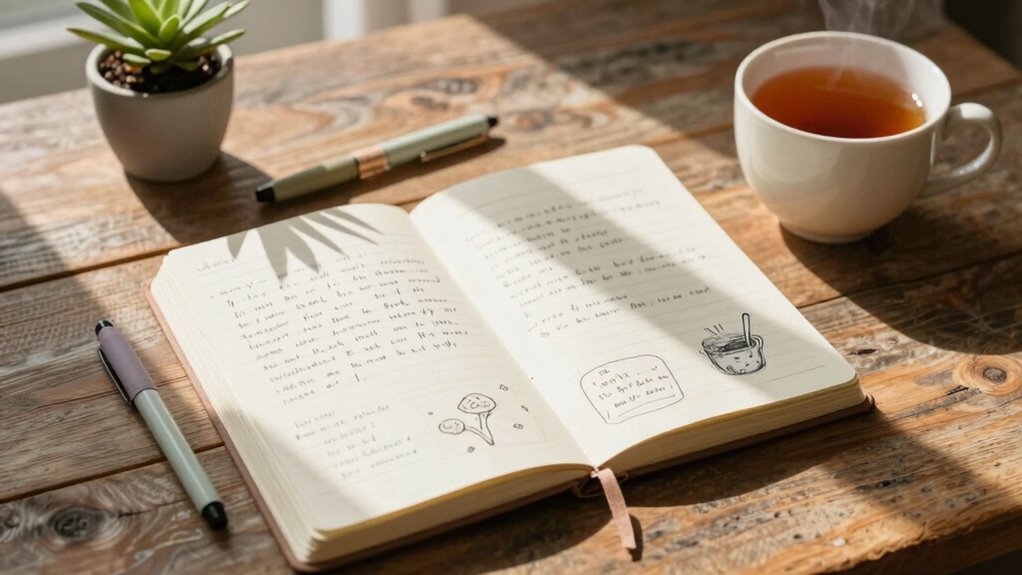

To use journaling as a pressure-free self-care tool, create a relaxed space where you can honestly express your thoughts without worrying about perfection. Focus on connecting with your feelings and keep it simple—ask yourself gentle prompts or describe joyful moments. Remember, consistency matters more than length, and there’s no need to censor or correct yourself. Embrace flexibility and let go of rules—if you keep going, you’ll discover even more ways to make journaling rewarding.

Turn your quiet moments into listening time
- Thousands of audiobooks, podcasts and originals
- Listen on your phone, tablet or Echo — also offline
- Cancel anytime
Key Takeaways
- Set a flexible schedule, journaling only when you feel the need, rather than forcing daily entries.
- Use simple prompts or questions to gently spark your thoughts without overthinking.
- Emphasize honesty and self-expression without worrying about grammar or perfection.
- Keep your journaling space relaxed and personalized, incorporating doodles or visuals if it helps.
- Focus on the process as a calming, enjoyable activity rather than an obligation or performance.

Journaling can be a powerful self-care tool, but it often feels intimidating or like a chore when you think you have to do it perfectly. You might worry about writing beautifully, staying consistent, or having enough to say each day. The truth is, journaling isn’t about perfection; it’s about creating a safe space for yourself. To take the pressure off, start with creative prompts. These are simple questions or statements that spark your thoughts without demanding a perfect response. For example, you could write about a moment that made you smile or describe your ideal day. Creative prompts serve as gentle nudges, helping you get started without overthinking what you should write. They can turn journaling from a daunting task into an enjoyable activity, especially when you’re not feeling inspired.
Developing a journaling routine doesn’t mean you have to write every day or for hours on end. Instead, think of it as a flexible habit that fits your schedule. Maybe you set aside five minutes in the morning or evening, or perhaps you journal only when you feel the need. The key is consistency, not length or frequency. If you’re worried about making it a chore, remind yourself that even a few sentences count. Over time, these small moments add up, creating a sense of stability and mindfulness. Establishing a routine helps your mind associate journaling with relaxation and self-care, rather than obligation. Remember, content formats can vary, and exploring different styles might make the process more engaging for you. Incorporating positive psychology techniques into your journaling can further enhance its benefits and make it more enjoyable.
To keep it light and pressure-free, let go of the idea that your journal has to be perfect or polished. It’s your personal space, so write honestly and freely. Don’t censor yourself or worry about grammar and spelling. The goal is to connect with your feelings and thoughts without judgment. If you’re feeling stuck, use creative prompts or doodles to express yourself visually. Remember, journaling is a tool for self-discovery, not an assignment. When you stop focusing on doing it “right,” you’ll find it becomes a more natural, calming part of your self-care routine.
Ultimately, journaling is about nurturing yourself in a way that feels good for you. Embrace the flexibility, use prompts to spark your creativity, and keep your routines simple. With no pressure, journaling can become a treasured ritual that enhances your mental and emotional well-being.
Frequently Asked Questions
Can Journaling Replace Therapy for Mental Health?
Journaling isn’t a replacement for therapy, but it offers an alternative coping strategy for emotional expression. When you’re feeling overwhelmed, writing helps you process emotions and gain clarity. However, therapy provides professional support, diagnosis, and tailored treatment that journaling alone can’t offer. Use journaling alongside therapy to enhance self-awareness and emotional well-being, but don’t rely on it solely for mental health needs.
What Materials Are Best for Pressure-Free Journaling?
Honestly, the best materials for pressure-free journaling are simple and mindful—think soft, unlined notebooks and calming pens. You don’t need fancy supplies; your favorite creative supplies or even recycled paper work just fine. Use what feels natural and inspiring, avoiding anything that adds pressure. The goal is to create a safe space, so choose mindful materials that encourage genuine expression without judgment or constraints.
How Often Should I Journal for Self-Care Benefits?
You should aim for daily reflection, but don’t pressure yourself into perfection. Use creative prompts to keep journaling engaging and stress-free. Even a few minutes each day can boost your self-awareness and reduce stress. If daily journaling feels overwhelming, try every other day or weekly check-ins. The key is consistency over quantity—find a rhythm that feels natural and enjoyable for you.
Is It Okay to Write Negative Feelings During Journaling?
Absolutely, it’s okay to write negative feelings during journaling—it’s like releasing a tidal wave of emotion onto paper. Expressing emotions helps you process and understand your inner world, providing a safe space to release stress. Journaling isn’t about perfection; it’s about honesty. Letting those feelings out, no matter how dark, can lighten your mental load and foster healing, making your self-care journey more genuine and effective.
How Do I Overcome Writer’s Block When Journaling?
To overcome writer’s block, try using creative prompts to spark ideas and keep your journaling fresh. Establish a consistent writing routine, even if it’s just a few minutes daily, to build momentum and reduce pressure. When stuck, shift focus from perfection to expression, allowing yourself to write freely without judgment. These strategies help you reconnect with your journaling practice, making it enjoyable and sustainable.
Conclusion
So, now you’re all set to become a journaling guru—without the stress of perfect prose or daily declarations of greatness. Remember, your journal isn’t a performance stage; it’s your secret escape hatch. So, scribble, doodle, or just stare at the blank page—whatever keeps you sane. Because if you’re obsessing over every word, you might as well hire a therapist. Spoiler: You’ve got that covered too. Happy journaling, or at least, happy pretending!
Products Worth Considering
pressure-free journaling notebook
As an affiliate, we earn on qualifying purchases.
As an affiliate, we earn on qualifying purchases.