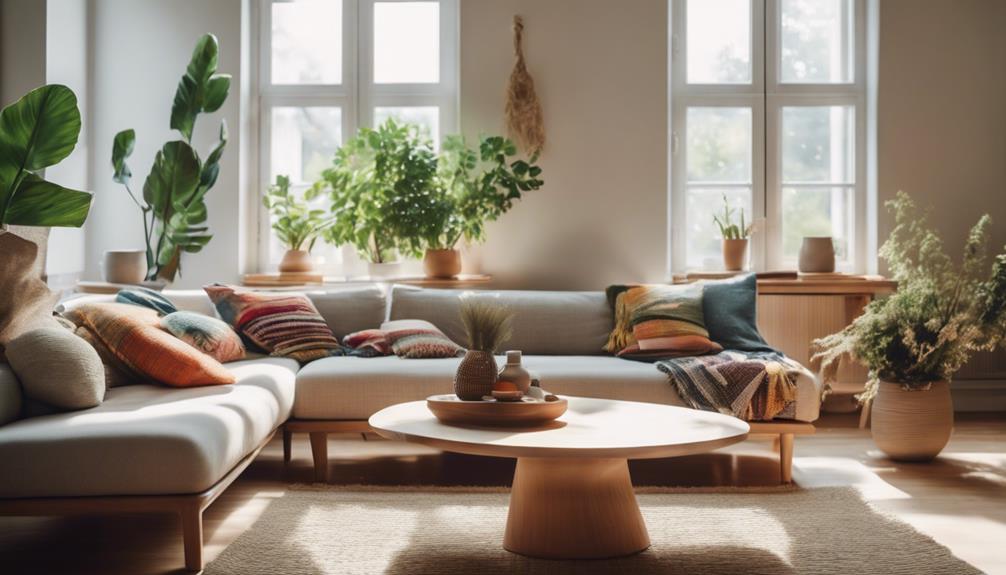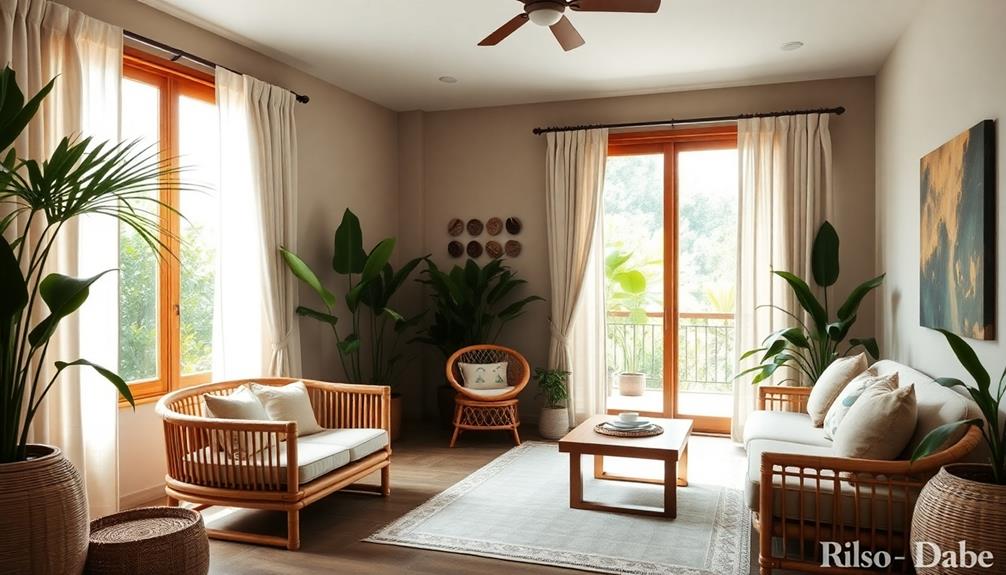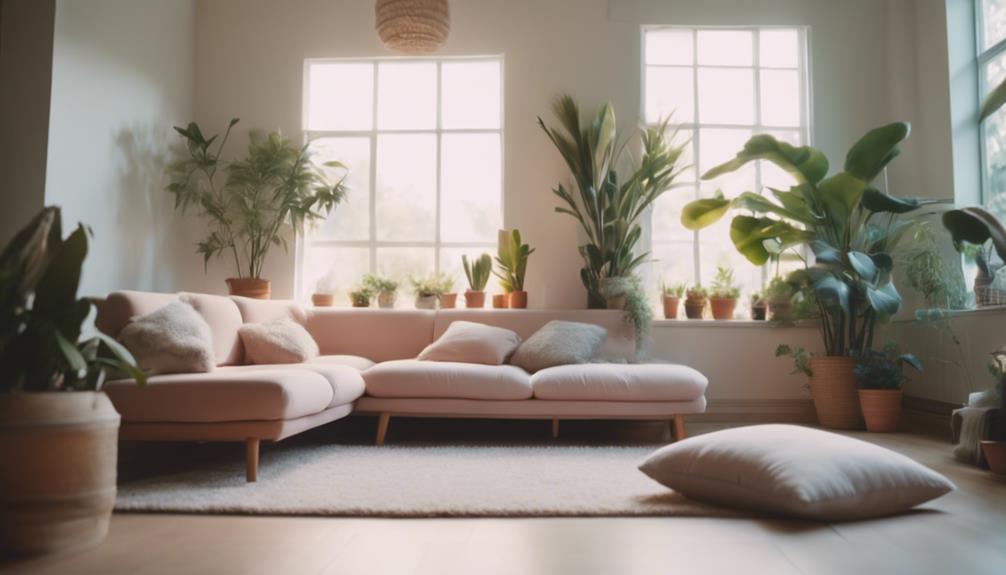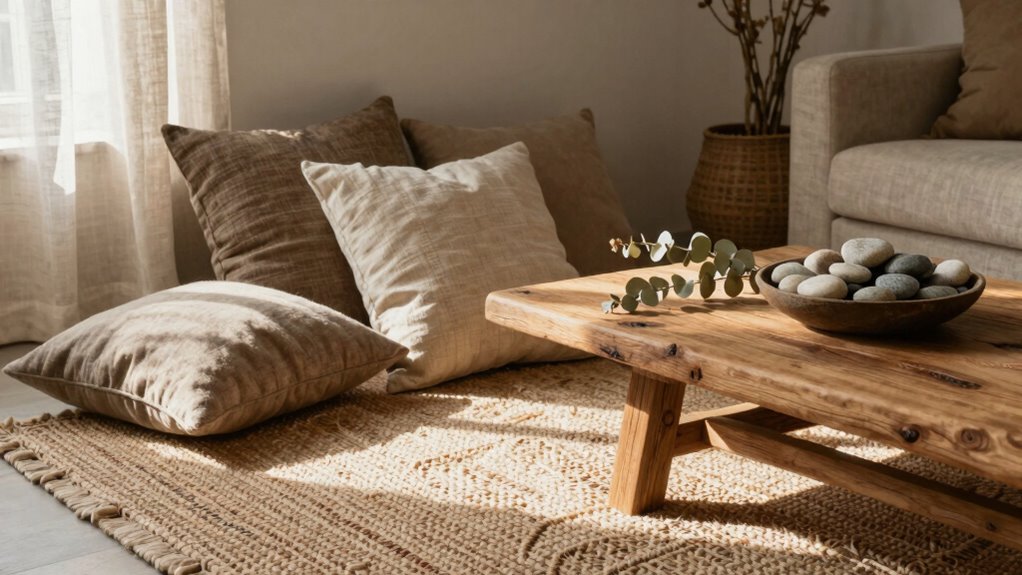

To layer natural materials for a more grounded home, start with a neutral, textured foundation like jute or linen. Then, add contrasting textures such as rough wood alongside smooth marble or soft wool with rustic stone. Focus on earthy tones, layering textiles and accents that enhance harmony and authenticity. Embrace the beauty of aging materials, like reclaimed wood or vintage textiles, to create character and warmth. Keep exploring these ideas to transform your space into a timeless, cozy sanctuary.
Key Takeaways
- Combine textures like wood, stone, linen, and wool to create tactile warmth and visual interest.
- Use natural aging and patinas to add authenticity and character over time.
- Maintain a cohesive color palette with earthy tones to foster a calming, unified environment.
- Layer neutral foundational materials with accent pieces for depth and tactile variety.
- Incorporate seasonal textures and vintage elements to enhance authenticity and seasonal harmony.
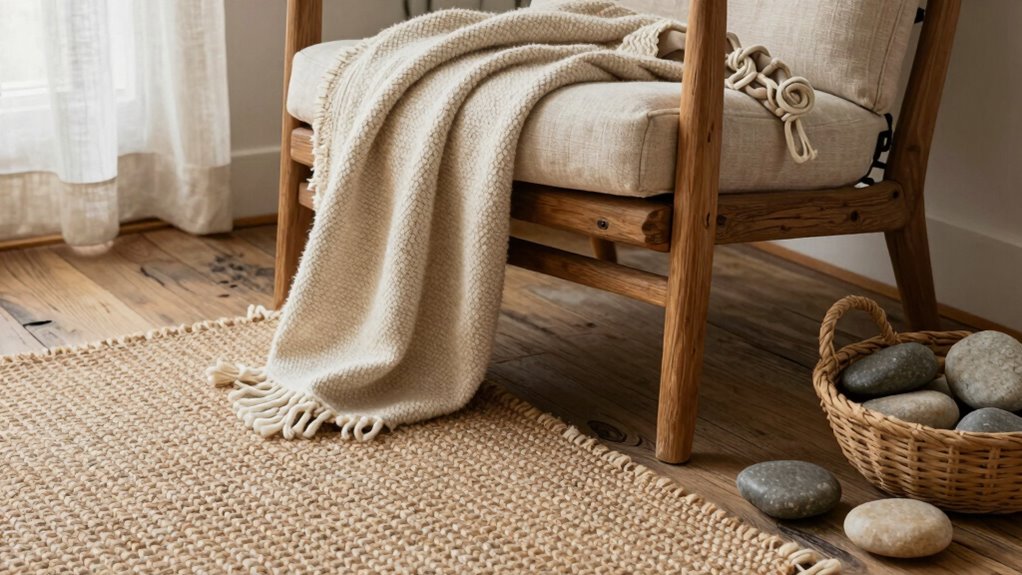
Creating a grounded home begins with thoughtfully layering natural materials to bring warmth, texture, and a sense of harmony to your space. When you select materials like wood, stone, linen, and wool, you’re building a tactile environment that feels both inviting and authentic. To achieve this, focus on creating texture contrast; juxtaposing smooth surfaces with rougher textures adds visual interest and depth. For example, pairing a sleek marble countertop with a rustic wooden dining table offers a striking balance that invites touch and discovery. Texture contrast isn’t just about variety; it’s about making each element stand out while working together seamlessly. Incorporating material aging and natural patinas further enhances the authentic, lived-in feel of your space, allowing it to develop character over time. Additionally, incorporating elements like reclaimed wood or vintage textiles can enrich the sense of authenticity and sustainability within your layered design. Paying attention to weather changes can also influence texture choices, helping to create a home that adapts beautifully to seasonal shifts. Furthermore, considering seasonal textures can enhance your space’s comfort and visual appeal throughout the year. Embracing these natural elements can also support sustainable design practices, fostering an eco-friendly environment.
Layer natural materials with contrasting textures for a warm, authentic, and harmonious home.
At the same time, pay attention to color harmony. Natural materials often come in earthy tones—beige, taupe, greige, soft greens—and when you layer them thoughtfully, they foster a calming, cohesive atmosphere. You want your materials to complement each other rather than compete, so consider choosing a dominant hue and then selecting other elements that echo or subtly contrast that base. For instance, if your flooring is a warm oak, incorporate textiles like linen curtains or wool throws in muted greens or soft browns to reinforce a sense of unity. This careful coordination prevents the space from feeling chaotic and helps each material contribute to a unified aesthetic.
When layering, don’t just focus on individual pieces but think holistically about how they work together. Start with a neutral, textured foundation—like a jute rug or a linen sofa—and then add accent pieces that introduce both texture contrast and color harmony. A chunky knit blanket, a leather armchair, or a stone vase can serve as accents that deepen the tactile experience and enrich the color palette. The key is to guarantee these elements anchor the space without overwhelming it. Each layer should enhance the overall serenity and grounded feel you’re aiming for. Considering the influence of natural materials in your design helps foster a more authentic and resilient home environment.
Finally, remember that natural materials age beautifully and develop character over time. By layering different textures and maintaining color harmony, you create a home that feels effortlessly authentic and timeless. You want your space to tell a story—one of warmth, simplicity, and connection to nature. When you pay attention to how textures contrast and colors harmonize, you craft a sanctuary that’s not only visually compelling but also emotionally grounding. This thoughtful layering turns your house into a true reflection of a grounded, natural lifestyle.
Frequently Asked Questions
How Do I Maintain Natural Materials Over Time?
To maintain natural materials over time, regularly clean with non-toxic cleaning products to prevent buildup and damage. Use eco-friendly finishes that protect surfaces while preserving their natural beauty. Avoid harsh chemicals, which can degrade materials and affect indoor air quality. Keep materials dry and avoid direct sunlight to prevent fading or warping. With consistent care, your natural elements stay beautiful and sustainable, creating a grounded, healthy home environment.
Which Natural Materials Are Most Allergy-Friendly?
You should choose hypoallergenic options and low allergy materials for a more allergy-friendly home. Materials like organic cotton, wool, bamboo, and silk are naturally resistant to allergens and mold. Avoid heavily processed or synthetic options, as they can trap dust and allergens. Regular cleaning and good ventilation further reduce allergy triggers. By selecting these natural, low allergy materials, you create a healthier, more comfortable environment for everyone.
Can Natural Materials Be Used in Humid Environments?
Yes, natural materials can be used in humid environments if you focus on mold prevention and careful material selection. Opt for moisture-resistant options like bamboo, teak, or treated wood, which resist mold growth better. Keep the space well-ventilated, dry, and regularly cleaned to prevent mold. Properly selecting and maintaining your materials helps create a grounded, natural home even in humid conditions.
Are Natural Materials Suitable for Outdoor Spaces?
Natural materials can be suitable for outdoor spaces if you consider natural durability and material compatibility. You should choose options like stone, teak, or cedar, which withstand weather better. Proper sealing and maintenance also help preserve their look and strength. Keep in mind that some materials may require extra care to prevent damage from moisture, sun, or pests. By selecting the right natural materials, you can create a beautiful, grounded outdoor environment.
How Do I Incorporate Sustainable Sourcing Into My Decor?
Want to make your decor more sustainable? You can start by choosing items with eco-friendly certifications like FSC or Fair Trade, ensuring materials are responsibly sourced. Have you considered ethical sourcing? It supports fair labor practices and reduces environmental harm. By prioritizing these factors, you not only enhance your space’s natural beauty but also contribute to a healthier planet. Isn’t that a beautiful way to decorate with purpose?
Conclusion
By layering natural materials, you create a home so grounded, even trees would envy your stability. Your space will radiate a cozy, earthy vibe so powerful, it could single-handedly calm a raging storm—or tame your busiest mornings. Embrace these textures and tones, and watch your home transform into a sanctuary so peaceful, even a mountain would envy its tranquility. Get layering, and turn your house into the ultimate haven of natural bliss!