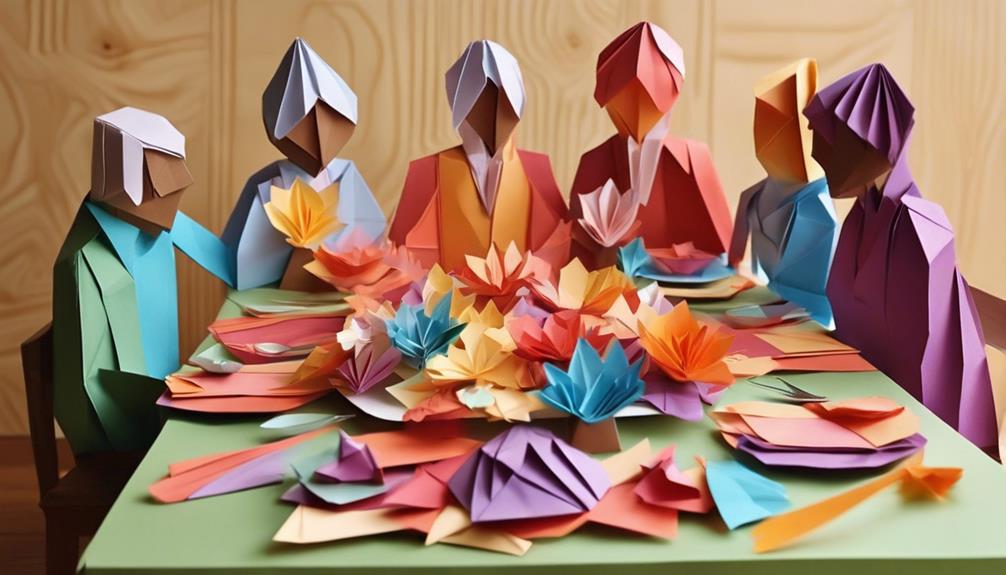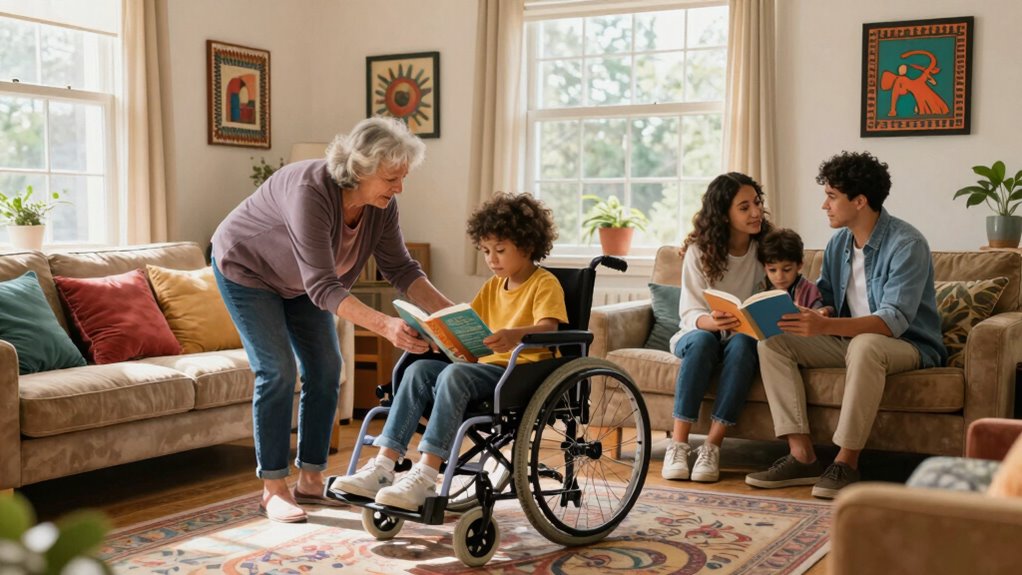

To build a more inclusive home culture, actively celebrate diversity by appreciating different backgrounds and incorporating cultural traditions into daily life. Foster open dialogue by creating a safe space for everyone to share feelings and listen actively. Set clear boundaries against discrimination and reinforce values of equality and kindness. Cultivate trust by recognizing small victories and making everyone feel valued. Focus on consistent, intentional actions to create a loving, respectful environment where all family members truly belong. Keep exploring for more ways to strengthen this environment.
Key Takeaways
- Foster open communication by encouraging family members to share feelings and listen actively.
- Celebrate and incorporate diverse traditions, stories, and perspectives into daily routines.
- Set clear boundaries against discrimination and promote shared values of kindness and respect.
- Recognize and affirm each member’s unique background, fostering a sense of belonging and trust.
- Model inclusive behaviors and involve everyone in decision-making to reinforce collective respect.

Have you ever wondered how to create a home environment where everyone feels truly valued and respected? Building an inclusive home culture starts with understanding that every family member’s voice matters. You can begin by actively celebrating diversity—recognizing and appreciating the different backgrounds, beliefs, and experiences each person brings to the table. When you make a conscious effort to honor these differences, you send a clear message that everyone’s identity is valid and valued. This isn’t just about tolerance; it’s about embracing what makes each person unique. Use everyday moments to highlight various cultures, traditions, or perspectives, whether through shared meals, stories, or music. Celebrating diversity isn’t a one-time event; it’s woven into your daily interactions, making inclusiveness a natural part of your family life. Additionally, incorporating elements like color accuracy in visual displays can help ensure everyone sees the world as vividly and authentically as possible.
Celebrating diversity daily fosters a loving, respectful family environment where everyone feels valued and truly seen.
Fostering open dialogue is equally vital. Creating a space where family members feel safe to express their thoughts and feelings encourages honesty and understanding. When conflicts arise or misunderstandings happen, approach them as opportunities for learning rather than reasons for judgment. Encourage everyone to listen actively and ask questions that deepen understanding, rather than interrupt or dismiss. Model this behavior yourself—share your feelings openly and show empathy when others do the same. By establishing clear communication norms, you help your home become a place where vulnerability is welcomed and respectful conversations flourish.
It’s also important to set intentional boundaries that reinforce your commitment to inclusiveness. Make it known that discrimination, prejudice, or disrespect are not tolerated within your home. When you address these issues promptly and thoughtfully, you reinforce the values of equality and kindness. Additionally, involve all family members in decision-making processes, especially when it relates to household rules or activities. This practice empowers everyone and underscores the importance of collective respect.
Finally, be patient and persistent. Building a truly inclusive home culture takes time and continuous effort. Celebrate small victories along the way—like a meaningful conversation or a new tradition that resonates with everyone. Over time, these efforts will foster a sense of belonging and trust that makes your home a safe haven for all. By actively celebrating diversity and fostering open dialogue, you cultivate an environment where every family member feels seen, heard, and appreciated. This isn’t just about creating a more inclusive space; it’s about nurturing a loving, respectful family that thrives on understanding and acceptance.
Frequently Asked Questions
How Can I Address Unintentional Biases in My Family?
You can address unintentional biases by openly discussing implicit biases and encouraging your family to recognize stereotypes. Start conversations about stereotypes and their impact, fostering stereotype awareness. Challenge assumptions gently and ask questions that promote understanding. Model inclusive behavior and encourage family members to reflect on their beliefs. Creating a safe space for honest dialogue helps everyone become more aware of biases, leading to a more inclusive and understanding home environment.
What Are Effective Ways to Include Diverse Cultural Traditions?
You can include diverse cultural traditions by actively participating in cultural celebrations and encouraging tradition sharing within your family. Attend festivals, cook traditional dishes, or learn dances from different cultures. Invite family members to share stories and customs from their backgrounds, fostering understanding and respect. These practices create a welcoming environment where everyone’s heritage is valued, helping your home become more inclusive and culturally rich.
How Do I Handle Disagreements About Inclusion Within the Family?
When disagreements about inclusion arise, you should practice respectful listening and empathy building. Listen carefully to each family member’s perspective without interruption, showing genuine understanding. Express your feelings calmly, focusing on shared values. Encourage open dialogue, asking questions to clarify concerns. By fostering a safe space for honest conversations, you help everyone feel heard and valued, ultimately guiding your family toward consensus and a more inclusive home environment.
What Resources Are Available to Educate Children About Diversity?
You can introduce children to diversity through books and documentaries that showcase different cultures and experiences, sparking curiosity and empathy. Community programs also offer interactive learning, connecting your family with diverse groups and events. These resources provide a dynamic balance of storytelling and real-world engagement, helping your kids understand and appreciate differences. By combining media and community activities, you’ll create a rich, inclusive environment that nurtures understanding and respect.
How Can I Create a Safe Space for Open Discussions on Inclusion?
You can create a safe space for open discussions on inclusion by inviting guest speakers from diverse backgrounds to share their experiences. Organize cultural celebrations that highlight different traditions, encouraging curiosity and respect. Make it clear that everyone’s voice matters, and set ground rules for respectful conversations. By actively promoting these practices, you foster an environment where open dialogue is welcomed, and your family feels safe and supported in exploring inclusion together.
Conclusion
By weaving empathy and understanding into your daily routines, your home transforms into a sanctuary where everyone feels seen and valued. Imagine the warmth of shared laughter filling the air, walls echoing with acceptance, and hearts opening like blooming flowers in spring. Every small act of kindness plants a seed of belonging, creating a vibrant tapestry of love and inclusion. Together, you’re cultivating a space where every person can truly thrive, grounded in unity and compassion.
Products Worth Considering
inclusive family communication board
As an affiliate, we earn on qualifying purchases.
As an affiliate, we earn on qualifying purchases.