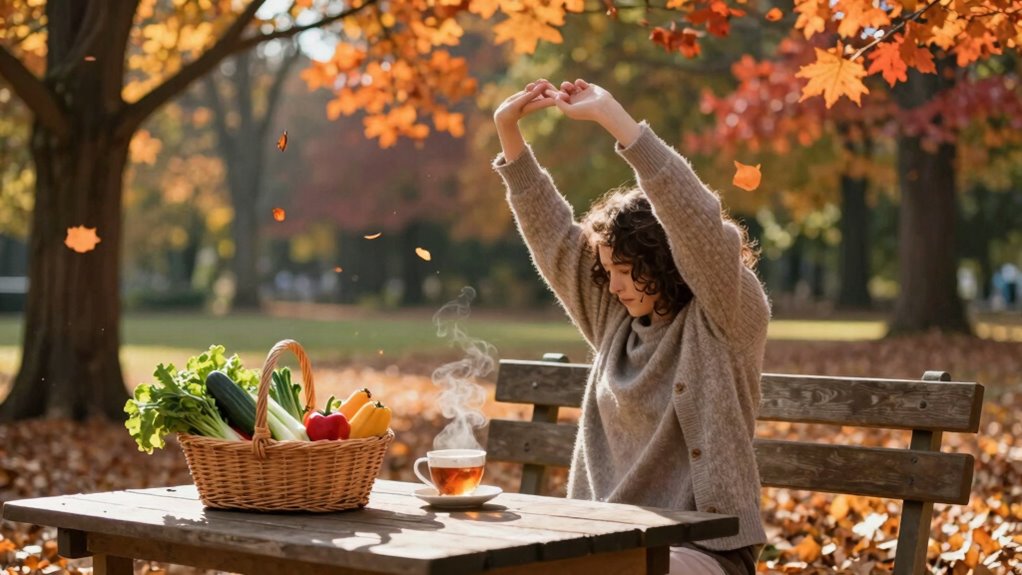

Living in harmony with seasonal changes supports your physical health by aligning your diet, outdoor activities, and environment with nature’s natural rhythms. Eating in-season foods provides fresh, nutrient-rich produce that boosts immunity. Outdoor exercise exposes you to sunlight, enhancing vitamin D levels and mood. Adjusting your routines to seasonal cues encourages balanced habits and sustainable living. If you stay tuned, you’ll discover simple ways to naturally boost your vibrancy all year round.

Turn your quiet moments into listening time
- Thousands of audiobooks, podcasts and originals
- Listen on your phone, tablet or Echo — also offline
- Cancel anytime
Key Takeaways
- Eating seasonal foods provides nutrient-rich produce that boost immunity and overall health.
- Outdoor activities aligned with seasons enhance vitamin D levels and cardiovascular health.
- Seasonal routines encourage balanced diets and active lifestyles, promoting physical resilience.
- Awareness of indoor air quality variations helps reduce pollutants and supports respiratory well-being.
- Living in harmony with seasonal cycles fosters energy, bodily awareness, and long-term vitality.

As the seasons change, your body responds in ways that can influence your overall health. Embracing seasonal living means you adapt your habits to align with the natural shifts around you, which can profoundly boost your physical well-being. One of the key ways to do this is by focusing on seasonal nutrition. When you eat foods that are in season, you’re providing your body with fresh, nutrient-dense produce that supports your immune system and energy levels. For example, during fall, incorporate squash, apples, and root vegetables, which are rich in vitamins and antioxidants. In winter, hearty greens, citrus fruits, and seasonal berries help combat the cold and keep your defenses strong. Eating locally and seasonally not only enhances your health but also reduces your carbon footprint, making your lifestyle more sustainable. Incorporating outdoor spaces such as backyard gardens or natural pools can further enhance the benefits of seasonal living.
Adapting your diet to seasonal foods boosts immunity and supports sustainable living.
Outdoor activity is another essential aspect of seasonal living that directly benefits your physical health. When you engage in outdoor exercise, you get exposed to natural sunlight, which helps your body produce vitamin D—an essential nutrient for bone health and immune function. During warmer months, outdoor activities like hiking, biking, or even a brisk walk in the park become more appealing, encouraging you to move more frequently. As temperatures cool, you can adapt by enjoying winter sports or simply layering up for a walk in the crisp air. These activities boost cardiovascular health, improve mood, and help regulate weight. Being outdoors also exposes you to fresh air, which can clear your lungs and support better respiratory health. Additionally, engaging in seasonal outdoor activities can motivate you to stay consistent with your exercise routine, reinforcing healthy habits. Incorporating knowledge about microplastics in dust and their impact on indoor air quality can also help you create a healthier environment at home, especially during seasons when indoor air pollution may increase. Furthermore, understanding the sources of indoor pollutants can guide you in making better choices for indoor air quality, promoting overall health.
Adjusting your routine to match the seasons creates a natural rhythm that fosters a healthier lifestyle. For example, in spring, you might focus on lighter meals packed with fresh greens and herbs, while summer invites you to indulge in hydrating fruits and vegetables. As fall arrives, you can enjoy warming foods and cozy outdoor activities like apple picking or nature walks. These practices help you stay connected to your environment, encouraging consistency and motivation. When you listen to your body’s seasonal cues, you’re more likely to maintain a balanced diet and stay active, both of which are fundamental to good health. Recognizing the importance of outdoor spaces in supporting physical activity can motivate you to make the most of your environment. Moreover, being mindful of seasonal changes can help you better plan your meals and activities to align with your body’s natural needs. Incorporating knowledge about mammography guidelines and staying aware of your health needs can also help you make informed choices about your physical well-being. Additionally, being aware of indoor air quality factors, such as dust that may contain microplastics, can support your efforts to maintain a healthier living space throughout the year.
Ultimately, embracing seasonal nutrition and outdoor activity aligns your lifestyle with nature’s cycles, supporting your physical health year-round. You’ll find yourself more energized, resilient, and in tune with your body’s needs. This natural approach not only enhances your well-being but also fosters a deeper appreciation for the changing seasons and the opportunities they bring for growth, vitality, and health.
Frequently Asked Questions
How Can Seasonal Living Improve Mental Health Alongside Physical Health?
You can improve your mental health through seasonal living by engaging in mindfulness practices that align with each season’s natural rhythms. This approach helps you stay present and reduces stress. Additionally, embracing seasonal changes builds emotional resilience, making it easier to handle life’s ups and downs. By syncing with nature’s cycles, you foster a sense of balance, clarity, and well-being, positively impacting both your mental and physical health.
What Are Specific Seasonal Foods Beneficial for Physical Health?
You should include winter vegetables like kale, Brussels sprouts, and carrots, which are rich in antioxidants and vitamins that boost immunity. During summer, enjoy fresh fruits like berries, melons, and peaches, providing hydration and essential nutrients. Eating seasonally helps you get the freshest produce, supports digestion, and strengthens your body’s defenses, making it easier to stay healthy and energized throughout the year.
How Does Exposure to Seasonal Sunlight Affect Vitamin D Levels?
Exposure to seasonal sunlight boosts your vitamin D levels through sunlight absorption, which triggers your skin’s vitamin synthesis process. When you spend time outdoors during sunnier months, your body efficiently converts sunlight into vitamin D, supporting your immune system, bone health, and overall well-being. Regular, moderate sunlight exposure helps maintain ideal vitamin D levels, especially in seasons with less daylight, ensuring your body stays balanced and healthy year-round.
Are There Seasonal Exercises Best Suited for Different Times of the Year?
You should tailor your exercises to the seasons to match your environment. In winter, focus on warming up with winter stretches to stay flexible and prevent injuries in the cold. During summer, prioritize summer strength exercises like outdoor workouts to build endurance and enjoy the longer daylight hours. Adjusting your routine seasonally helps optimize your physical health, keeps you motivated, and makes exercise more enjoyable throughout the year.
Can Seasonal Living Help Manage Chronic Health Conditions?
Seasonal living acts like a tailored suit for your health, fitting your body’s needs throughout the year. It can help manage chronic conditions by encouraging climate adaptation strategies and seasonal hydration, which keep your immune system steady. By adjusting your routines to each season, you support your body’s natural rhythms, reducing flare-ups and discomfort. Embracing these changes helps you stay healthier, more balanced, and resilient year-round.
Conclusion
Embrace seasonal living, and you’ll notice your body aligning with nature’s rhythm, boosting your health. Just like the vibrant blooms of spring or the cozy warmth of winter, your body thrives on change. While comfort might beckon you to stay still, stepping into each season’s unique rhythm keeps you energized and balanced. So, welcome each season’s gifts—your body will thank you with renewed vigor and resilience. After all, life’s best health lessons come from simply honoring nature’s flow.
Products Worth Considering
seasonal superfoods for immunity
As an affiliate, we earn on qualifying purchases.
As an affiliate, we earn on qualifying purchases.