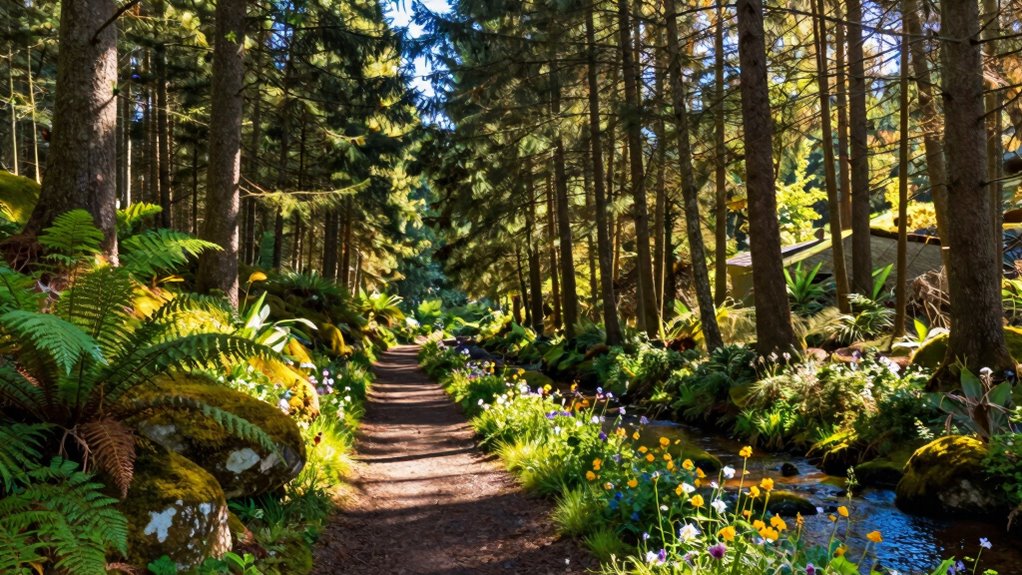

Walking in nature activates brain regions linked to creativity and quiets mental chatter through mindfulness, helping you find fresh ideas. Unlike endless scrolling, nature engages your senses and enhances cognitive clarity, boosting neuroplasticity and visual perception. The simplicity and rhythm of natural surroundings foster curiosity, wonder, and new perspectives. Plus, reduced digital distractions open space for innovative thinking. If you’re curious to discover how stepping outside can transform your creative flow, keep exploring these benefits further.

Turn your quiet moments into listening time
- Thousands of audiobooks, podcasts and originals
- Listen on your phone, tablet or Echo — also offline
- Cancel anytime
Key Takeaways
- Nature walks activate creative brain regions suppressed during digital engagement, fostering innovative thinking.
- Quiet observation during walks sparks curiosity and fresh insights, unlike superficial digital interactions.
- Immersion in nature reduces stress and mental chatter, increasing receptivity to new ideas.
- Movement and mindfulness in natural settings enhance cognitive clarity and mental flexibility.
- Digital distractions hinder deep thought, whereas nature promotes neuroplasticity and imaginative problem-solving.
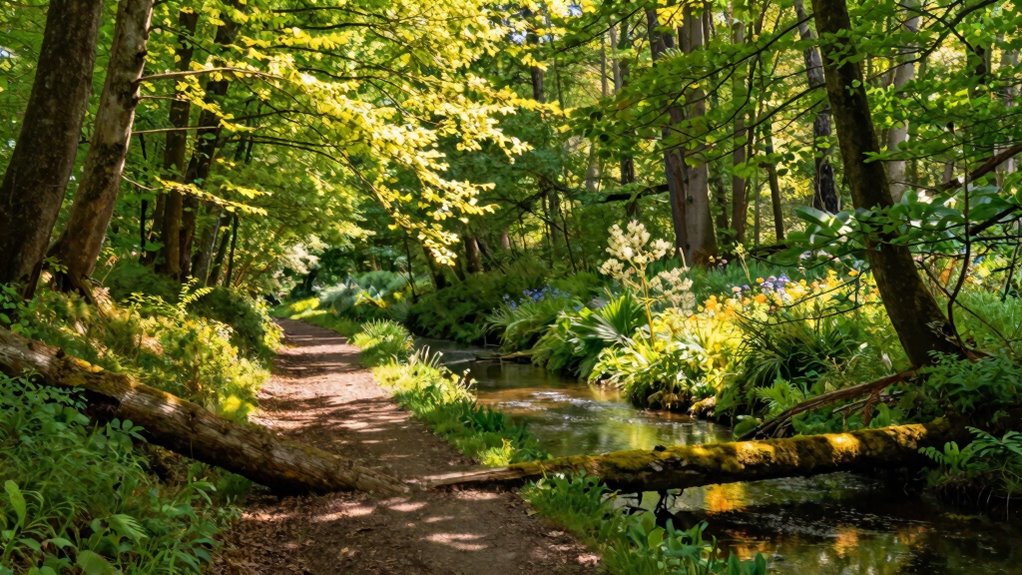
Taking a walk in nature can do more than just clear your mind; it can spark better ideas. When you step outside and immerse yourself in the natural world, you activate a different part of your brain—one that’s often underused during endless scrolling or screen time. This is where mindfulness practice comes into play. As you walk, you become more aware of your surroundings—the rustling leaves, the chirping birds, the scent of fresh air. This mindful attention helps quiet the chatter in your mind, making space for creative inspiration to emerge naturally. Instead of forcing ideas or trying to solve problems through sheer effort, you allow your subconscious to process information in the background, which often leads to those “aha” moments.
While scrolling through social media or endlessly browsing your devices, your mind gets caught in a loop of distraction. This constant stimulation can stifle creativity, trapping you in a cycle of superficial engagement without meaningful insight. In contrast, a revitalizing walk in nature shifts your focus from screens to the present moment. It encourages you to slow down and observe the details around you. This change in perspective can spark new connections and ideas that wouldn’t surface in the noise of digital distractions. Nature’s calming effect reduces stress and anxiety, which are major barriers to creative thinking. When you’re relaxed and present, your brain becomes more receptive to innovative thoughts and solutions.
Digital distractions hinder creativity; nature walks foster presence, reduce stress, and spark innovative ideas naturally.
Moreover, the simplicity of a nature walk fosters a sense of curiosity and wonder that can fuel your creative process. As you notice the intricacies of a leaf or the patterns in the bark of a tree, you engage your imagination and open yourself to inspiration. These moments of quiet observation can serve as a springboard for brainstorming new projects or refining existing ideas. The rhythm of walking itself helps organize your thoughts, giving your mind time to wander freely without judgment. This mental clarity can lead to fresh insights and perspectives that seem to appear out of nowhere when you’re in a state of mindfulness practice outdoors. Engaging with the natural environment can also enhance cognitive function, making it easier for your brain to generate innovative solutions. Additionally, research shows that exposure to natural settings can improve color accuracy in visual perception, which supports clearer mental imagery and creative visualization. Studies also demonstrate that being in nature can promote neuroplasticity, further boosting your capacity for creative thinking and problem-solving.
In the end, the combination of physical movement, mindfulness, and the natural environment creates an ideal setting for generating better ideas. Instead of feeling stuck in a cycle of endless scrolling, you tap into your innate creative potential by simply stepping outside. Nature walks offer an invigorating way to recharge your mental batteries, boost your creativity, and find clarity—reminding you that sometimes, the best ideas come when you least expect them, in the quiet stillness of the outdoors.
Frequently Asked Questions
How Long Should a Nature Walk Last to Boost Creativity?
A nature walk should last about 20 to 30 minutes to boost your creativity. During this time, focus on mindful observation and sensory engagement—notice the sights, sounds, and smells around you. This duration allows your mind to relax and reset without feeling rushed. As you immerse yourself in nature, you’ll find your ideas flow more freely, making your walk both invigorating and inspiring.
Can Nature Walks Replace Traditional Brainstorming Sessions?
Yes, nature walks can replace traditional brainstorming sessions. As you walk through lush greenery, you engage in mindful observation and sensory engagement, which sparks new ideas. The rustling leaves and chirping birds clear mental clutter, fostering creativity naturally. While not a complete substitute, they offer a revitalizing, inspiring alternative that nurtures your mind’s ability to generate innovative solutions, often more effectively than sitting indoors brainstorming.
Are There Specific Environments That Enhance Idea Generation?
Yes, certain environments boost idea generation. You’ll find that wildlife observation in natural settings sparks creativity, as observing animals and plants stimulates your mind. Forest therapy, which involves immersive walks in dense forests, enhances focus and relaxation, making it easier to generate innovative ideas. These environments reduce mental clutter and foster a sense of calm, allowing your creativity to flow freely and leading to fresh, insightful solutions.
How Does Nature Influence Brain Activity Related to Creativity?
Like a modern-day Da Vinci wandering through nature, you activate your neural pathways and boost cognitive enhancement. When you walk outdoors, your brain receives diverse stimuli, encouraging creative thinking and problem-solving. Nature’s calming influence reduces mental clutter, allowing your mind to relax and connect ideas more freely. This natural environment stimulates your brain’s creative zones, fostering innovative thoughts while improving overall mental clarity and focus.
Is Outdoor Activity More Effective Than Indoor Relaxation for Ideas?
Outdoor activity is more effective than indoor relaxation for sparking ideas because it helps you escape indoor distractions and provides a true digital detox. When you step outside, you clear your mind, boost creativity, and gain fresh perspectives. The natural environment stimulates your brain differently than indoor settings, allowing ideas to flow more freely. So, ditch the screens and embrace outdoor adventures for better, more innovative thinking.
Conclusion
So, next time your mind feels stuck in the endless scroll, lace up your boots and step outside. Let the gentle rustle of leaves and the whispering breeze be your muse, like the great poets of old wandering through enchanted forests. Nature’s simplicity clears your mind, sparks fresh ideas, and revives your spirit. Remember, even in this digital age, a walk in the woods can turn your modern chaos into a Renaissance of creativity.
Products Worth Considering
As an affiliate, we earn on qualifying purchases.